
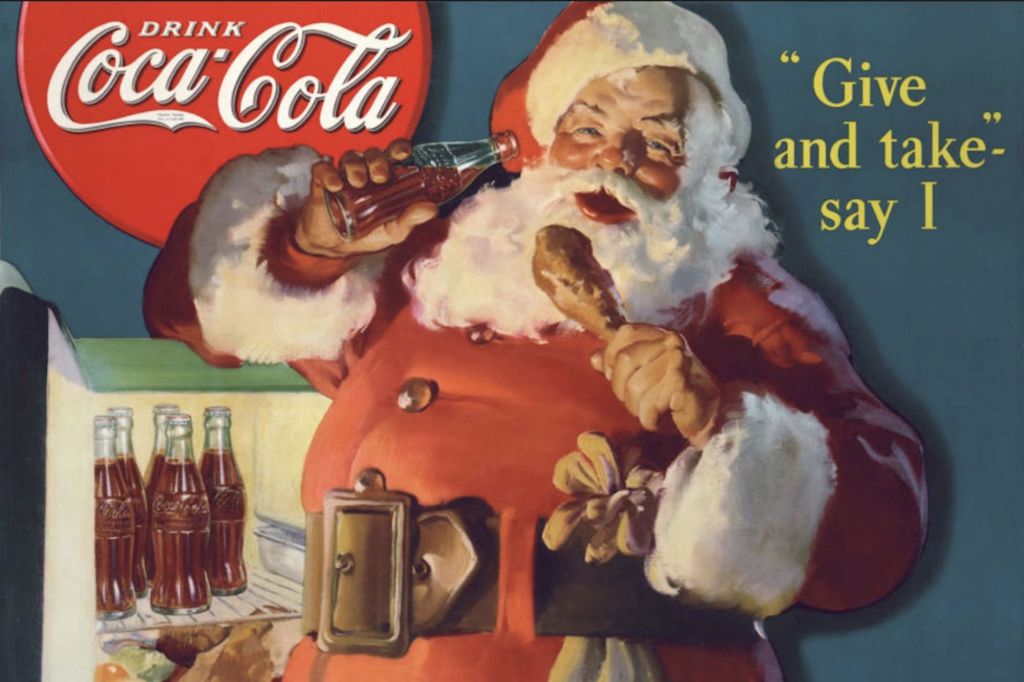
What is the origin story of Santa Claus?
The figure of Santa Claus – known by various names including Father Christmas, Kris Kringle and Saint Nicholas – has evolved over centuries and has been shaped by a combination of Christian traditions, folklore and historical figures. Here’s a brief overview of the origin story of Santa Claus:
- Saint Nicholas: The origin of Santa Claus can be traced back to Saint Nicholas, a 4th-century Christian bishop who lived in what is now modern-day Turkey. Saint Nicholas was known for his acts of kindness and generosity, especially toward children and those in need.
- Evolution of the legend: Over time, stories and legends about Saint Nicholas’s generosity spread across Europe. He became the patron saint of children and sailors. In many countries, Saint Nicholas Day is celebrated on 6th December, and children receive gifts in his honour.
- Dutch influence: Dutch immigrants to the United States brought with them the tradition of celebrating Sinterklaas (Saint Nicholas) on 5th December, a custom that eventually merged with the Christmas holiday in America. Sinterklaas evolved into “Santa Claus”.
- Coca-Cola’s Influence: In the 1930s, Coca-Cola played a significant role in shaping the modern image of Santa Claus. They commissioned artist Haddon Sundblom to create a series of images featuring a plump, jolly Santa Claus enjoying Coca-Cola. This popularised the image of Santa as we know him today, with a red suit and white beard.

Interesting anecdotes about Santa Claus
- International names and variations: Santa Claus goes by different names and variations in various countries. For example, in France, he is Père Noël; in Italy, he is Babbo Natale; in Russia, he is Ded Moroz; and in the Netherlands, he is Sinterklaas, who has a helper named Zwarte Piet.
- Santa’s mail: Many countries have dedicated addresses where children can send letters to Santa Claus. These letters often receive responses from volunteers or postal workers.
- NORAD Santa Tracker: Since 1955, the North American Aerospace Defense Command (NORAD) has been tracking Santa Claus’s journey around the world on Christmas Eve. It began as a result of a misprinted phone number in a newspaper ad, and it has become a popular tradition.
- SantaCon: In cities around the world, SantaCon is an annual event where people dress up as Santa Claus and participate in a pub crawl or other festive activities.
- Santa’s transportation: In many cultures, Santa Claus is believed to travel in various ways. In the United States, he’s said to use a sleigh pulled by reindeer, while in some European countries, he arrives on a horse or even by boat.
- Leaving out treats: In the United States and other countries, it’s a tradition for children to leave out milk and cookies for Santa Claus as a token of appreciation for his gift-giving.
- Santa parades: Santa Claus often appears in parades leading up to Christmas, including the Macy’s Thanksgiving Day Parade in New York City.
- The Santa Claus Oath: There is an official Santa Claus Oath that many individuals who portray Santa Claus in public take, pledging to uphold the values and spirit of Santa.
- Santa’s workshop: The North Pole is commonly depicted as the location of Santa’s workshop, where he and his elves make toys for children. This imagery has become deeply ingrained in the Santa Claus legend.
- Acts of kindness: Many people embrace the spirit of Santa Claus by engaging in acts of kindness and charity during the holiday season, helping those in need and spreading joy.

In a nutshell
The story of Santa Claus is a heartwarming tale that has transcended borders and cultures, bringing joy and goodwill to people around the world during the Christmas season. Santa represents the spirit of giving, generosity, and the magic of the holidays.
Coda
Putting DALL-E 3’s imagination to work, here are a couple of images showing the Yule Lads greeting Santa Claus, as his reindeer pull a flying sled across the sky, all in an Icelandic landscape.


 Jolabokaflod