
What is the origin story of Christmas cards?

The tradition of sending Christmas cards dates back to the 19th century in England, with its roots firmly planted in the British Isles. Here’s how this beloved tradition began:
- Early card sending: The concept of exchanging cards during the Christmas season existed for centuries before the first official Christmas card was created. People would send handwritten notes, letters, and small tokens of goodwill to friends and family during the holidays.
- Sir Henry Cole and the first Christmas card: The credit for the first Christmas card goes to Sir Henry Cole, a British civil servant, and John Horsley, a well-known illustrator. In 1843, Cole found himself too busy to write individual Christmas greetings to friends and family. To save time, he commissioned Horsley to design a card that could be mass-produced.
- The design: The resulting card featured a simple design with a central panel depicting a family enjoying Christmas festivities. The card’s greeting read, “A Merry Christmas and a Happy New Year to You.” It was printed in a small quantity and was initially met with mixed reactions due to the depiction of a child drinking wine.
- Popularity and spread: Despite the initial controversy, Christmas cards gained popularity in Britain over the years. The introduction of the penny postage system in the 1840s made it more affordable to send mail, contributing to the growth of the tradition.
Interesting anecdotes about Christmas cards
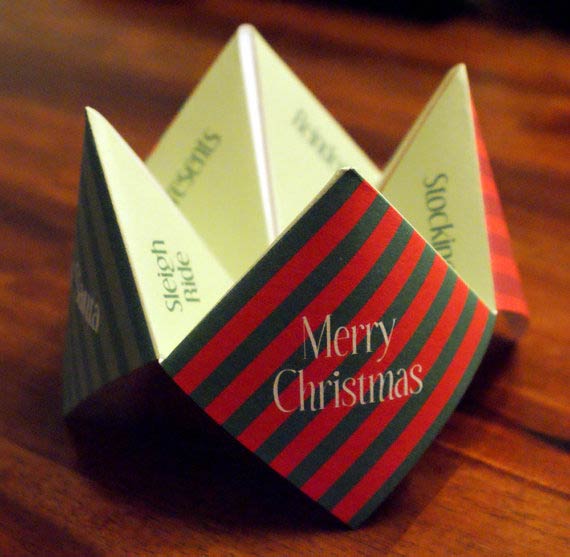
- Early cards were expensive: Early Christmas cards were not accessible to everyone. They were often handmade or hand-colored and were considered a luxury item affordable only by the affluent.
- Influence of Queen Victoria: Queen Victoria and Prince Albert played a significant role in popularizing the Christmas card tradition. They exchanged Christmas cards with their family and friends, and this royal endorsement further popularized the practice.
- Louis Prang, the “Father of the American Christmas card”: Louis Prang, a German immigrant to the United States, is often credited with popularizing the Christmas card tradition in America in the late 19th century. He is known as the “Father of the American Christmas card.”
- Record for the most Christmas cards sent: The record for sending the most Christmas cards in a single year is held by Robin Smith from the United Kingdom. In 1990, he sent 205,000 Christmas cards, earning him a place in the Guinness World Records.
- Charitable Christmas cards: Many organisations produce Christmas cards with the proceeds going to charity. Purchasing and sending these cards is a way for people to support various causes during the holiday season.
- Digital Christmas cards: In the digital age, e-cards and digital Christmas greetings have become increasingly popular. People send electronic cards via email or social media to connect with loved ones, especially if they are far away.
- Worldwide variations: While Christmas cards are a well-known tradition in many countries, each culture may have its unique customs and designs. For example, Japanese New Year’s cards (nengajo) are similar to Christmas cards but are sent for the New Year holiday.
- The Christmas Card Act: In the United Kingdom, the Postal Services Act 2000 legally required Royal Mail to deliver all Christmas cards for the price of a standard stamp. This ensures that cards are accessible to all.
- Personalised cards: Many people now personalise their Christmas cards with family photos and custom messages, making each card unique and special.
In a nutshell

Christmas cards have become an integral part of the holiday season, allowing people to connect with friends and family near and far, exchange warm wishes, and spread joy and goodwill during this festive time of year. The tradition has evolved and adapted with technology, but the sentiment of sharing holiday greetings remains at its core.
Coda
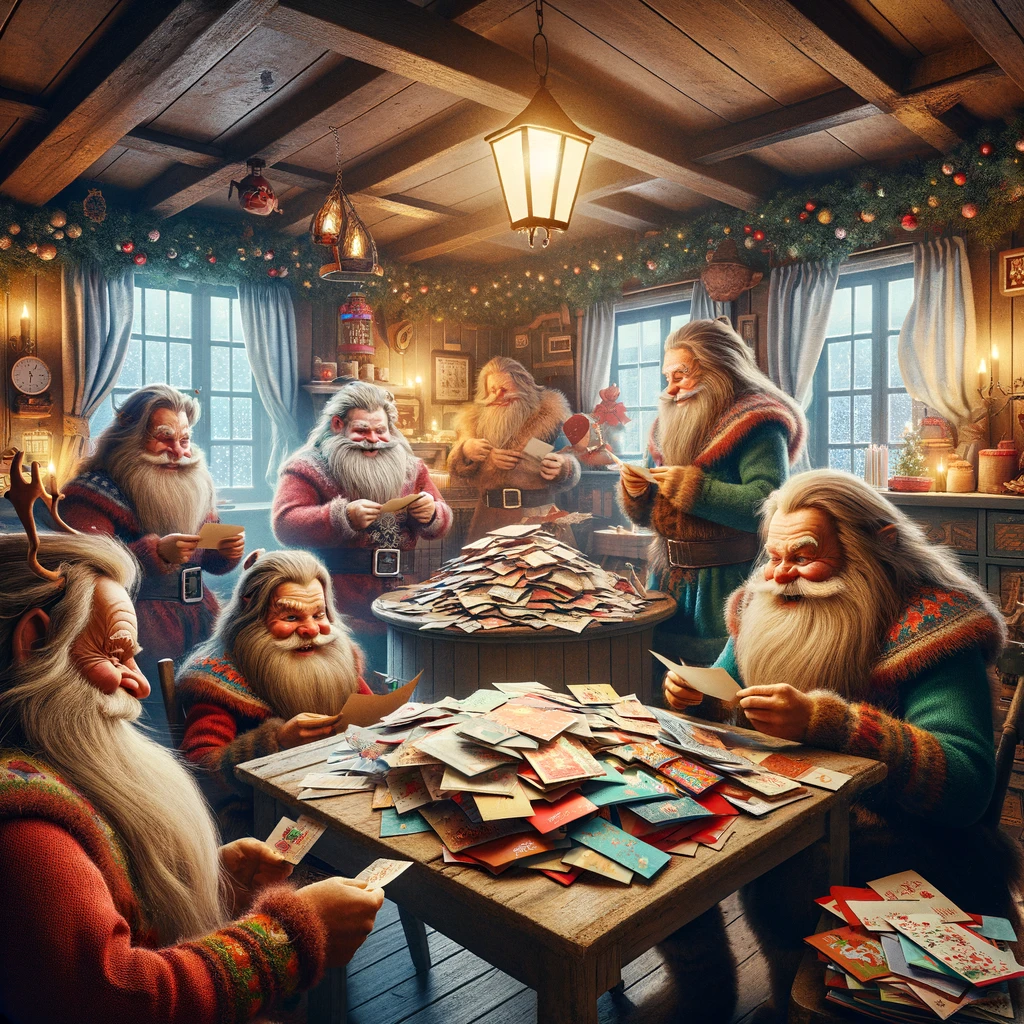
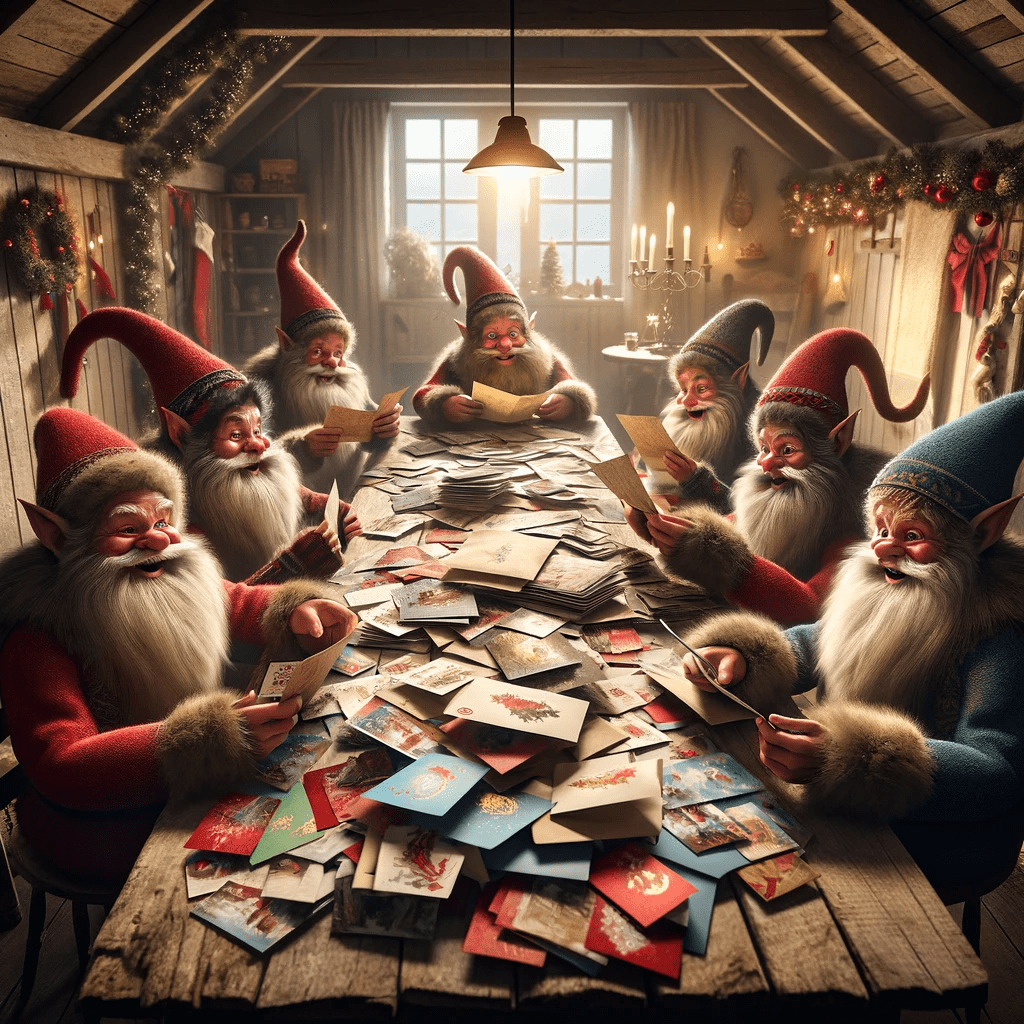
Here is DALL-E 3’s take on the Yule Lads receiving and opening Christmas cards sent to them in the post to their home in Iceland.

 Jolabokaflod