
What is the origin story of Christmas pudding?
Christmas pudding, also known as plum pudding, is a traditional British dessert that has been associated with festive celebrations for centuries. Its origins can be traced back to medieval England, and it has evolved over time into the iconic Christmas dessert we know today. Here’s the origin story and some interesting anecdotes about Christmas pudding and how this tradition is used to celebrate the festive season around the world:

- Medieval origins: Christmas pudding can trace its roots to medieval England, where it was initially a savoury dish known as “fFumenty.” This early version consisted of meat, wine-soaked bread, spices, and dried fruits.
- Puritan ban: During the 17th century, the Puritans in England, who viewed Christmas as a pagan celebration, banned many Christmas traditions, including the preparation of Christmas pudding. However, the tradition survived in secret.
- Reinvention as a sweet dish: By the 18th century, Christmas pudding had evolved into a sweet dish. The meat was gradually replaced with suet (animal fat), and the mixture was enriched with a variety of dried fruits, spices, and other ingredients.
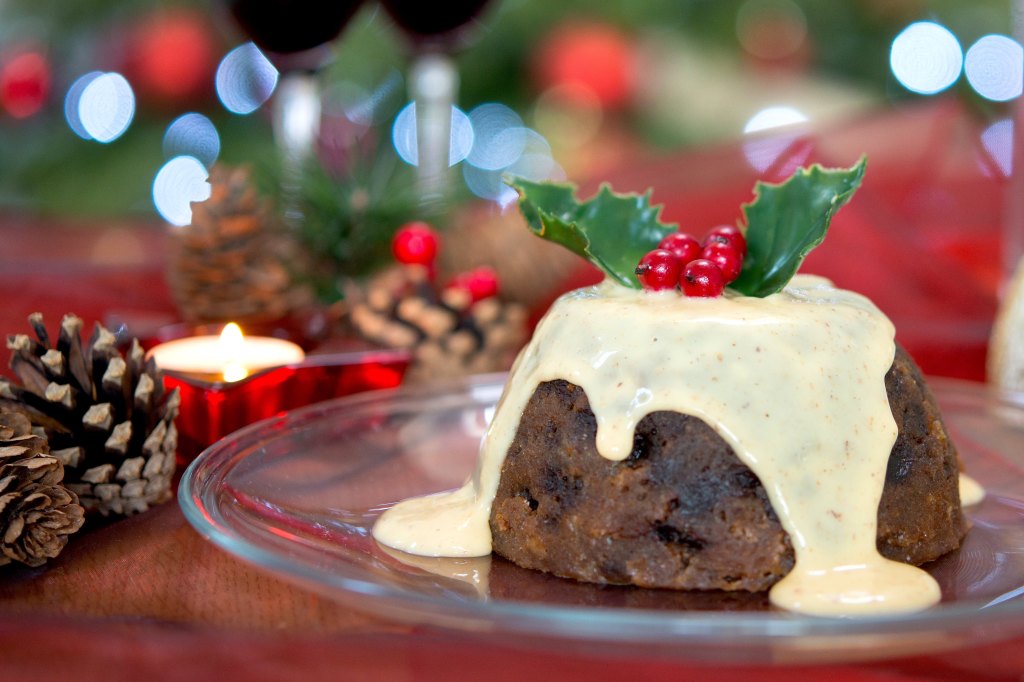
Interesting anecdotes about Christmas pudding

- Stir-up Sunday: The tradition of making Christmas pudding is closely associated with “Stir-up Sunday,” which falls on the last Sunday before Advent (usually five weeks before Christmas). On this day, families gather to make their Christmas puddings, taking turns to stir the mixture and make a wish.
- Thirteen ingredients: Traditional Christmas pudding recipes often call for 13 ingredients, symbolising Jesus and his 12 apostles. Each family member stirs the pudding mixture from east to west, symbolizing the journey of the Magi. Here is a popular recipe for Classic Christmas pudding, published in the BBC’s Good Food online magazine.
- Coin in the pudding: It was once a tradition to hide small objects, such as coins or charms, inside the Christmas pudding. Finding these items in their portion was considered lucky. However, due to safety concerns, this practice has become less common.
- Steaming process: Christmas pudding is traditionally steamed for several hours, resulting in a dense and moist texture. It is often served flaming, with brandy or rum poured over it and set alight just before serving.
- Alternative names: In some regions of the UK, Christmas pudding is known as “plum pudding,” even though it may not contain plums. The term “plum” was historically used to refer to dried fruits.
- Global influence: British colonial influence spread Christmas pudding to various parts of the world, including Australia, New Zealand, and Canada, where it remains a part of Christmas traditions.
- Modern variations: While traditional Christmas pudding is still enjoyed, there are now many variations to cater to dietary preferences and restrictions. Vegetarian and vegan versions, as well as lighter or gluten-free options, have become popular.
- Christmas pudding races: In some places, particularly the UK, Christmas pudding races are organised as charity events. Participants dress in festive attire and race while balancing a Christmas pudding on a plate, adding an element of fun to the holiday season.

In a nutshell
Christmas pudding remains a cherished part of Christmas celebrations in the UK and in various countries with British cultural influences. It symbolizes the rich history and enduring traditions associated with the holiday season and continues to be a beloved dessert enjoyed by many around the world.
Coda
Today, DALL-E 3 has created images of the Yule Lads making Christmas pudding in a British/Icelandic hybrid kitchen.
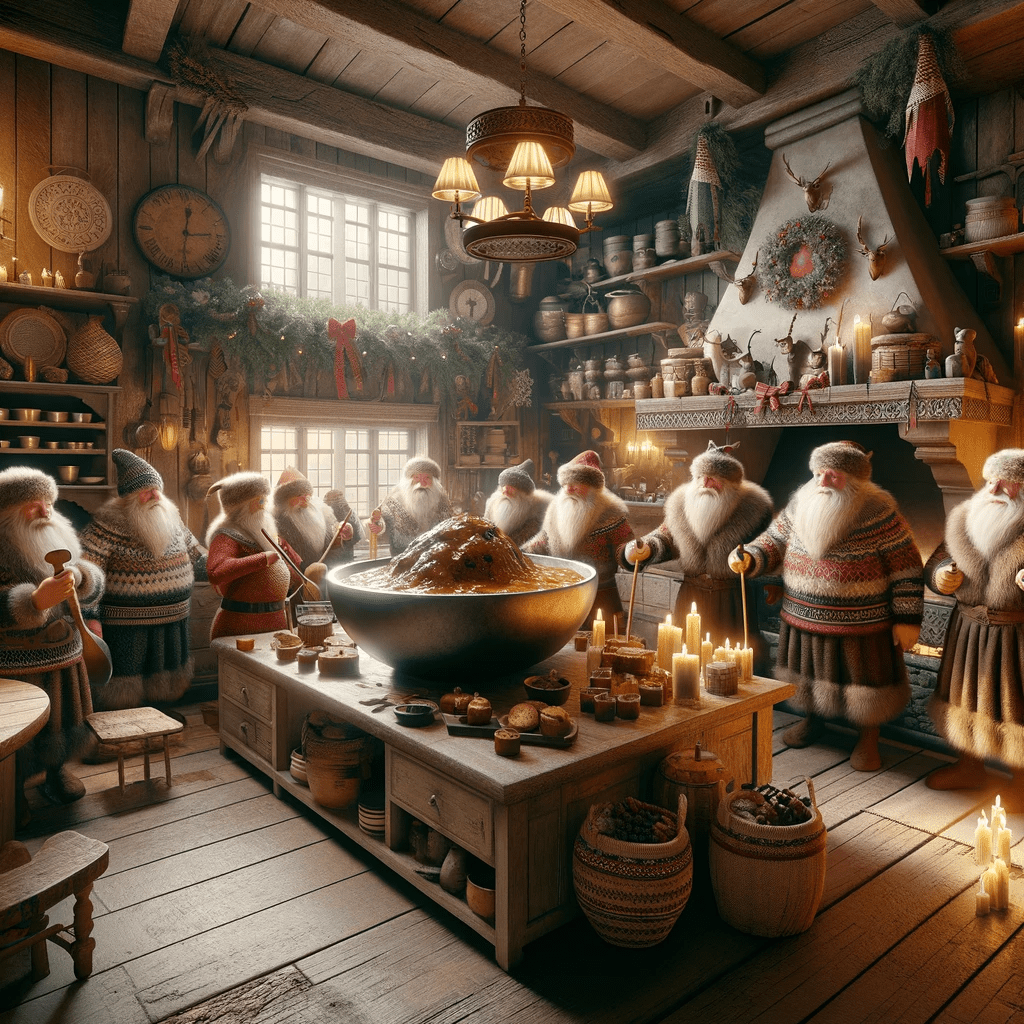


 Jolabokaflod