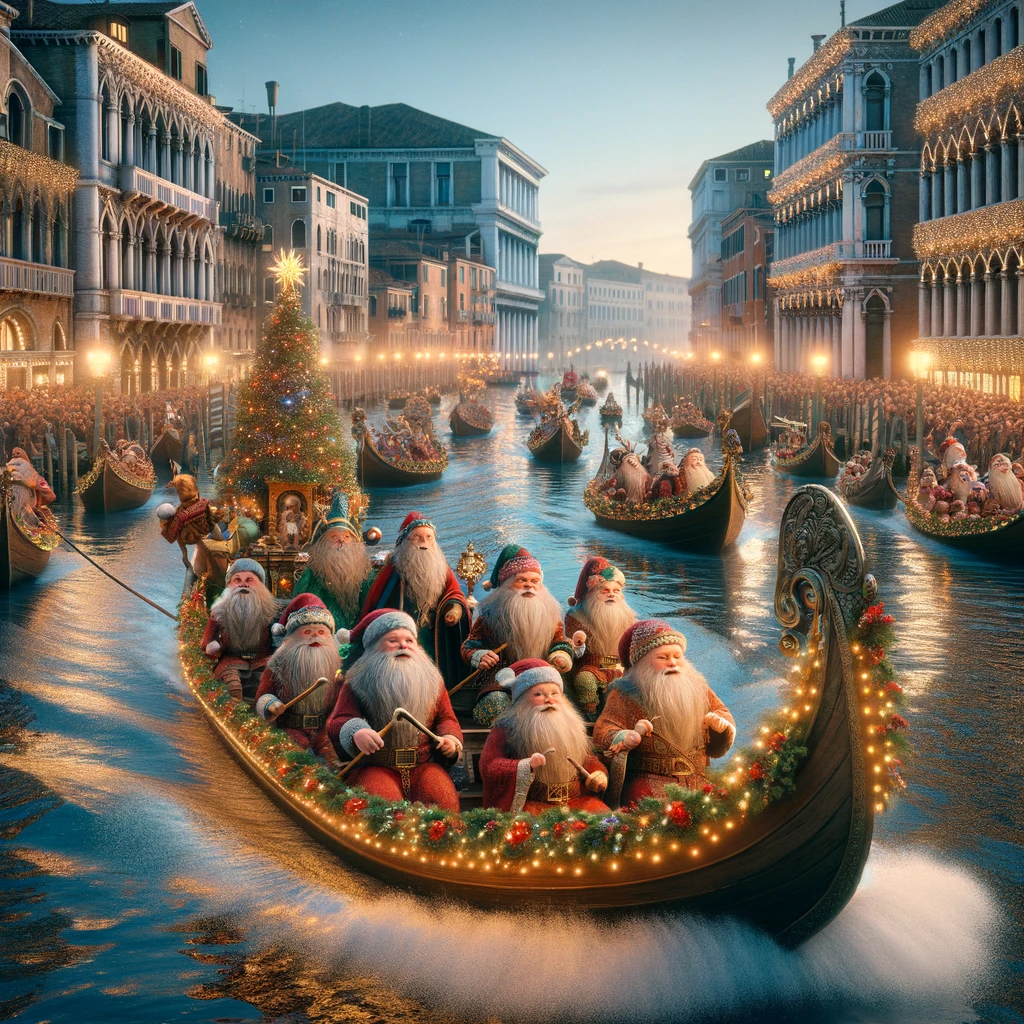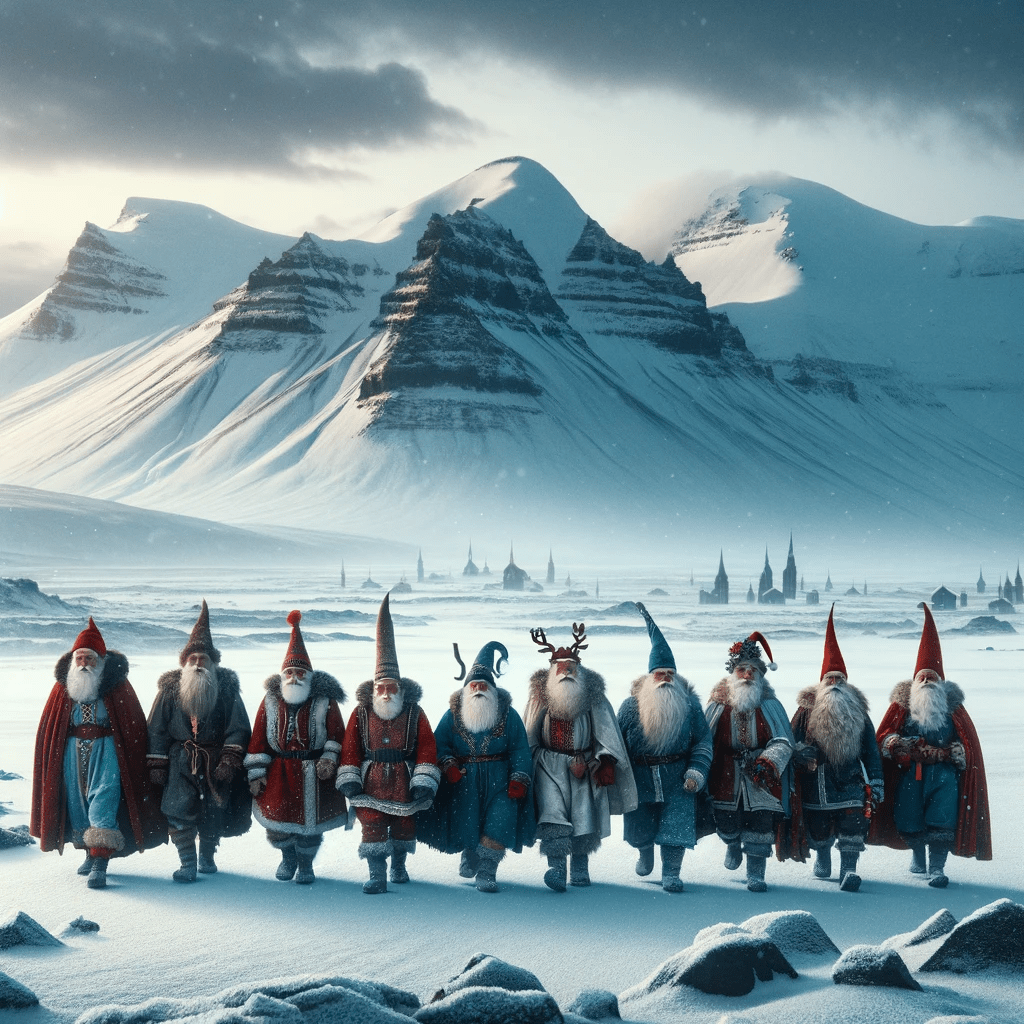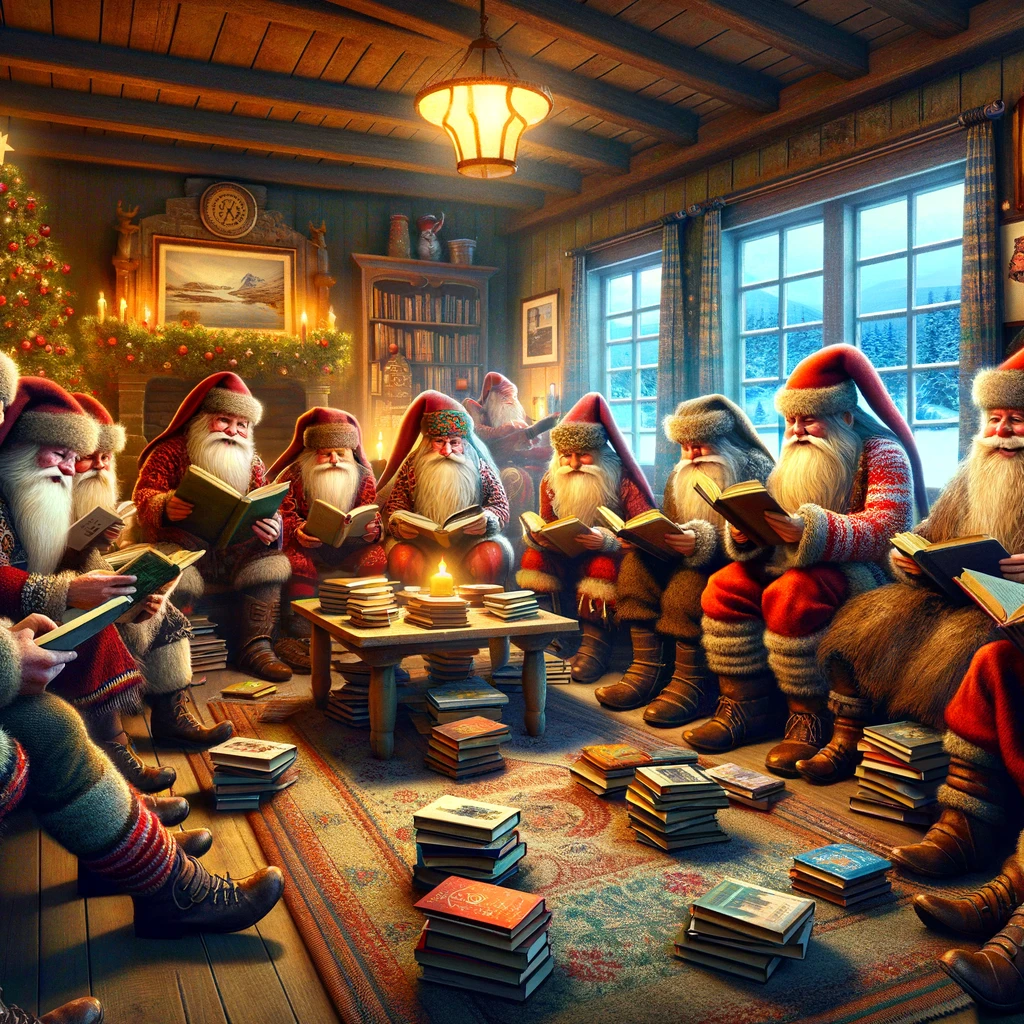
Jolabokaflod

Christmas Book Flood • Reading for Pleasure


Leave a comment

Christmas traditions (Advent calendar, Day 19)

What is the origin story of Christmas wreaths?

Wreath crown, Roman mosaic (Wikipedia)

The tradition of using wreaths during the Christmas season has ancient roots that date back to pagan times. Wreaths, circular in shape, have always symbolised eternity and the cycle of life. As Christianity spread across Europe, wreaths were adapted for use in festive celebrations, incorporating Christian symbolism. Here’s the origin story and some interesting anecdotes about Christmas wreaths and how this tradition is used to celebrate Christmas around the world:

  • Pagan origins: The use of wreaths as decorative elements predates Christianity. In ancient Rome, for example, wreaths of evergreen foliage, such as laurel and holly, were worn as crowns during festivals and celebrations, including the winter solstice.
  • Adaptation for Christmas: As Christianity gained prominence in Europe, wreaths began to be associated with Christmas. The circular shape of the wreath came to mean the eternity of God’s love, with no beginning or end. The evergreen foliage used in wreaths symbolised life and hope.

Interesting anecdotes about Christmas wreaths

Advent wreath (Catholic Supply of St. Louis, Inc.)
  • Advent wreaths: In Christian tradition, the Advent wreath is a significant symbol of the Advent season, which begins on the fourth Sunday before Christmas. Advent wreaths typically consist of a circular evergreen wreath with four candles, one for each Sunday of Advent. Each candle is lit on its respective Sunday to mark the countdown to Christmas.
  • Candles and colours: The Advent wreath candles are often three purple or blue candles, representing penance and preparation, and one pink or rose candle, symbolising joy. A white centre candle, called the Christ candle, is lit on Christmas Eve or Christmas Day to represent the birth of Jesus.
  • Decorative elements: Christmas wreaths are typically adorned with various decorative elements, such as red ribbons, pinecones, ornaments, and artificial berries. These elements add colour and festive flair to the wreaths.
  • Welcoming symbol: In many cultures, the Christmas wreath is placed on the front door or displayed in windows as a symbol of welcome and hospitality. It is a way to greet visitors and share the joy of the season.
  • Wreath-making: Making or decorating Christmas wreaths is a popular holiday craft activity. Many families and communities gather to create their own wreaths, customising them with personal touches.
  • Global variations: While the basic concept of the Christmas wreath is consistent, different cultures and regions may have unique variations and customs associated with wreath-making and display.
  • Outdoor decorations: In some regions with colder climates, Christmas wreaths may be placed outdoors to withstand the winter weather. They are often adorned with lights and serve as festive outdoor decorations.
  • Holiday markets: Christmas wreaths are commonly sold at holiday markets and craft fairs, where they are available in various sizes and styles to suit individual preferences.
  • Memorial wreaths: In addition to festive wreaths, there are also memorial wreaths that are used to honour and remember loved ones during the holiday season. These wreaths may be displayed at cemeteries or other meaningful locations.
Door wreath (Mano Mano)

In a nutshell

Christmas wreaths, with their timeless symbolism and versatility, continue to be an integral part of Christmas celebrations worldwide. They bring beauty, warmth, and a sense of tradition to homes and communities during the holiday season, serving as a visual reminder of the spirit of Christmas.

Coda

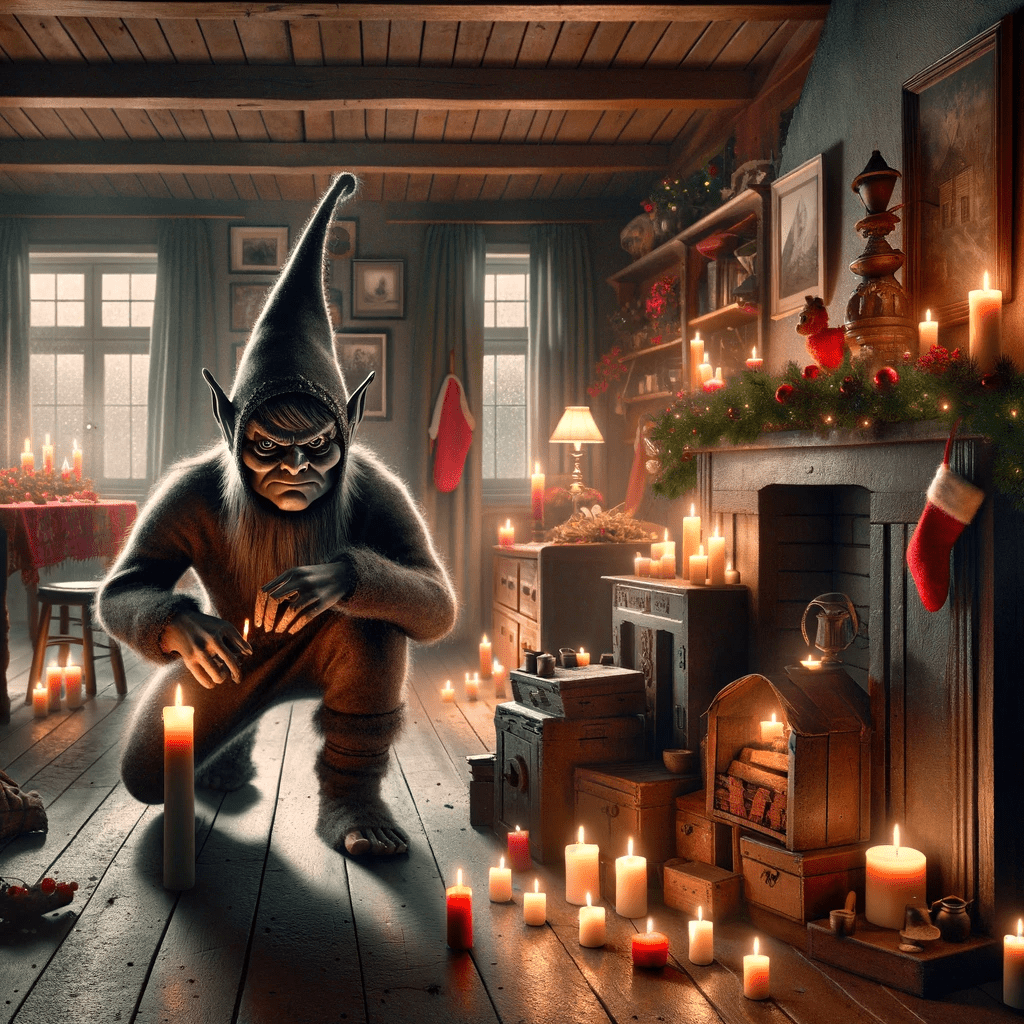
Today, DALL-E 3 has imagined the Yule Lads inside an Icelandic home, lighting a candle on an Advent wreath for Christmas.


Leave a comment

Arrival of the eighth Yule Lad

Skyrgámur

Also known as “Skyr-Gobbler” in English, Skyrgámur visit Icelandic households and communities on 19 December. He is one of 13 Yule Lads, a group of mischievous characters, each with their unique personalities and behaviours. Let’s explore the specific characteristics and folklore associated with Skyrgámur:

Skyrgámur is often depicted as a portly and gluttonous figure. His rotund appearance reflects his insatiable appetite, particularly for a traditional Icelandic yoghurt-like dairy product called “skyr“.

His primary naughty behaviour centres around his love for skyr. During his nighttime visits to Icelandic homes, he seeks out any skyr left unattended and consumes it voraciously. His goal is to devour as much skyr as he can find, leaving behind empty containers and perhaps some messy evidence of his late-night feasting.

Skyrgámur is known for his ability to swallow enormous quantities of skyr in a single gulp. This talent makes him particularly adept at clearing out any skyr that might be in the kitchen or refrigerator.


Leave a comment

Christmas traditions (Advent calendar, Day 18)

What is the origin story of Christmas pudding?

Christmas pudding, also known as plum pudding, is a traditional British dessert that has been associated with festive celebrations for centuries. Its origins can be traced back to medieval England, and it has evolved over time into the iconic Christmas dessert we know today. Here’s the origin story and some interesting anecdotes about Christmas pudding and how this tradition is used to celebrate the festive season around the world:

Frumenty
  • Medieval origins: Christmas pudding can trace its roots to medieval England, where it was initially a savoury dish known as “fFumenty.” This early version consisted of meat, wine-soaked bread, spices, and dried fruits.
  • Puritan ban: During the 17th century, the Puritans in England, who viewed Christmas as a pagan celebration, banned many Christmas traditions, including the preparation of Christmas pudding. However, the tradition survived in secret.
  • Reinvention as a sweet dish: By the 18th century, Christmas pudding had evolved into a sweet dish. The meat was gradually replaced with suet (animal fat), and the mixture was enriched with a variety of dried fruits, spices, and other ingredients.
Christmas pudding today

Interesting anecdotes about Christmas pudding

Stir-up Sunday (Coram Xmas card, approved by OCA for use)
  • Stir-up Sunday: The tradition of making Christmas pudding is closely associated with “Stir-up Sunday,” which falls on the last Sunday before Advent (usually five weeks before Christmas). On this day, families gather to make their Christmas puddings, taking turns to stir the mixture and make a wish.
  • Thirteen ingredients: Traditional Christmas pudding recipes often call for 13 ingredients, symbolising Jesus and his 12 apostles. Each family member stirs the pudding mixture from east to west, symbolizing the journey of the Magi. Here is a popular recipe for Classic Christmas pudding, published in the BBC’s Good Food online magazine.
  • Coin in the pudding: It was once a tradition to hide small objects, such as coins or charms, inside the Christmas pudding. Finding these items in their portion was considered lucky. However, due to safety concerns, this practice has become less common.
  • Steaming process: Christmas pudding is traditionally steamed for several hours, resulting in a dense and moist texture. It is often served flaming, with brandy or rum poured over it and set alight just before serving.
  • Alternative names: In some regions of the UK, Christmas pudding is known as “plum pudding,” even though it may not contain plums. The term “plum” was historically used to refer to dried fruits.
  • Global influence: British colonial influence spread Christmas pudding to various parts of the world, including Australia, New Zealand, and Canada, where it remains a part of Christmas traditions.
  • Modern variations: While traditional Christmas pudding is still enjoyed, there are now many variations to cater to dietary preferences and restrictions. Vegetarian and vegan versions, as well as lighter or gluten-free options, have become popular.
  • Christmas pudding races: In some places, particularly the UK, Christmas pudding races are organised as charity events. Participants dress in festive attire and race while balancing a Christmas pudding on a plate, adding an element of fun to the holiday season.
Christmas pudding race (Barnado’s, 1937)

In a nutshell

Christmas pudding remains a cherished part of Christmas celebrations in the UK and in various countries with British cultural influences. It symbolizes the rich history and enduring traditions associated with the holiday season and continues to be a beloved dessert enjoyed by many around the world.

Coda

Today, DALL-E 3 has created images of the Yule Lads making Christmas pudding in a British/Icelandic hybrid kitchen.


Leave a comment

Arrival of the seventh Yule Lad

Hurðaskellir

The next Yule Lad to arrive from the mountains is Hurðaskellir, also known as “Door-Slammer” in English. He makes his visit to Icelandic households and communities on 18 December. The Yule Lads are a group of 13 mischievous characters, each with their unique personalities and behaviour. Let’s explore the specific characteristics and folklore associated with Hurðaskellir.

Hurðaskellir is often depicted as a lanky and tall figure with a somewhat gaunt appearance. His appearance reflects his mischievous behaviour, as he uses his height and agility to engage in door-related pranks.

As his name suggests, Hurðaskellir‘s primary naughty behaviour centres around doors. He is known for his habit of slamming doors during the night to startle and wake up the household. He derives enjoyment from creating loud noises and chaos with his door-slamming antics. While this behaviour may initially appear unsettling, it is important to note that it is all in good fun and part of the Yuletide tradition.

Like many of his Yule Lad counterparts, Hurðaskellir tends to be cautious and avoids direct interaction with humans. He prefers to carry out his door-slamming pranks from the shadows, ensuring that he remains unseen.


Leave a comment

Christmas traditions (Advent calendar, Day 17)

What is the origin story of Christingle?

Christingle is a Christmas tradition that originated in Germany and has spread to various parts of the world, particularly in Europe and some English-speaking countries. The word “Christingle” is derived from the German word “Christkindl,” which means “Christ Child.” The tradition revolves around a symbolic representation of Christ and serves as a way to celebrate and teach the Christmas story. Here’s the origin story and some interesting anecdotes about Christingle and how this tradition is used to celebrate Christmas around the world.

Christmas service in a Moravian church
  • Origins in Germany: The Christingle tradition is believed to have originated in the Moravian Church, a Protestant denomination with roots in the Czech Republic and Germany, in the 18th century. It was originally introduced as a way to teach children about the nativity story.
  • The Christingle object: The centrepiece of a Christingle celebration is a “Christingle object”, which is typically made from an orange. The orange represents the world, and various other elements are added to symbolize aspects of the Christian faith. Here are the components of a Christingle object:
    • Orange: This symbolises the Earth.
    • Red ribbon: This encircles the orange, symbolising the love and blood of Christ.
    • Candle: Placed in the centre of the orange, it represents Jesus as the light of the world.
    • Four cocktail sticks or toothpicks: These are inserted into the orange, with sweets or dried fruits attached to them, symbolising the four seasons and God’s creations.
    • Fruits or sweets: Attached to the cocktail sticks, these represent God’s blessings and the bounty of the earth.
A Christingle object

Interesting anecdotes about Christingle

  • Moravian connection: The Moravian Church played a significant role in popularising the Christingle tradition. They used it as a teaching tool to convey the Christmas story to children.
  • Adoption in Anglican tradition: The Christingle custom was introduced to the Church of England in the mid-20th century. It quickly gained popularity as a way to engage children in the Christmas message. It is now a common feature of Anglican Christmas celebrations in the United Kingdom.
  • Charitable aspect: Many Christingle services and events have a charitable component. Donations collected during Christingle services often go to organizations and causes that support children and families in need.
  • Interactive element: Christingle services are often interactive, with participants, especially children, involved in making their own Christingle objects during the service. This hands-on experience adds to the educational aspect of the tradition.
  • Alternative celebrations: In some countries, Christingle has become an alternative way to celebrate Christmas, especially for those who may not have a strong Christian background. The symbolism of Christ as the light of the world resonates with people seeking a message of hope and goodwill.
  • Variations worldwide: While the basic concept of Christingle remains the same, there are variations in how it is celebrated and the additional symbolism attached to it in different countries.
  • Continued relevance: Despite its historical origins, Christingle continues to be a meaningful and accessible way for people of all ages to engage with the Christmas story and reflect on the Christian faith during the holiday season.
Children in an Anglican Christingle service

In a nutshell

Christingle serves as a creative and symbolic way to convey the message of Christmas and is a beloved tradition in many churches and communities around the world. It combines visual and tactile elements to help people of all ages understand and celebrate the significance of Christ’s birth.

Coda

In these scenes, DALL-E imagines the Yule Lads making Christingle objects inside a church in a Moravian/Icelandic hybrid location.


Leave a comment

Arrival of the sixth Yule Lad

Askasleikir

Askasleikir, also known as “Bowl-Licker” in English, is one of the Yule Lads, (“Jólasveinarnir” in Icelandic), who makes his visit to Icelandic households and communities on 17 December. The Yule Lads are a group of 13 mischievous characters, each with their unique personalities and behaviors. Let’s delve into the specific characteristics and folklore associated with Askasleikir:

Askasleikir is often depicted as a thin and wiry figure with a somewhat scrawny appearance. His physical traits are reflective of his singular obsession with bowls and his penchant for indulging in their contents.

His primary mischievous behaviour concerns his fascination with bowls of food. During his nighttime visits to Icelandic households, he seeks out bowls that have been left unattended and licks them clean. His goal is to savour any leftover food remnants, especially anything that might have been sticking to the sides or bottom of the bowl.

Like many of the other Yule Lads, Askasleikir is characterised as cautious, preferring to operate discreetly. He avoids direct interaction with humans and carries out his bowl-licking activities in secret.


Leave a comment

Christmas traditions (Advent calendar, Day 16)

What is the origin story of eggnog?

Posset pot with lid, England, 1701-1800. (Wellcome Trust)

Eggnog is a rich and creamy beverage associated with the Christmas season, particularly in the United States and Canada. Its origins can be traced back to medieval Europe, where “posset” was a popular drink made with hot milk, eggs, and ale or wine. Here’s the origin story and some interesting anecdotes about eggnog and how this tradition is used to celebrate Christmas around the world:

  • Medieval origins: The predecessor to eggnog, posset, was a warm, spiced drink made with milk curdled with ale or wine. It was often sweetened and flavoured with spices like nutmeg and cinnamon. Posset was commonly consumed in medieval England.
  • Eggnog in America: Eggnog as we know it today evolved in the American colonies in the 18th century. The name “eggnog” likely comes from “nog,” which was a term for a strong ale. Early American settlers adapted the posset recipe, substituting ale or wine with rum or brandy, which were more readily available.
George Washington with drink in hand (Chelsea Wine Co.)

Interesting anecdotes about eggnog

  • Colonial America: Eggnog became a popular holiday drink in colonial America, where it was often made with rum, brandy, or whiskey. It was considered a festive and warming drink, especially during the cold winter months.
  • George Washington’s recipe: It is said that George Washington, the first President of the United States, had his own special recipe for eggnog. His version included rye whiskey, rum and sherry, along with the traditional ingredients of eggs, milk, sugar and nutmeg.
  • Christmas tradition: In the United States and Canada, eggnog is closely associated with Christmas and is often served at holiday gatherings, parties and festivities. Commercially produced eggnog is widely available during the holiday season.
  • Recipe variations: While traditional eggnog recipes include alcohol, non-alcoholic versions are also popular, making the drink suitable for people of all ages. Some variations include bourbon, brandy or cognac.
  • Cultural variations: Eggnog-inspired drinks and beverages are enjoyed in various forms around the world. In Puerto Rico, “Coquito” is a holiday drink made with coconut cream, condensed milk, rum, and spices. In Mexico, “Rompope” is a similar drink made with rum, eggs, milk and vanilla.
  • Eggnog lattes and flavours: In recent years, eggnog flavours have expanded beyond the traditional beverage. Eggnog lattes, ice cream, and even eggnog-flavoured cookies and desserts have become popular during the holiday season.
  • National Eggnog Day: National Eggnog Day is observed on 24 December in the United States, just in time for Christmas Eve celebrations.
  • Eggnog traditions around the world: While eggnog itself is not a widespread tradition outside of North America, similar creamy, spiced drinks can be found in various cultures. These beverages often have regional names and ingredients but share a common theme of warmth and festivity during the holiday season.
Eggnog (Trinkreif.de)

In a nutshell

Eggnog remains a beloved and indulgent holiday treat, bringing warmth and cheer to Christmas celebrations in North America. Whether enjoyed with or without alcohol, it continues to be a festive tradition that evokes feelings of comfort and nostalgia during the holiday season.

Coda

The Yule Lads are depicted by DALL-E 3 as drinking eggnog at a Christmas party or social gathering in Colonnial-era America.


2 Comments

Arrival of the fifth Yule Lad

Pottaskefill

Also known as “Pot-Scraper” in English, Pottaskefill is one of the Icelandic Yule Lads, who makes his appearance on 16 December as part of the Yuletide tradition. These Yule Lads are a group of thirteen mischievous characters, each with their own distinct personalities and behaviour. Let’s explore the specific characteristics and folklore associated with Pottaskefill.

Pottaskefill is often depicted as a peculiar and scruffy-looking figure. He is known for his scraggly appearance, which includes unkempt hair and clothing. His attire is typically ragged, reflecting his dishevelled nature.

His mischievous behaviour revolves around Pottaskefill‘s obsession with food, particularly the remnants of food left in pots and pans. He sneaks into households during the night to scrape the leftover bits of food from cooking utensils, especially pots. His goal is to enjoy any tasty morsels that may be clinging to the cooking implements. Households may find their kitchenware cleaned to an unusual degree or with telltale signs of Pottaskefill‘s late-night visits.

Similar to many of his Yule Lad counterparts, Pottaskefill tends to be cautious and avoids direct contact with humans. He operates quietly and discreetly, sneaking into kitchens under the cover of darkness to carry out his pot-scraping activities.


Leave a comment

Christmas traditions (Advent calendar, Day 15)

What is the origin story of Christmas wafers?

Christmas wafers, also known as “Oplatki” in Polish, “Oblatky” in Slovak, and “Oblaten” in German, have their origins in Eastern and Central European countries, particularly Poland, Slovakia, and Germany. These thin, unleavened wafers have been used for centuries as part of Christmas traditions. Here’s the origin story and some interesting anecdotes about Christmas wafers and how this tradition is used to celebrate Christmas around the world:

Christmas wafers (Catholic Supply)
  • Religious origins: The tradition of using wafers during religious ceremonies dates back to medieval times in Europe. The wafers were initially used as a form of sacramental bread in the Christian Eucharist (Holy Communion).
  • Adaptation for Christmas: Over time, the use of wafers extended beyond the Eucharist and became incorporated into Christmas celebrations. The tradition evolved to include the sharing of wafers among family members and friends as a symbol of unity, forgiveness, and good wishes.

Interesting anecdotes about Christmas wafers

Sharing wafers at Christmas Eve dinner (The Catholic Company)
  • Oplatki in Poland: In Poland, the Christmas wafer is called “Oplatek.” It is usually a white, rectangular wafer embossed with religious symbols, such as Nativity scenes or depictions of the Holy Family. During the Christmas Eve supper (Wigilia), family members break off a piece of the wafer and share it with each other while offering good wishes and blessings for the coming year.
  • Slovakia and Germany: Similar traditions involving Christmas wafers exist in Slovakia and Germany, where they are called “Oblatky” and “Oblaten,” respectively. In these countries, families and friends also exchange wafers during the Christmas season.
  • Communion connection: The use of wafers in Christmas traditions maintains a connection to their original religious purpose as sacramental bread. This connection reinforces the idea of sharing the Eucharist and the spiritual aspect of Christmas.
  • Personalised wafers: Some families choose to have personalised Christmas wafers made with custom designs, messages, or family names. These personalised wafers add a personal touch to the tradition.
  • Interfaith and intercultural exchange: In modern times, Christmas wafers have become a symbol of interfaith and intercultural exchange. Families from different backgrounds may exchange wafers as a sign of respect and unity during the holiday season.
  • Blessings and good wishes: Sharing Christmas wafers is accompanied by the exchange of blessings and good wishes for health, happiness, and prosperity in the coming year. It is a heartfelt moment of connection and reflection.
  • Continued tradition: Christmas wafers have stood the test of time and continue to be an integral part of Christmas celebrations in the regions where they are practiced. The tradition serves as a reminder of the importance of forgiveness, unity, and goodwill during the holiday season.
Sharing Christmas wafers with loved ones

In a nutshell

Christmas wafers represent a beautiful and meaningful tradition that bridges the religious and cultural aspects of the holiday season. They symbolise the importance of sharing, unity, and extending good wishes to loved ones and neighbours, making them a cherished part of Christmas celebrations in Eastern and Central Europe.

Coda

Today, I prompted DALL-E 3 to create a scene in which the Yule Lads are in Poland for Christmas, sharing Christmas wafers with each other while sitting around a table enjoying a special Christmas Eve meal of traditional Polish dishes. Here are the images that were created.


Leave a comment

Arrival of the fourth Yule Lad

Þvörusleikir

The next Icelandic Yule Lad in sequence of arrival is Þvörusleikir (“Spoon-Licker” in English): he makes his appearance on 15 December. The Yule Lads are a group of 13 mischievous characters, each with their own distinct personalities and behaviours. Let’s delve into the specific characteristics and folklore associated with Þvörusleikir.

Þvörusleikir is often depicted as a lanky and tall figure with an elongated nose and ears, giving him a somewhat comical appearance. His appearance reflects his penchant for spoons and his inclination to use them to get up to mischief.

As his name suggests, Þvörusleikir‘s primary naughty behaviour revolves around spoons. He is notorious for sneaking into households and licking the spoons or utensils used for stirring pots and pans. His intent is not to contaminate the kitchenware but rather to enjoy any remaining scraps of food that may be clinging to them.

Like many of his Yule Lad brethren, Þvörusleikir tends to be shy and cautious around humans. He prefers to operate quietly and unseen while carrying out his spoon-licking activities. This timid nature adds to the intrigue and whimsy surrounding his character.