What is the origin story of Christmas wafers?
Christmas wafers, also known as “Oplatki” in Polish, “Oblatky” in Slovak, and “Oblaten” in German, have their origins in Eastern and Central European countries, particularly Poland, Slovakia, and Germany. These thin, unleavened wafers have been used for centuries as part of Christmas traditions. Here’s the origin story and some interesting anecdotes about Christmas wafers and how this tradition is used to celebrate Christmas around the world:

- Religious origins: The tradition of using wafers during religious ceremonies dates back to medieval times in Europe. The wafers were initially used as a form of sacramental bread in the Christian Eucharist (Holy Communion).
- Adaptation for Christmas: Over time, the use of wafers extended beyond the Eucharist and became incorporated into Christmas celebrations. The tradition evolved to include the sharing of wafers among family members and friends as a symbol of unity, forgiveness, and good wishes.
Interesting anecdotes about Christmas wafers

- Oplatki in Poland: In Poland, the Christmas wafer is called “Oplatek.” It is usually a white, rectangular wafer embossed with religious symbols, such as Nativity scenes or depictions of the Holy Family. During the Christmas Eve supper (Wigilia), family members break off a piece of the wafer and share it with each other while offering good wishes and blessings for the coming year.
- Slovakia and Germany: Similar traditions involving Christmas wafers exist in Slovakia and Germany, where they are called “Oblatky” and “Oblaten,” respectively. In these countries, families and friends also exchange wafers during the Christmas season.
- Communion connection: The use of wafers in Christmas traditions maintains a connection to their original religious purpose as sacramental bread. This connection reinforces the idea of sharing the Eucharist and the spiritual aspect of Christmas.
- Personalised wafers: Some families choose to have personalised Christmas wafers made with custom designs, messages, or family names. These personalised wafers add a personal touch to the tradition.
- Interfaith and intercultural exchange: In modern times, Christmas wafers have become a symbol of interfaith and intercultural exchange. Families from different backgrounds may exchange wafers as a sign of respect and unity during the holiday season.
- Blessings and good wishes: Sharing Christmas wafers is accompanied by the exchange of blessings and good wishes for health, happiness, and prosperity in the coming year. It is a heartfelt moment of connection and reflection.
- Continued tradition: Christmas wafers have stood the test of time and continue to be an integral part of Christmas celebrations in the regions where they are practiced. The tradition serves as a reminder of the importance of forgiveness, unity, and goodwill during the holiday season.

In a nutshell
Christmas wafers represent a beautiful and meaningful tradition that bridges the religious and cultural aspects of the holiday season. They symbolise the importance of sharing, unity, and extending good wishes to loved ones and neighbours, making them a cherished part of Christmas celebrations in Eastern and Central Europe.
Coda
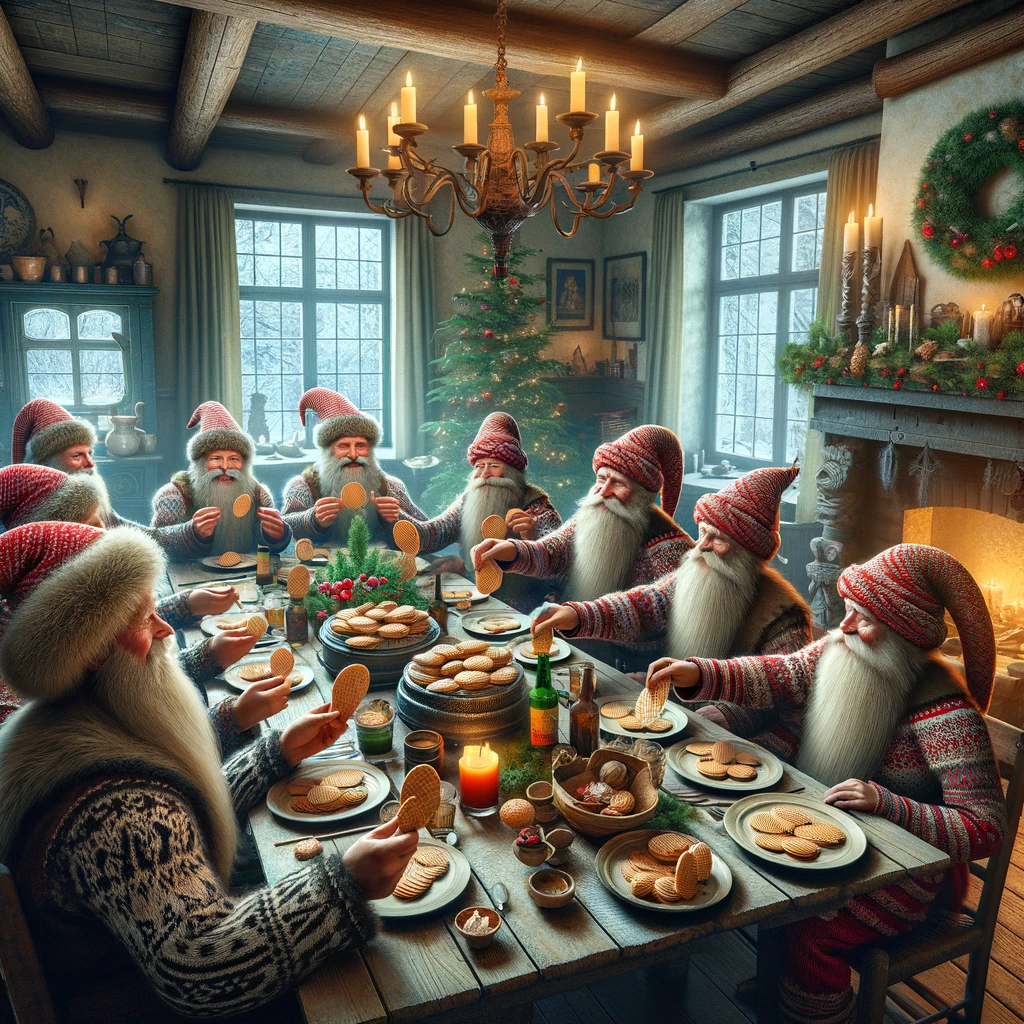
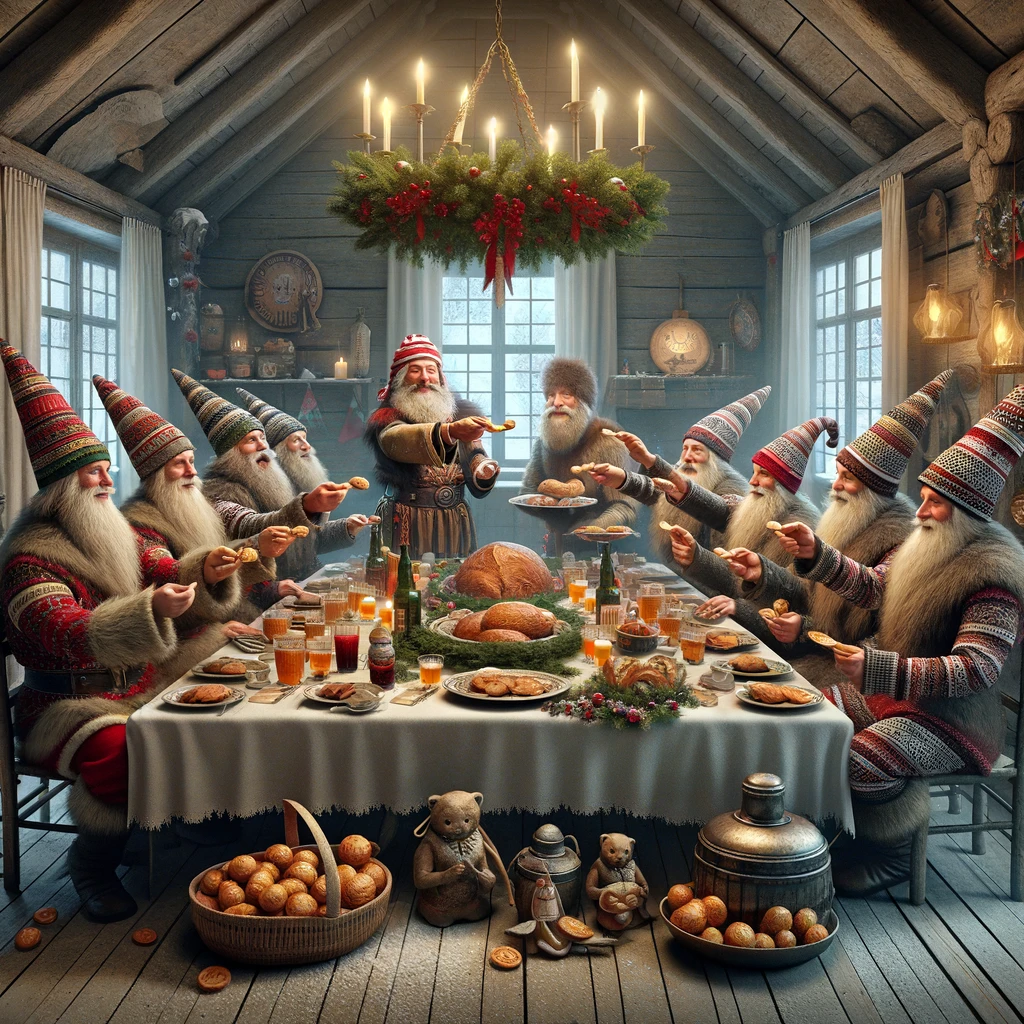
Today, I prompted DALL-E 3 to create a scene in which the Yule Lads are in Poland for Christmas, sharing Christmas wafers with each other while sitting around a table enjoying a special Christmas Eve meal of traditional Polish dishes. Here are the images that were created.
 Jolabokaflod