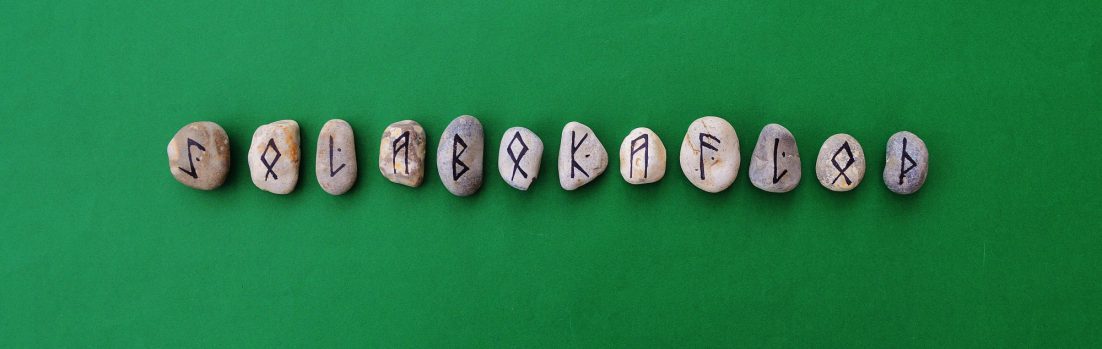

Jolabokaflod

Christmas Book Flood • Reading for Pleasure


Leave a comment

Christmas traditions (Advent calendar, Day 23)

What is the origin story of Simbang Gabi?

Simbang Gabi, which means “Night Mass” in Filipino, is a cherished Christmas tradition in the Philippines. This novena (sequence of nine) dawn Masses leading up to Christmas Eve is a unique and significant part of Filipino festive celebrations. Here’s the origin story and some interesting anecdotes about Simbang Gabi and how this tradition is used to celebrate Christmas:

“Misa de Gallo” in Manila, Philippines (Reuters)
  • Spanish influence: Simbang Gabi can trace its origins to the Spanish colonial period in the Philippines, which lasted for over 300 years. The tradition was introduced by Spanish friars who wanted to accommodate the agrarian schedules of Filipino farmers. The early morning Masses allowed farmers to attend before going to work in the fields.
  • Aguinaldo Mass: Simbang Gabi was initially called “Aguinaldo Masses” or “Misa de Gallo” (Rooster’s Mass) because it was traditionally held at dawn, symbolising the coming of the new day and the rooster’s crow. The custom of attending these pre-dawn Masses spread rapidly throughout the Philippines.

Interesting anecdotes about Simbang Gabi

Parish leaders with parols in church (Crosscut)
  • Nine mornings: Simbang Gabi consists of a series of nine Masses celebrated on consecutive days, usually starting on 16 December and culminating on Christmas Eve, 24 December. This nine-day novena is a significant spiritual preparation for Christmas.
  • Diverse traditions: Simbang Gabi is celebrated with regional and local variations throughout the Philippines. Each region may have its unique customs and practices associated with the Masses.
  • Filipino cuisine: One of the highlights of Simbang Gabi is the availability of Filipino delicacies and treats sold outside churches and along the streets, especially after the Masses. Vendors offer a wide variety of food, including bibingka (rice cake), puto bumbong (purple rice cake), tsokolate (chocolate), and various rice and noodle dishes.
  • Community and fellowship: Simbang Gabi brings communities together. Families, friends and neighbours attend the Masses as a group, fostering a sense of togetherness and solidarity. It is also a time for social gatherings and reunions.
  • Dress code: It is customary for attendees to wear their best clothes to Simbang Gabi Masses. Many people choose to wear traditional Filipino attire, such as the barong tagalog for men and the Filipiniana dress for women.
  • Christmas music: Traditional Filipino Christmas carols, known as “Simbang Gabi” songs, are sung during the Masses. These songs add a festive and joyous atmosphere to the novena.
  • Midnight Mass: Simbang Gabi culminates with the Midnight Mass on Christmas Eve, known as “Misa de Gallo.” This is when Christmas officially begins in the Philippines, and it is one of the most well-attended Masses of the year.
  • Candlelit processions: In some regions, candlelit processions and parades are held after the Masses, creating a luminous and visually stunning spectacle.
  • Faith and devotion: Simbang Gabi is not only a cultural tradition but also a deeply religious and spiritual experience for Filipinos. It is a time for prayer, reflection, and strengthening one’s faith.
Traditional food at Simbang Gabi

In a nutshell

Simbang Gabi is a beautiful and spiritually enriching tradition that captures the essence of Filipino Christmas. It is a time of devotion, community, and celebration that prepares the faithful to welcome the birth of Jesus Christ on Christmas Day.

Coda

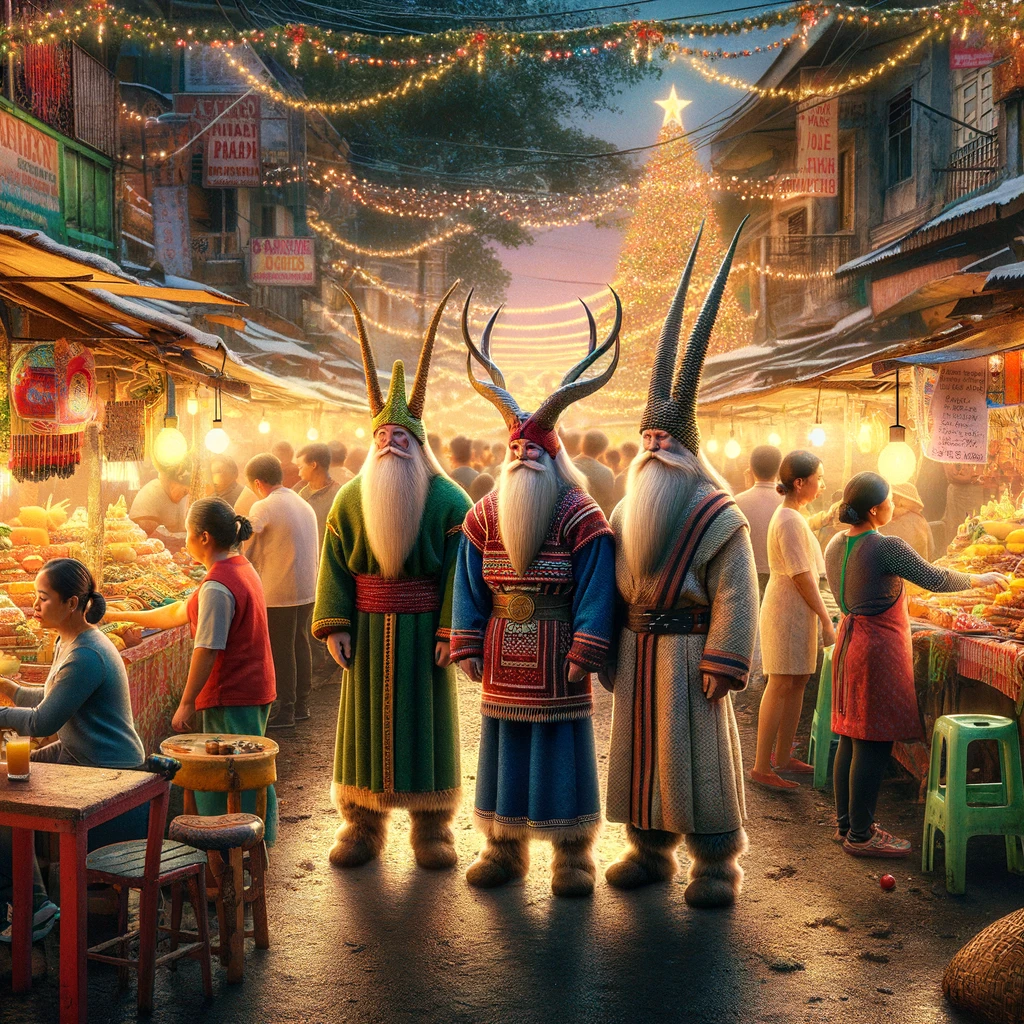
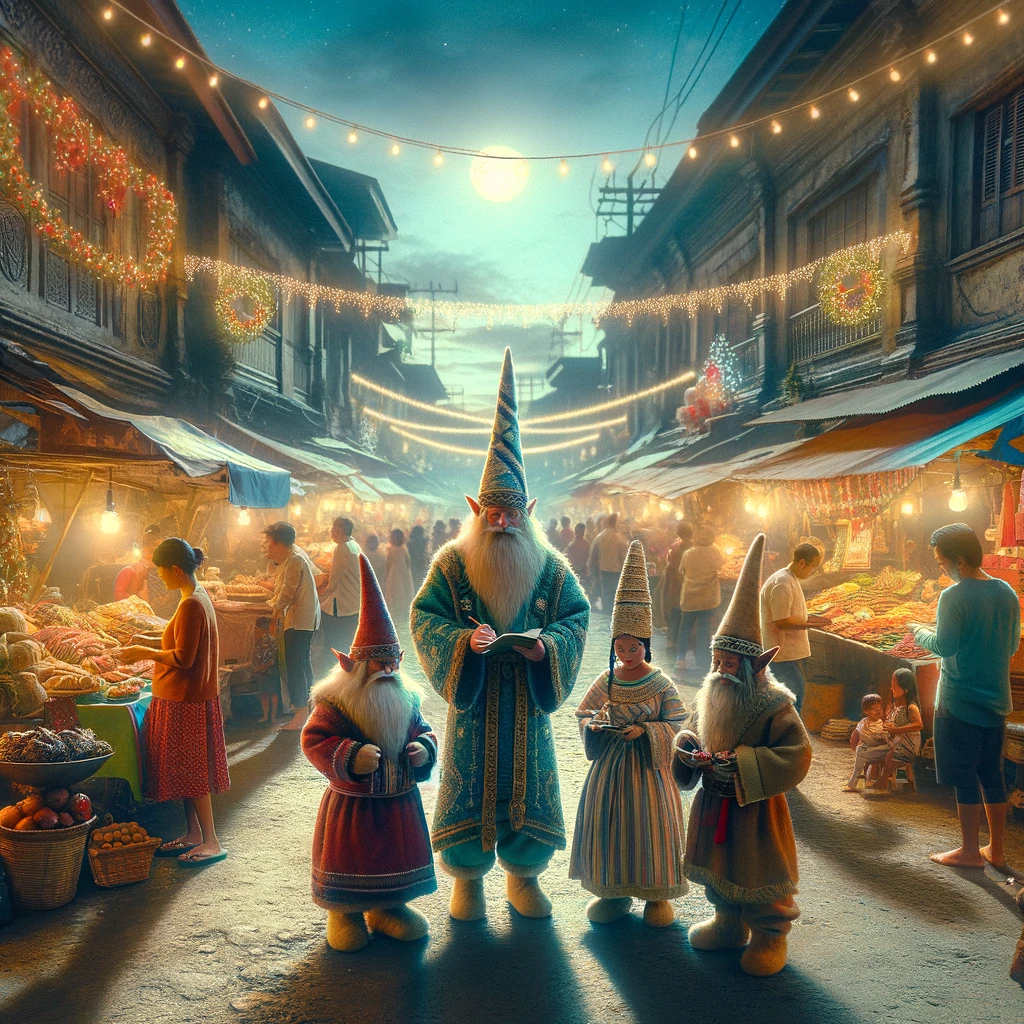
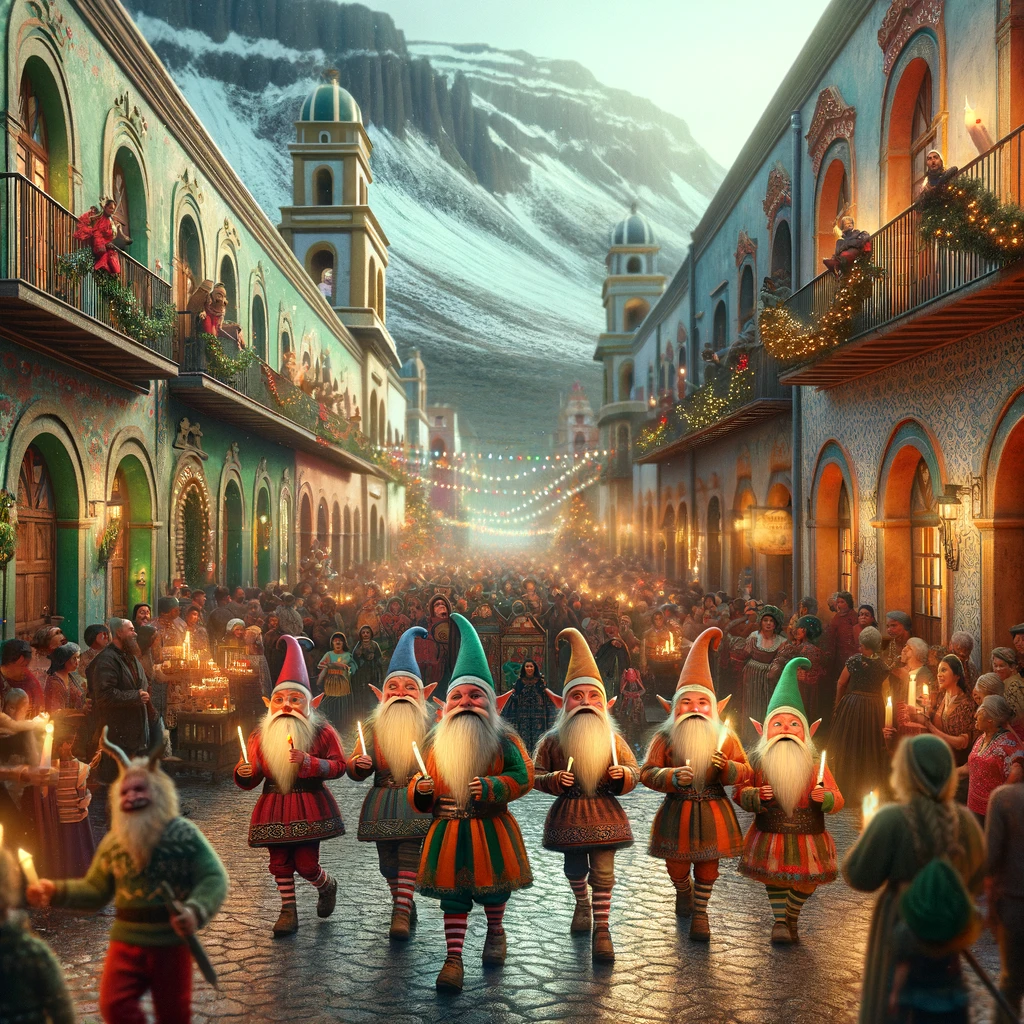
In order to capture the exuberance of Simbang Gabi in the Philippines, DALL-E 3 imagines the Yule Lads wearing traditional clothes walking in a Manila street full of street vendors selling traditional food.


Leave a comment

Arrival of the eighth Yule Lad

Skyrgámur

Also known as “Skyr-Gobbler” in English, Skyrgámur visit Icelandic households and communities on 19 December. He is one of 13 Yule Lads, a group of mischievous characters, each with their unique personalities and behaviours. Let’s explore the specific characteristics and folklore associated with Skyrgámur:

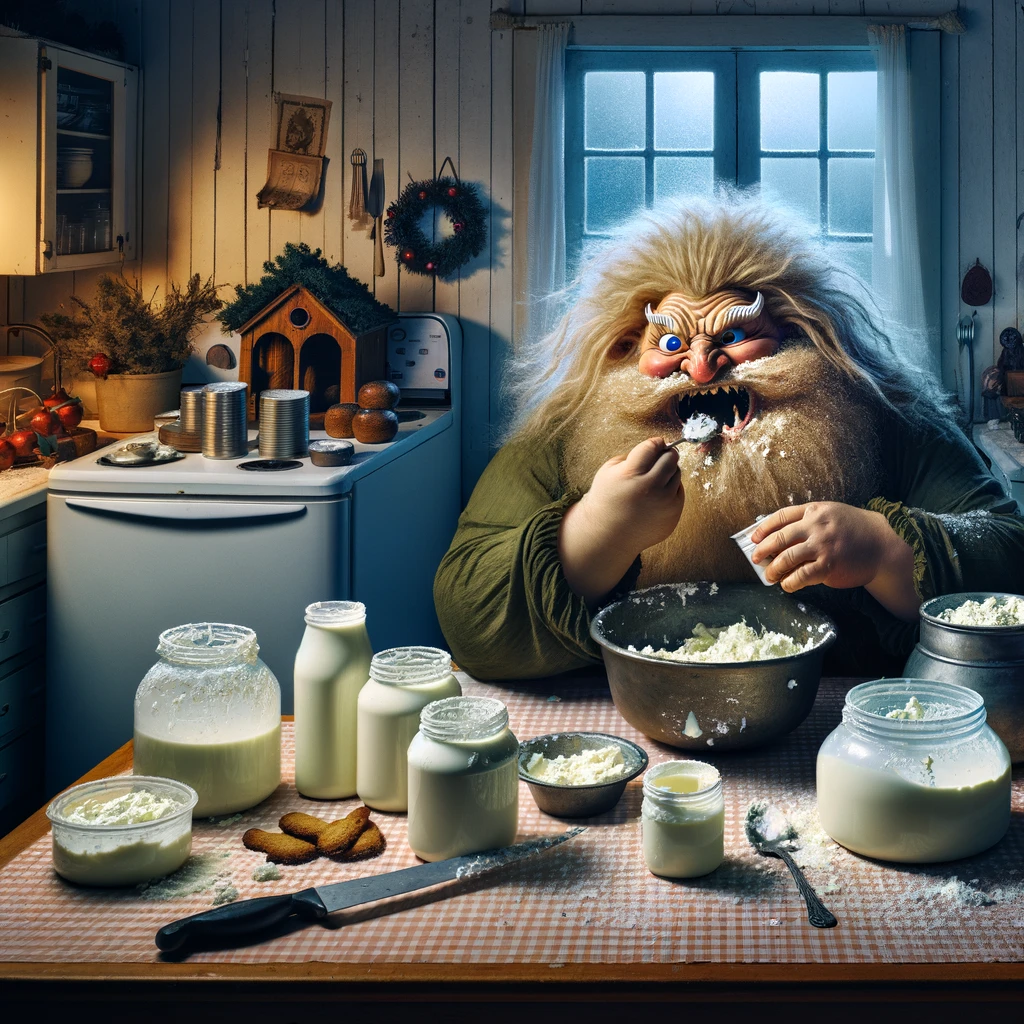
Skyrgámur is often depicted as a portly and gluttonous figure. His rotund appearance reflects his insatiable appetite, particularly for a traditional Icelandic yoghurt-like dairy product called “skyr“.

His primary naughty behaviour centres around his love for skyr. During his nighttime visits to Icelandic homes, he seeks out any skyr left unattended and consumes it voraciously. His goal is to devour as much skyr as he can find, leaving behind empty containers and perhaps some messy evidence of his late-night feasting.

Skyrgámur is known for his ability to swallow enormous quantities of skyr in a single gulp. This talent makes him particularly adept at clearing out any skyr that might be in the kitchen or refrigerator.


Leave a comment

Arrival of the sixth Yule Lad

Askasleikir

Askasleikir, also known as “Bowl-Licker” in English, is one of the Yule Lads, (“Jólasveinarnir” in Icelandic), who makes his visit to Icelandic households and communities on 17 December. The Yule Lads are a group of 13 mischievous characters, each with their unique personalities and behaviors. Let’s delve into the specific characteristics and folklore associated with Askasleikir:

Askasleikir is often depicted as a thin and wiry figure with a somewhat scrawny appearance. His physical traits are reflective of his singular obsession with bowls and his penchant for indulging in their contents.

His primary mischievous behaviour concerns his fascination with bowls of food. During his nighttime visits to Icelandic households, he seeks out bowls that have been left unattended and licks them clean. His goal is to savour any leftover food remnants, especially anything that might have been sticking to the sides or bottom of the bowl.

Like many of the other Yule Lads, Askasleikir is characterised as cautious, preferring to operate discreetly. He avoids direct interaction with humans and carries out his bowl-licking activities in secret.


2 Comments

Arrival of the fifth Yule Lad

Pottaskefill

Also known as “Pot-Scraper” in English, Pottaskefill is one of the Icelandic Yule Lads, who makes his appearance on 16 December as part of the Yuletide tradition. These Yule Lads are a group of thirteen mischievous characters, each with their own distinct personalities and behaviour. Let’s explore the specific characteristics and folklore associated with Pottaskefill.

Pottaskefill is often depicted as a peculiar and scruffy-looking figure. He is known for his scraggly appearance, which includes unkempt hair and clothing. His attire is typically ragged, reflecting his dishevelled nature.

His mischievous behaviour revolves around Pottaskefill‘s obsession with food, particularly the remnants of food left in pots and pans. He sneaks into households during the night to scrape the leftover bits of food from cooking utensils, especially pots. His goal is to enjoy any tasty morsels that may be clinging to the cooking implements. Households may find their kitchenware cleaned to an unusual degree or with telltale signs of Pottaskefill‘s late-night visits.

Similar to many of his Yule Lad counterparts, Pottaskefill tends to be cautious and avoids direct contact with humans. He operates quietly and discreetly, sneaking into kitchens under the cover of darkness to carry out his pot-scraping activities.


Leave a comment

Christmas traditions (Advent calendar, Day 13)

What is the origin story of Las Posadas?

Las Posadas is a traditional Christmas celebration primarily observed in Mexico and some other Latin American countries. The term “posada” means “inn” or “lodging” in Spanish, and the celebration reenacts Mary and Joseph’s search for a place to stay in Bethlehem before the birth of Jesus. Here’s the origin story and some interesting anecdotes about Las Posadas and how it is used to celebrate Christmas:

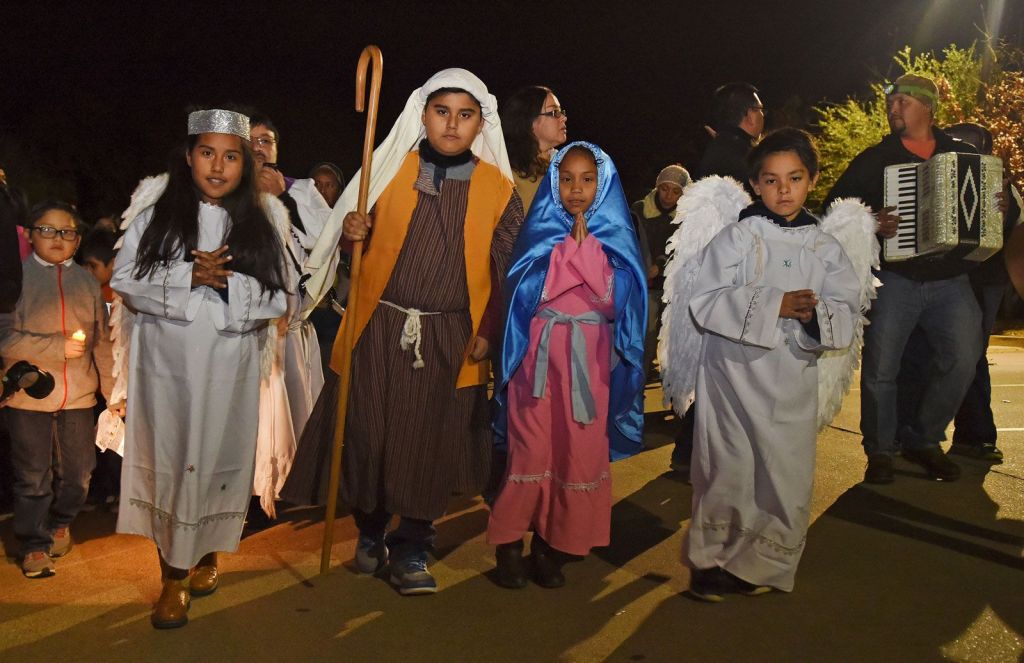
Children in a procession (Britannica)
  • Spanish influence: Las Posadas has its origins in the Spanish colonisation of Latin America. When Spanish missionaries arrived in the Americas in the 16th century, they sought to convert indigenous populations to Christianity. To make the religious teachings more accessible, they incorporated indigenous traditions into Christian rituals and celebrations.
  • Simulating Mary and Joseph’s journey: Las Posadas re-enacts the biblical journey of Mary and Joseph as they sought shelter in Bethlehem. Participants, often in costumes, form a procession that goes from house to house, representing the couple’s search for lodging. At each stop, they sing carols and request shelter, but they are usually turned away until they reach the final “inn.”

Interesting anecdotes about Las Posadas

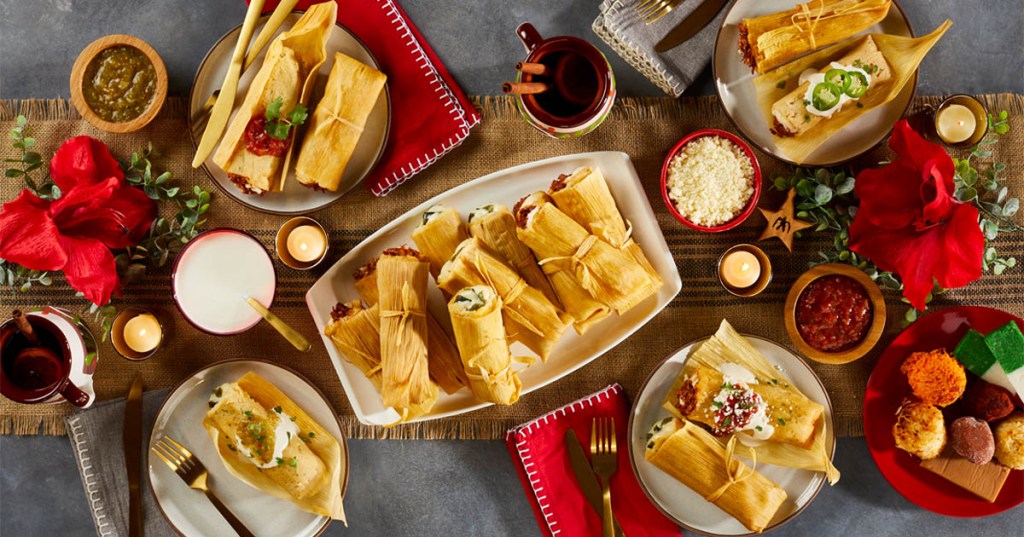
Traditional food and drink (Cacique Foods)
  • Duration of the celebration: Las Posadas typically begins on 16 December and continues for nine consecutive nights, culminating on 24 December, Christmas Eve. Each night’s procession is known as a “posada.”
  • Traditional songs: Special songs, known as “villancicos,” are sung during Las Posadas. These songs often include lyrics that reflect Mary and Joseph’s journey and their plea for lodging.
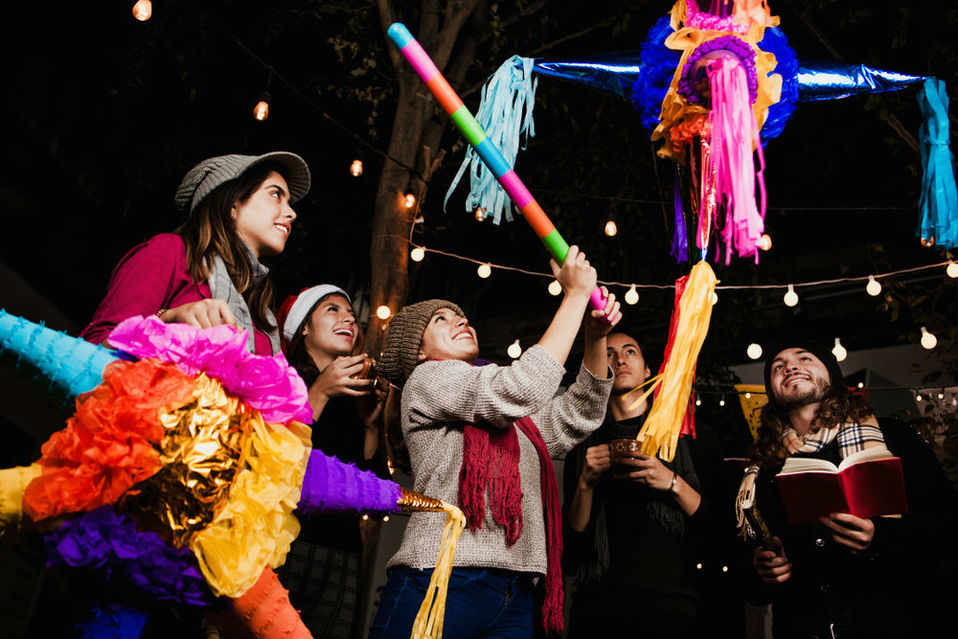
  • Piñatas: Piñatas are a common feature of Las Posadas celebrations. The traditional piñata represents the devil, and breaking it symbolizes overcoming evil. Piñatas are filled with candies and small toys that spill out when the piñata is broken.
  • Party and refreshments: After the final “inn” has accepted Mary and Joseph, a party often takes place, featuring traditional foods and drinks such as tamales, ponche (fruit punch), and atole (a warm, thick beverage made from masa or corn flour).
  • Religious significance: Las Posadas is not only a cultural celebration but also a religious one. It serves as a way for communities to come together to reflect on the nativity story and to prepare for the birth of Jesus on Christmas.
  • Community bonding: Las Posadas fosters a strong sense of community and togetherness. Neighbors and friends often participate in the processions and open their homes to fellow community members, reinforcing bonds and solidarity.
  • Variations in Latin America: While Las Posadas is most closely associated with Mexico, variations of the celebration exist in other Latin American countries, each with its unique customs and traditions.
  • Modern adaptations: In some urban areas, Las Posadas processions have taken on a more modern form, with participants riding in cars or buses rather than walking from house to house. However, the core elements of the celebration, including singing, prayer and fellowship remain intact.
Hitting a traditional piñata (Milenio)

In a nutshell

Las Posadas is a meaningful and festive Christmas tradition that combines cultural heritage with religious devotion. It serves as a way for communities to come together, reflect on the nativity story, and prepare for the joyous celebration of the birth of Jesus.

Coda

Today’s prompt allowed DALL-3 to really flex its muscles. I asked the image AI generator to show the Yule Lads in Mexico for Christmas, taking part in a Las Posadas street procession where a few of the Lads are hitting a traditional piñata. I requested a backdrop of a Mexican/Icelandic hybrid landscape in a village. Here are the results.


Leave a comment

Christmas traditions (Advent calendar, Day 7)

What is the origin story of Christmas markets?

The tradition of Christmas markets, also known as Christkindlmarkts or Weihnachtsmärkte, originated in Europe during the late Middle Ages. Here’s the origin story and some interesting anecdotes about Christmas markets and how they are used to celebrate Christmas around the world:

Medieval Christmas market, Durlach
  • Medieval fairs: The concept of Christmas markets can be traced back to medieval fairs and markets that took place in towns and cities across Europe. These fairs were not specifically Christmas-themed but provided an opportunity for people to buy and sell goods, especially as the holiday season approached.
  • First documented market: The first documented Christmas market was in Vienna, Austria, in 1294. These early markets were often associated with Advent, a period of fasting and preparation leading up to Christmas, and served as a place for people to stock up on supplies for the winter.
  • Cologne, Germany: One of the most famous Christmas markets is the one in Cologne, Germany. It dates back to the early 14th century and has a rich history. During the Middle Ages, the market was held to help fund the construction of the Cologne Cathedral.
  • Craftsmen and artisans: Christmas markets were originally places for craftsmen and artisans to sell their wares, which often included handmade ornaments, toys, candles, and seasonal foods.

Interesting anecdotes about Christmas markets

Ice-skating rink, Christmas market, Cologne
  • Mulled wine and seasonal treats: Christmas markets are known for their delicious seasonal treats and beverages. One popular drink is mulled wine (glühwein in German), a warm, spiced wine often served in decorative mugs. You can also find gingerbread cookies, roasted chestnuts, sausages, and other festive snacks.
  • Ornaments and decorations: Christmas markets are a treasure trove of unique ornaments and decorations. Visitors can find handcrafted ornaments, tree toppers, and nativity scenes, often made by local artisans.
  • Ice skating: Many Christmas markets feature ice skating rinks, providing a fun and festive activity for families and visitors. Skating amid twinkling lights and holiday decorations adds to the magical atmosphere.
  • Gift shopping: Christmas markets are ideal places to shop for holiday gifts. Visitors can discover a wide range of items, including handmade jewelry, textiles, pottery, and wooden crafts.
  • Live entertainment: Some Christmas markets feature live performances, including choirs, musicians, and theatrical presentations. These performances add to the festive ambiance and entertain visitors of all ages.
  • Market themes: Some Christmas markets have specific themes or traditions unique to their region. For example, the Nuremberg Christmas Market in Germany is famous for its gingerbread cookies (Lebkuchen) and has a “Christkind” (Christmas angel) who opens the market.
  • Worldwide popularity: While Christmas markets originated in Europe, they have gained popularity worldwide. You can find Christmas markets in cities and towns across North America, Asia, and other continents.
  • Holiday lights: Christmas markets are renowned for their beautiful holiday lighting displays. Markets often feature thousands of twinkling lights, making the evening atmosphere particularly enchanting.
  • Community and tradition: Christmas markets play an important role in fostering a sense of community and preserving cultural traditions. Many markets are organized and run by local communities and volunteers.
  • Environmental awareness: In recent years, there has been a growing awareness of sustainability and reducing waste at Christmas markets. Some markets have introduced eco-friendly practices, such as using reusable mugs and encouraging recycling.
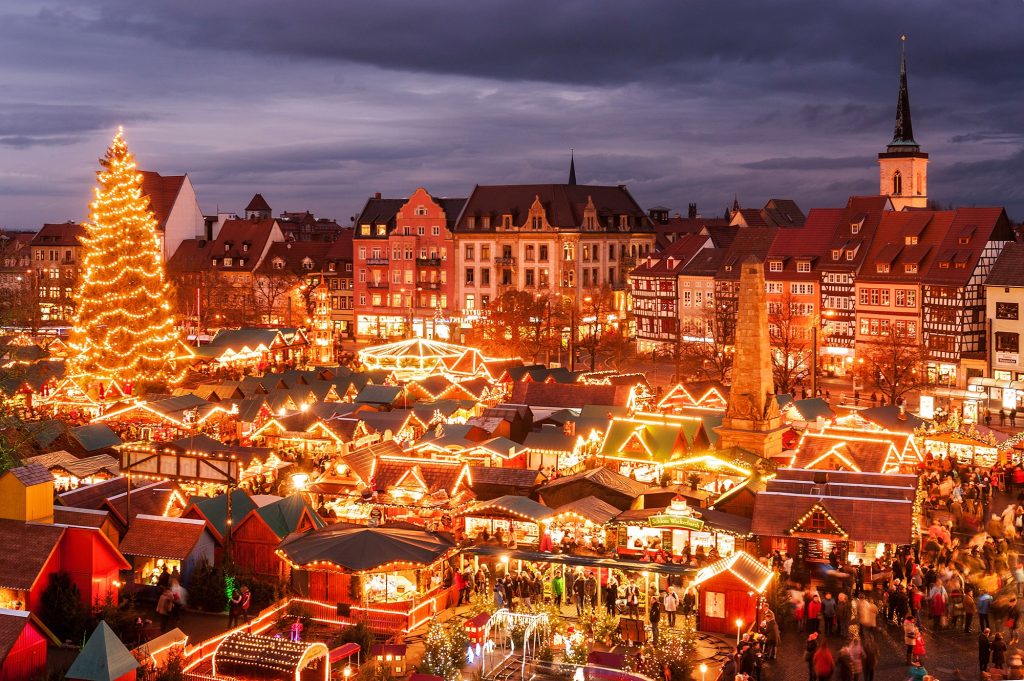
Festive lights, Christmas market, Erfurt

In a nutshell

Christmas markets continue to be a beloved tradition that brings communities together and ushers in the festive spirit of the holiday season. Whether you’re shopping for gifts, savoring seasonal treats, or simply soaking up the enchanting atmosphere, Christmas markets offer a delightful way to celebrate Christmas around the world.

Coda

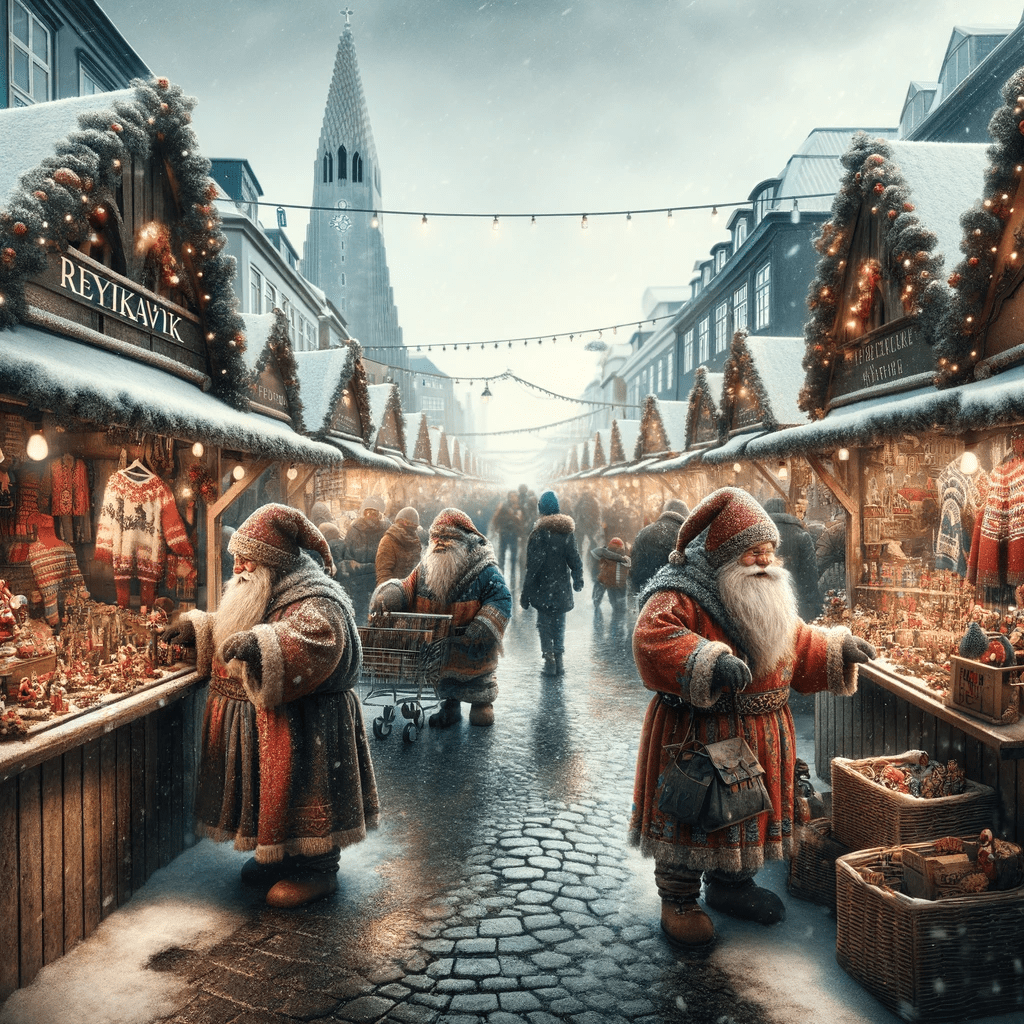
Here is DALL-E 3’s interpretation of the Yule Lads browsing the stalls at a Christmas market in Reykjavík, the capital of Iceland. The market is located in Skólavörðustígur street with Hallgrímskirkja Lutherian parish church in the far distance, with its distinctive geyser-shaped spire.