Jolabokaflod

Christmas Book Flood • Reading for Pleasure


Leave a comment

Christmas traditions (Advent calendar, Day 15)

What is the origin story of Christmas wafers?

Christmas wafers, also known as “Oplatki” in Polish, “Oblatky” in Slovak, and “Oblaten” in German, have their origins in Eastern and Central European countries, particularly Poland, Slovakia, and Germany. These thin, unleavened wafers have been used for centuries as part of Christmas traditions. Here’s the origin story and some interesting anecdotes about Christmas wafers and how this tradition is used to celebrate Christmas around the world:

Christmas wafers (Catholic Supply)
  • Religious origins: The tradition of using wafers during religious ceremonies dates back to medieval times in Europe. The wafers were initially used as a form of sacramental bread in the Christian Eucharist (Holy Communion).
  • Adaptation for Christmas: Over time, the use of wafers extended beyond the Eucharist and became incorporated into Christmas celebrations. The tradition evolved to include the sharing of wafers among family members and friends as a symbol of unity, forgiveness, and good wishes.

Interesting anecdotes about Christmas wafers

Sharing wafers at Christmas Eve dinner (The Catholic Company)
  • Oplatki in Poland: In Poland, the Christmas wafer is called “Oplatek.” It is usually a white, rectangular wafer embossed with religious symbols, such as Nativity scenes or depictions of the Holy Family. During the Christmas Eve supper (Wigilia), family members break off a piece of the wafer and share it with each other while offering good wishes and blessings for the coming year.
  • Slovakia and Germany: Similar traditions involving Christmas wafers exist in Slovakia and Germany, where they are called “Oblatky” and “Oblaten,” respectively. In these countries, families and friends also exchange wafers during the Christmas season.
  • Communion connection: The use of wafers in Christmas traditions maintains a connection to their original religious purpose as sacramental bread. This connection reinforces the idea of sharing the Eucharist and the spiritual aspect of Christmas.
  • Personalised wafers: Some families choose to have personalised Christmas wafers made with custom designs, messages, or family names. These personalised wafers add a personal touch to the tradition.
  • Interfaith and intercultural exchange: In modern times, Christmas wafers have become a symbol of interfaith and intercultural exchange. Families from different backgrounds may exchange wafers as a sign of respect and unity during the holiday season.
  • Blessings and good wishes: Sharing Christmas wafers is accompanied by the exchange of blessings and good wishes for health, happiness, and prosperity in the coming year. It is a heartfelt moment of connection and reflection.
  • Continued tradition: Christmas wafers have stood the test of time and continue to be an integral part of Christmas celebrations in the regions where they are practiced. The tradition serves as a reminder of the importance of forgiveness, unity, and goodwill during the holiday season.
Sharing Christmas wafers with loved ones

In a nutshell

Christmas wafers represent a beautiful and meaningful tradition that bridges the religious and cultural aspects of the holiday season. They symbolise the importance of sharing, unity, and extending good wishes to loved ones and neighbours, making them a cherished part of Christmas celebrations in Eastern and Central Europe.

Coda

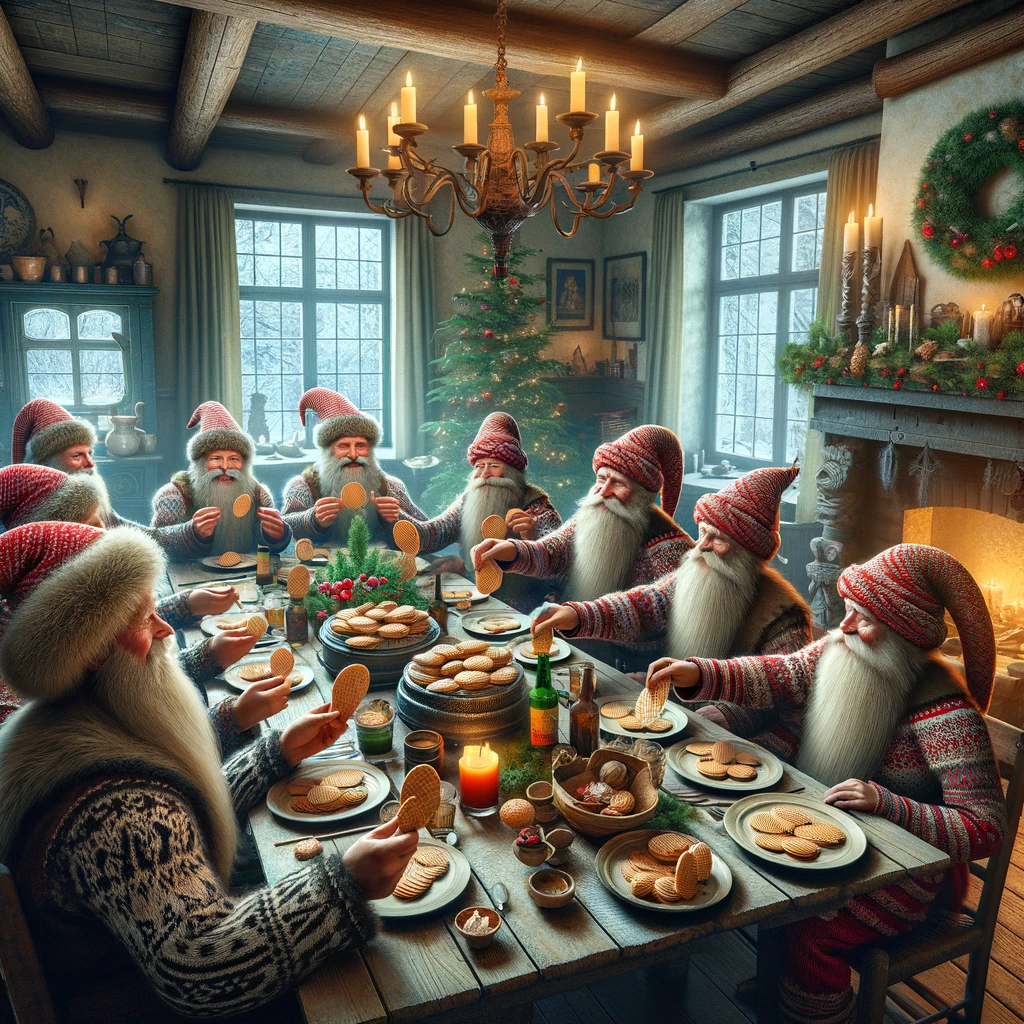
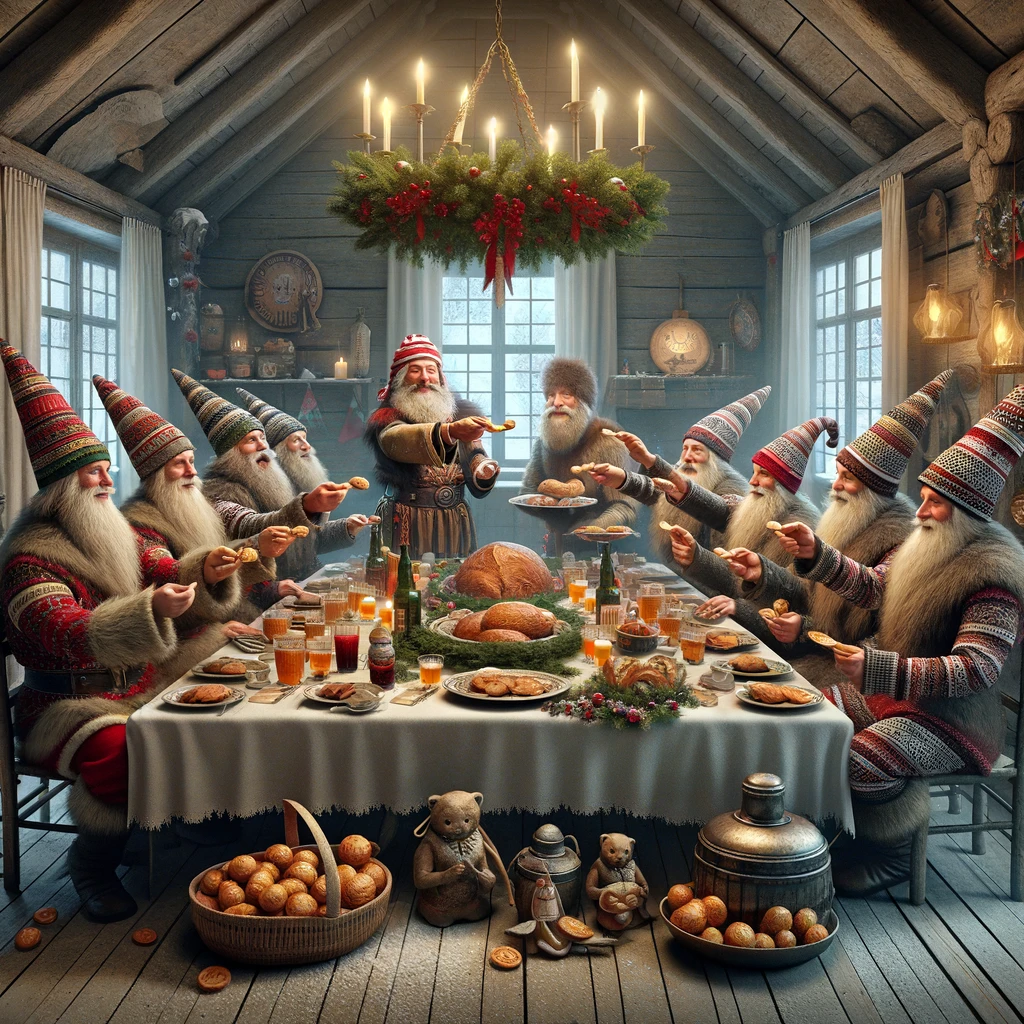
Today, I prompted DALL-E 3 to create a scene in which the Yule Lads are in Poland for Christmas, sharing Christmas wafers with each other while sitting around a table enjoying a special Christmas Eve meal of traditional Polish dishes. Here are the images that were created.
Leave a comment

Christmas traditions (Advent calendar, Day 7)

What is the origin story of Christmas markets?

The tradition of Christmas markets, also known as Christkindlmarkts or Weihnachtsmärkte, originated in Europe during the late Middle Ages. Here’s the origin story and some interesting anecdotes about Christmas markets and how they are used to celebrate Christmas around the world:

Medieval Christmas market, Durlach
  • Medieval fairs: The concept of Christmas markets can be traced back to medieval fairs and markets that took place in towns and cities across Europe. These fairs were not specifically Christmas-themed but provided an opportunity for people to buy and sell goods, especially as the holiday season approached.
  • First documented market: The first documented Christmas market was in Vienna, Austria, in 1294. These early markets were often associated with Advent, a period of fasting and preparation leading up to Christmas, and served as a place for people to stock up on supplies for the winter.
  • Cologne, Germany: One of the most famous Christmas markets is the one in Cologne, Germany. It dates back to the early 14th century and has a rich history. During the Middle Ages, the market was held to help fund the construction of the Cologne Cathedral.
  • Craftsmen and artisans: Christmas markets were originally places for craftsmen and artisans to sell their wares, which often included handmade ornaments, toys, candles, and seasonal foods.

Interesting anecdotes about Christmas markets

Ice-skating rink, Christmas market, Cologne
  • Mulled wine and seasonal treats: Christmas markets are known for their delicious seasonal treats and beverages. One popular drink is mulled wine (glühwein in German), a warm, spiced wine often served in decorative mugs. You can also find gingerbread cookies, roasted chestnuts, sausages, and other festive snacks.
  • Ornaments and decorations: Christmas markets are a treasure trove of unique ornaments and decorations. Visitors can find handcrafted ornaments, tree toppers, and nativity scenes, often made by local artisans.
  • Ice skating: Many Christmas markets feature ice skating rinks, providing a fun and festive activity for families and visitors. Skating amid twinkling lights and holiday decorations adds to the magical atmosphere.
  • Gift shopping: Christmas markets are ideal places to shop for holiday gifts. Visitors can discover a wide range of items, including handmade jewelry, textiles, pottery, and wooden crafts.
  • Live entertainment: Some Christmas markets feature live performances, including choirs, musicians, and theatrical presentations. These performances add to the festive ambiance and entertain visitors of all ages.
  • Market themes: Some Christmas markets have specific themes or traditions unique to their region. For example, the Nuremberg Christmas Market in Germany is famous for its gingerbread cookies (Lebkuchen) and has a “Christkind” (Christmas angel) who opens the market.
  • Worldwide popularity: While Christmas markets originated in Europe, they have gained popularity worldwide. You can find Christmas markets in cities and towns across North America, Asia, and other continents.
  • Holiday lights: Christmas markets are renowned for their beautiful holiday lighting displays. Markets often feature thousands of twinkling lights, making the evening atmosphere particularly enchanting.
  • Community and tradition: Christmas markets play an important role in fostering a sense of community and preserving cultural traditions. Many markets are organized and run by local communities and volunteers.
  • Environmental awareness: In recent years, there has been a growing awareness of sustainability and reducing waste at Christmas markets. Some markets have introduced eco-friendly practices, such as using reusable mugs and encouraging recycling.
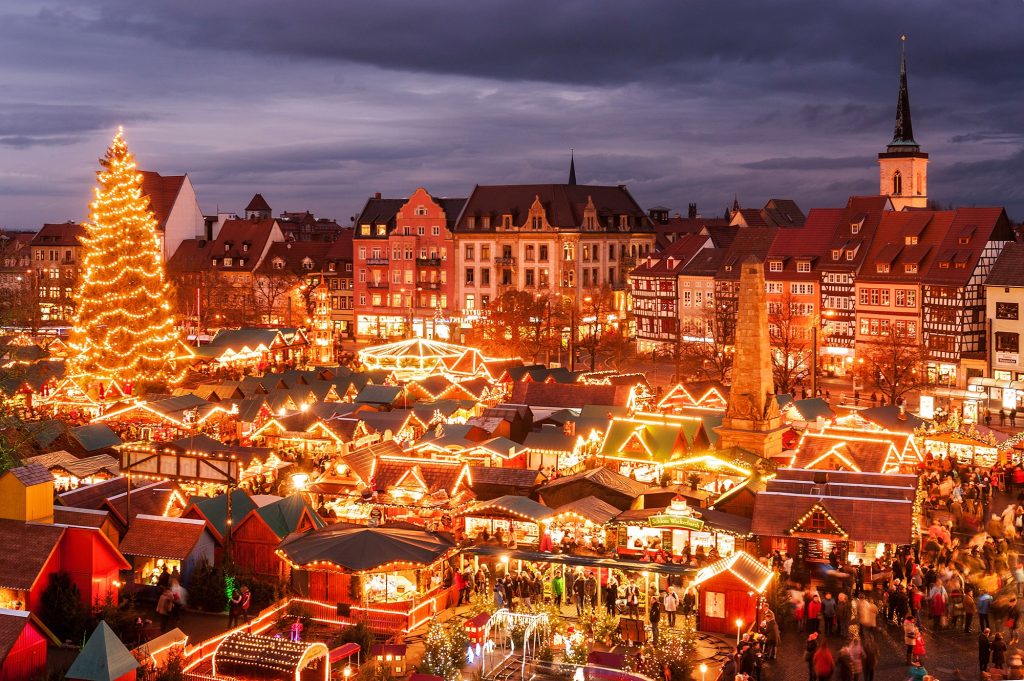
Festive lights, Christmas market, Erfurt

In a nutshell

Christmas markets continue to be a beloved tradition that brings communities together and ushers in the festive spirit of the holiday season. Whether you’re shopping for gifts, savoring seasonal treats, or simply soaking up the enchanting atmosphere, Christmas markets offer a delightful way to celebrate Christmas around the world.

Coda

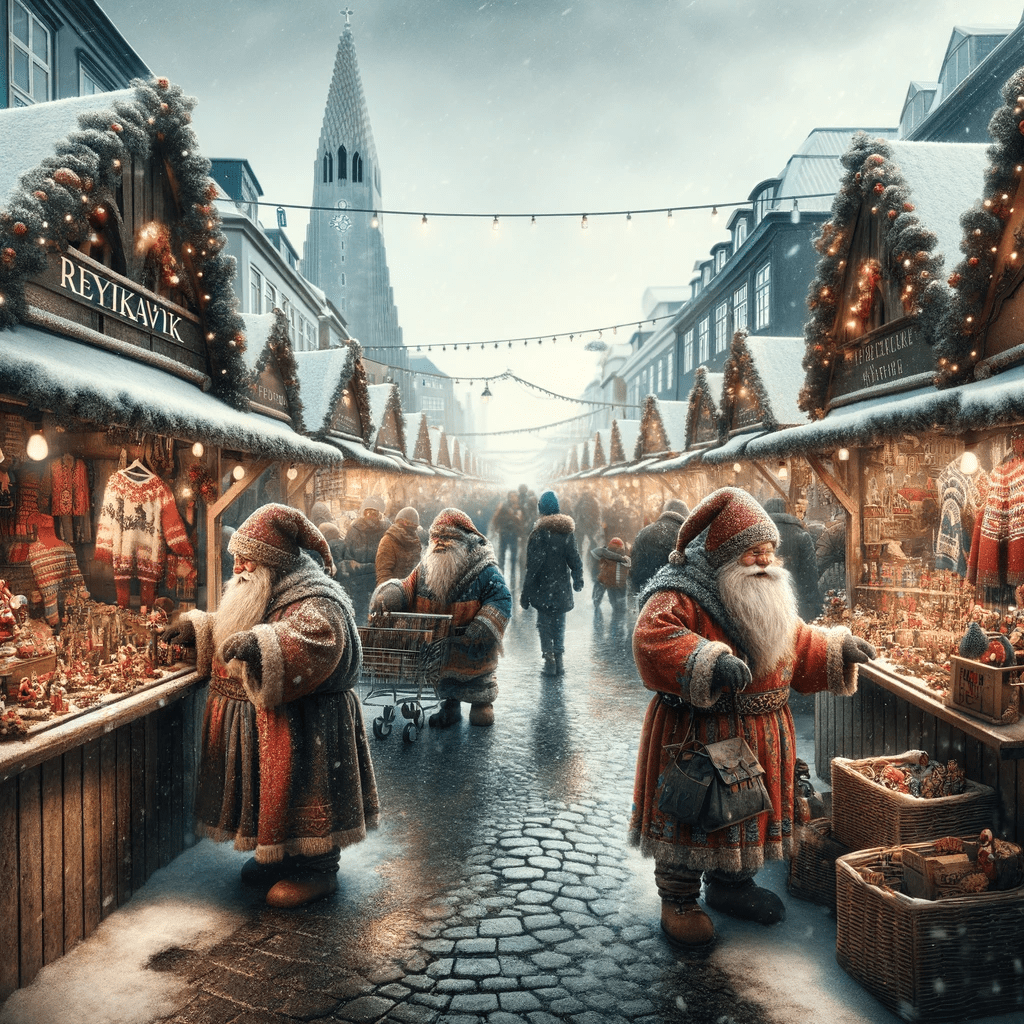
Here is DALL-E 3’s interpretation of the Yule Lads browsing the stalls at a Christmas market in Reykjavík, the capital of Iceland. The market is located in Skólavörðustígur street with Hallgrímskirkja Lutherian parish church in the far distance, with its distinctive geyser-shaped spire.