
What is the origin story of Christingle?
Christingle is a Christmas tradition that originated in Germany and has spread to various parts of the world, particularly in Europe and some English-speaking countries. The word “Christingle” is derived from the German word “Christkindl,” which means “Christ Child.” The tradition revolves around a symbolic representation of Christ and serves as a way to celebrate and teach the Christmas story. Here’s the origin story and some interesting anecdotes about Christingle and how this tradition is used to celebrate Christmas around the world.

- Origins in Germany: The Christingle tradition is believed to have originated in the Moravian Church, a Protestant denomination with roots in the Czech Republic and Germany, in the 18th century. It was originally introduced as a way to teach children about the nativity story.
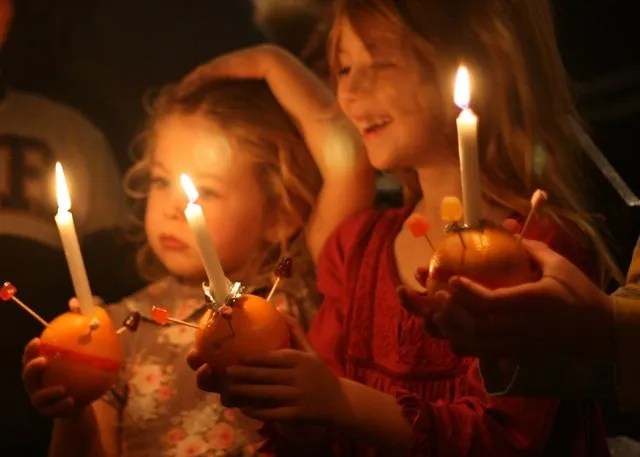
- The Christingle object: The centrepiece of a Christingle celebration is a “Christingle object”, which is typically made from an orange. The orange represents the world, and various other elements are added to symbolize aspects of the Christian faith. Here are the components of a Christingle object:
- Orange: This symbolises the Earth.
- Red ribbon: This encircles the orange, symbolising the love and blood of Christ.
- Candle: Placed in the centre of the orange, it represents Jesus as the light of the world.
- Four cocktail sticks or toothpicks: These are inserted into the orange, with sweets or dried fruits attached to them, symbolising the four seasons and God’s creations.
- Fruits or sweets: Attached to the cocktail sticks, these represent God’s blessings and the bounty of the earth.

Interesting anecdotes about Christingle
- Moravian connection: The Moravian Church played a significant role in popularising the Christingle tradition. They used it as a teaching tool to convey the Christmas story to children.
- Adoption in Anglican tradition: The Christingle custom was introduced to the Church of England in the mid-20th century. It quickly gained popularity as a way to engage children in the Christmas message. It is now a common feature of Anglican Christmas celebrations in the United Kingdom.
- Charitable aspect: Many Christingle services and events have a charitable component. Donations collected during Christingle services often go to organizations and causes that support children and families in need.
- Interactive element: Christingle services are often interactive, with participants, especially children, involved in making their own Christingle objects during the service. This hands-on experience adds to the educational aspect of the tradition.
- Alternative celebrations: In some countries, Christingle has become an alternative way to celebrate Christmas, especially for those who may not have a strong Christian background. The symbolism of Christ as the light of the world resonates with people seeking a message of hope and goodwill.
- Variations worldwide: While the basic concept of Christingle remains the same, there are variations in how it is celebrated and the additional symbolism attached to it in different countries.
- Continued relevance: Despite its historical origins, Christingle continues to be a meaningful and accessible way for people of all ages to engage with the Christmas story and reflect on the Christian faith during the holiday season.
In a nutshell
Christingle serves as a creative and symbolic way to convey the message of Christmas and is a beloved tradition in many churches and communities around the world. It combines visual and tactile elements to help people of all ages understand and celebrate the significance of Christ’s birth.
Coda
In these scenes, DALL-E imagines the Yule Lads making Christingle objects inside a church in a Moravian/Icelandic hybrid location.


 Jolabokaflod