Jolabokaflod

Christmas Book Flood • Reading for Pleasure


Leave a comment

Christmas traditions (Advent calendar, Day 19)

What is the origin story of Christmas wreaths?

Wreath crown, Roman mosaic (Wikipedia)

The tradition of using wreaths during the Christmas season has ancient roots that date back to pagan times. Wreaths, circular in shape, have always symbolised eternity and the cycle of life. As Christianity spread across Europe, wreaths were adapted for use in festive celebrations, incorporating Christian symbolism. Here’s the origin story and some interesting anecdotes about Christmas wreaths and how this tradition is used to celebrate Christmas around the world:

  • Pagan origins: The use of wreaths as decorative elements predates Christianity. In ancient Rome, for example, wreaths of evergreen foliage, such as laurel and holly, were worn as crowns during festivals and celebrations, including the winter solstice.
  • Adaptation for Christmas: As Christianity gained prominence in Europe, wreaths began to be associated with Christmas. The circular shape of the wreath came to mean the eternity of God’s love, with no beginning or end. The evergreen foliage used in wreaths symbolised life and hope.

Interesting anecdotes about Christmas wreaths

Advent wreath (Catholic Supply of St. Louis, Inc.)
  • Advent wreaths: In Christian tradition, the Advent wreath is a significant symbol of the Advent season, which begins on the fourth Sunday before Christmas. Advent wreaths typically consist of a circular evergreen wreath with four candles, one for each Sunday of Advent. Each candle is lit on its respective Sunday to mark the countdown to Christmas.
  • Candles and colours: The Advent wreath candles are often three purple or blue candles, representing penance and preparation, and one pink or rose candle, symbolising joy. A white centre candle, called the Christ candle, is lit on Christmas Eve or Christmas Day to represent the birth of Jesus.
  • Decorative elements: Christmas wreaths are typically adorned with various decorative elements, such as red ribbons, pinecones, ornaments, and artificial berries. These elements add colour and festive flair to the wreaths.
  • Welcoming symbol: In many cultures, the Christmas wreath is placed on the front door or displayed in windows as a symbol of welcome and hospitality. It is a way to greet visitors and share the joy of the season.
  • Wreath-making: Making or decorating Christmas wreaths is a popular holiday craft activity. Many families and communities gather to create their own wreaths, customising them with personal touches.
  • Global variations: While the basic concept of the Christmas wreath is consistent, different cultures and regions may have unique variations and customs associated with wreath-making and display.
  • Outdoor decorations: In some regions with colder climates, Christmas wreaths may be placed outdoors to withstand the winter weather. They are often adorned with lights and serve as festive outdoor decorations.
  • Holiday markets: Christmas wreaths are commonly sold at holiday markets and craft fairs, where they are available in various sizes and styles to suit individual preferences.
  • Memorial wreaths: In addition to festive wreaths, there are also memorial wreaths that are used to honour and remember loved ones during the holiday season. These wreaths may be displayed at cemeteries or other meaningful locations.
Door wreath (Mano Mano)

In a nutshell

Christmas wreaths, with their timeless symbolism and versatility, continue to be an integral part of Christmas celebrations worldwide. They bring beauty, warmth, and a sense of tradition to homes and communities during the holiday season, serving as a visual reminder of the spirit of Christmas.

Coda

Today, DALL-E 3 has imagined the Yule Lads inside an Icelandic home, lighting a candle on an Advent wreath for Christmas.


Leave a comment

Christmas traditions (Advent calendar, Day 11)

What is the origin story of Krampus?

Krampus is a folklore character with roots in Central European and Alpine traditions, particularly in Austria, Bavaria, and other German-speaking regions. Unlike Santa Claus, who rewards good children with gifts, Krampus is a dark and sinister figure who punishes naughty children during the Christmas season. Here’s the origin story and some interesting anecdotes about Krampus and how this character is used to celebrate Christmas around the world:

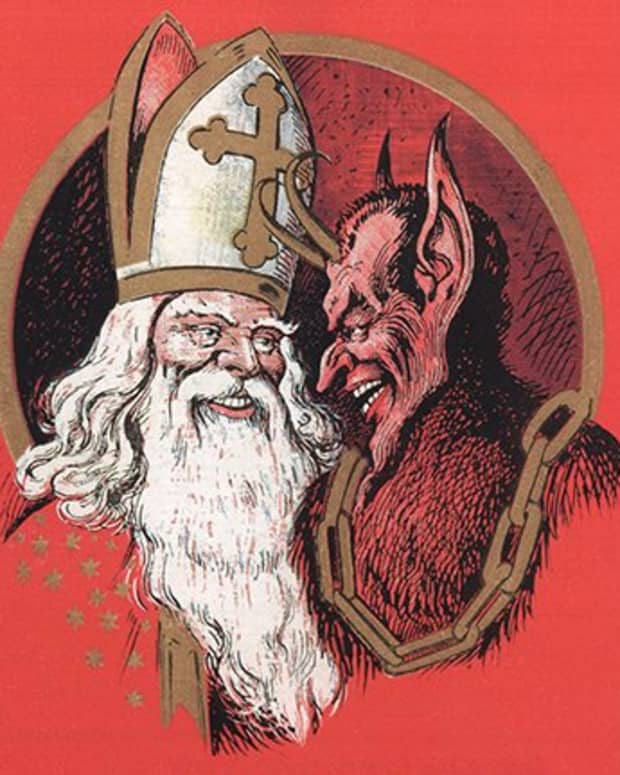
Celebrating St Nicholas’ Day
  • Pagan origins: Krampus’ origins can be traced back to pre-Christian pagan beliefs in the Alpine regions of Europe. In these areas, it was believed that during the winter solstice, evil spirits roamed the earth, and people performed rituals to drive them away.
  • Christian adaptation: With the spread of Christianity, many pagan traditions were incorporated into Christian holidays. Krampus became associated with St Nicholas, who rewarded good children and punished the bad. The date 6th December, known as St Nicholas Day, became the occasion when Krampus would visit homes.

Interesting anecdotes about Krampus

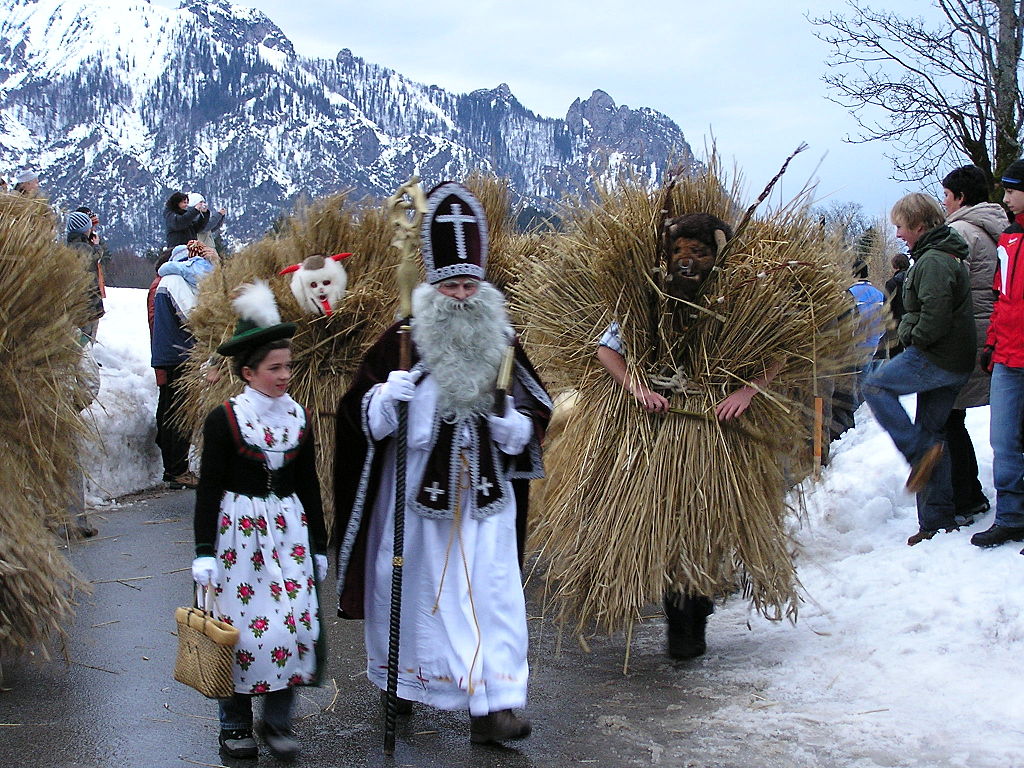
St Nicholas’ Day procession in Bavaria
  • Krampusnacht: On the night of 5th December, known as Krampusnacht, people in Alpine regions dress up as Krampus and roam the streets, scaring children and adults alike. In some places, parades featuring elaborate Krampus costumes are held.
  • Krampuslauf: “Krampuslauf” refers to Krampus runs or processions that take place in various Austrian and German towns. Participants dress as Krampus and roam the streets, often engaging in mock confrontations with spectators. These events have gained popularity and are now attended by tourists.
  • Krampus cards: In the early 20th century, greeting cards featuring Krampus, known as Krampuskarten, became popular in Austria and Bavaria. These cards often depicted Krampus frightening children and included humorous or rhyming verses.
  • Austrian folklore: In Austrian folklore, Krampus is sometimes accompanied by a counterpart known as “Perchten,” who are female creatures that represent the wild and untamed aspects of nature. The Perchten also participate in processions and festivities during the holiday season.
  • Modern pop culture: Krampus has made appearances in modern pop culture, including movies, television shows, and even a dedicated “Krampusnacht” event at Universal Studios’ Halloween Horror Nights.
  • Krampuslauf in the United States: In recent years, Krampus-themed events and parades have gained popularity in the United States. Cities like Los Angeles and Philadelphia host Krampus-themed runs and festivals.
  • Krampusnacht celebrations: Some people have embraced Krampusnacht as a playful and slightly subversive alternative to traditional Christmas celebrations. It’s a time to dress up as Krampus, indulge in dark humour, and celebrate the darker side of the holiday season.
  • Krampus’ punishments: In the legend, Krampus is often depicted carrying chains and a bundle of birch branches, which he uses to swat and whip naughty children. In some traditions, he might also stuff misbehaving children into his sack and carry them away.
Krampusnacht DC

In a nutshell

Krampus adds a unique and slightly eerie dimension to the Christmas season in certain European cultures. While he may be a fearsome character, he also serves as a reminder to children to behave and a source of entertainment for those who embrace the tradition of Krampusnacht.

Coda

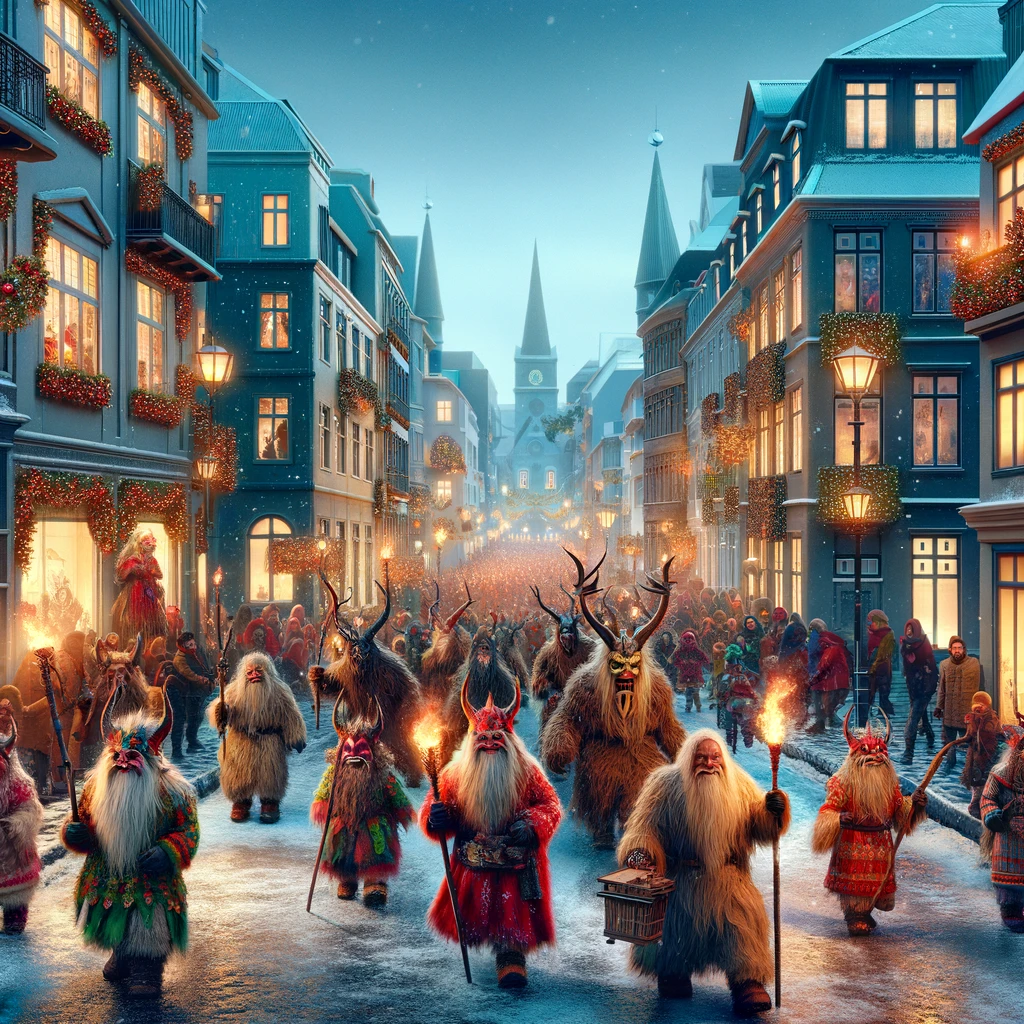
In these hypothetical tableaux, DALL-E 3 images the Yule Lads taking part in a Krampusnacht procession taking place in a street in Reykjavík, the capital of Iceland.


Leave a comment

Christmas traditions (Advent calendar, Day 8)

What is the origin story of Yule logs?

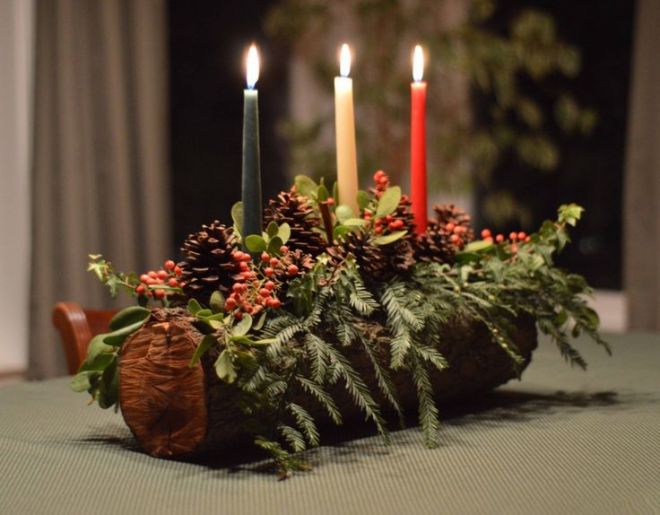
Winter Solstice centrepiece (Mark Green, Atheopaganism)

The Yule log, a significant symbol of the Christmas season, has ancient pagan roots and has evolved over time to become a beloved Christmas tradition. Here’s the origin story and some interesting anecdotes about Yule logs and how they are used to celebrate Christmas around the world:

  • Ancient pagan origins: The tradition of the Yule log predates Christianity and is believed to have originated with ancient Germanic and Celtic pagan celebrations of the winter solstice, known as Yule. During these festivals, a large, specially selected log, often from a fruit-bearing tree, was burned as a symbol of the sun’s return and the promise of longer days ahead.
  • Christian adoption: As Christianity spread across Europe, many pagan customs and traditions were incorporated into Christian celebrations to ease the transition to the new religion. The Yule log became associated with Christmas, symbolizing the light of Christ and the hope of salvation.

Interesting anecdotes about Yule logs

Bûche de Noël , French Christmas Yule Log Cake (Crafty Baking)
  • Yule log cake: In many cultures, especially in France and Belgium, the Yule log tradition has evolved into the creation of a Yule log cake, known as “Bûche de Noël” in French. This cake is shaped to resemble a log and is often made of sponge cake filled with flavored buttercream, rolled into a log shape, and decorated to look like a wooden log.
  • Decorating the log: In some regions, especially in France, families decorate the Yule log with candles, greenery, and small figurines to create a festive centrepiece for their Christmas celebrations.
  • Ashes for protection: In some traditions, ashes from the burned Yule log were believed to have protective qualities. People would sprinkle the ashes on their fields, homes, or even themselves to guard against evil spirits.
  • Three days of burning: In some regions, it was customary to keep the Yule log burning for the entire Christmas season, which traditionally spanned 12 days. The log would be lit on Christmas Eve and left to burn until 6 January, known as Epiphany or Twelfth Night.
  • Yule log ceremonies: Some families and communities have Yule log ceremonies, where they gather together to light the log, sing carols, and exchange gifts. This tradition fosters a sense of togetherness and celebration during the holiday season.
  • Variations around the world: Different cultures have their unique variations of the Yule log tradition. For example, in Catalonia, Spain, they have the “Caga Tió,” a Christmas log with a smiling face and a red hat. Children “beat” the log with sticks to make it “defecate” small gifts and candies.
  • Environmental awareness: In modern times, there has been a growing emphasis on environmentally friendly celebrations. Some people opt for a Yule log made of recycled or sustainable materials, or they choose alternatives like electric Yule log videos that mimic the crackling fire without the need for a physical log.
  • Yule log television broadcasts: In some countries, especially in North America, there is a tradition of broadcasting a Yule log video on television during the Christmas season. This tradition started in the 1960s and has become a popular way for people to enjoy the ambiance of a crackling fire even if they don’t have a fireplace.
Yule log TV channel

In a nutshell

The Yule log tradition bridges the gap between ancient pagan celebrations and modern Christian Christmas traditions. It continues to be a symbol of light, hope, and togetherness during the holiday season, celebrated in various forms by people around the world.

Coda

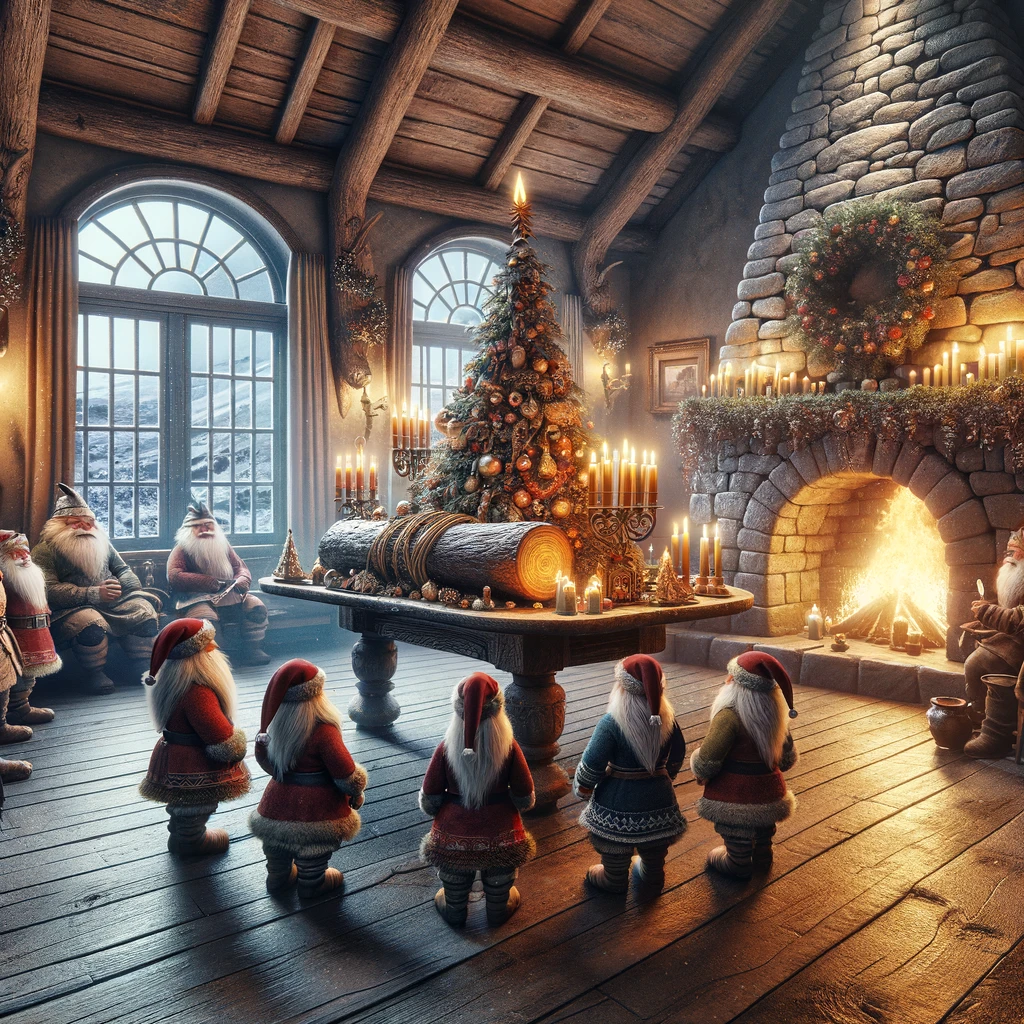
In this DALL-E 3 simulation, the Yule Lads are admiring a Yule log centrepiece on a dining-room table in an Icelandic house, with a roaring log fire in the background.