Jolabokaflod

Christmas Book Flood • Reading for Pleasure


Leave a comment

Christmas traditions (Advent calendar, Day 18)

What is the origin story of Christmas pudding?

Christmas pudding, also known as plum pudding, is a traditional British dessert that has been associated with festive celebrations for centuries. Its origins can be traced back to medieval England, and it has evolved over time into the iconic Christmas dessert we know today. Here’s the origin story and some interesting anecdotes about Christmas pudding and how this tradition is used to celebrate the festive season around the world:

Frumenty
  • Medieval origins: Christmas pudding can trace its roots to medieval England, where it was initially a savoury dish known as “fFumenty.” This early version consisted of meat, wine-soaked bread, spices, and dried fruits.
  • Puritan ban: During the 17th century, the Puritans in England, who viewed Christmas as a pagan celebration, banned many Christmas traditions, including the preparation of Christmas pudding. However, the tradition survived in secret.
  • Reinvention as a sweet dish: By the 18th century, Christmas pudding had evolved into a sweet dish. The meat was gradually replaced with suet (animal fat), and the mixture was enriched with a variety of dried fruits, spices, and other ingredients.
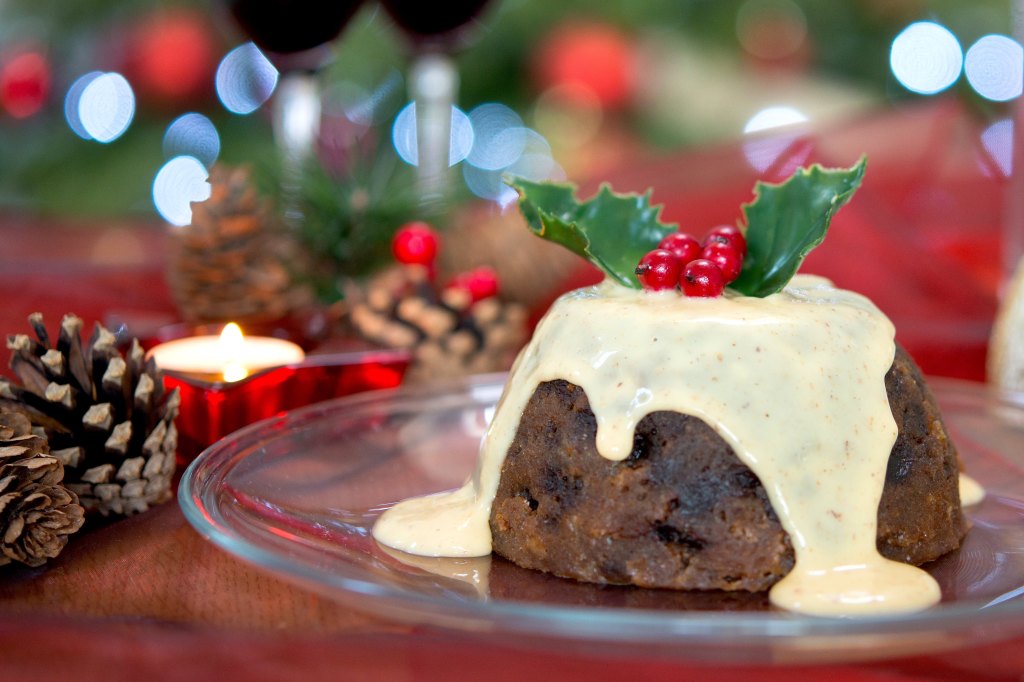
Christmas pudding today

Interesting anecdotes about Christmas pudding

Stir-up Sunday (Coram Xmas card, approved by OCA for use)
  • Stir-up Sunday: The tradition of making Christmas pudding is closely associated with “Stir-up Sunday,” which falls on the last Sunday before Advent (usually five weeks before Christmas). On this day, families gather to make their Christmas puddings, taking turns to stir the mixture and make a wish.
  • Thirteen ingredients: Traditional Christmas pudding recipes often call for 13 ingredients, symbolising Jesus and his 12 apostles. Each family member stirs the pudding mixture from east to west, symbolizing the journey of the Magi. Here is a popular recipe for Classic Christmas pudding, published in the BBC’s Good Food online magazine.
  • Coin in the pudding: It was once a tradition to hide small objects, such as coins or charms, inside the Christmas pudding. Finding these items in their portion was considered lucky. However, due to safety concerns, this practice has become less common.
  • Steaming process: Christmas pudding is traditionally steamed for several hours, resulting in a dense and moist texture. It is often served flaming, with brandy or rum poured over it and set alight just before serving.
  • Alternative names: In some regions of the UK, Christmas pudding is known as “plum pudding,” even though it may not contain plums. The term “plum” was historically used to refer to dried fruits.
  • Global influence: British colonial influence spread Christmas pudding to various parts of the world, including Australia, New Zealand, and Canada, where it remains a part of Christmas traditions.
  • Modern variations: While traditional Christmas pudding is still enjoyed, there are now many variations to cater to dietary preferences and restrictions. Vegetarian and vegan versions, as well as lighter or gluten-free options, have become popular.
  • Christmas pudding races: In some places, particularly the UK, Christmas pudding races are organised as charity events. Participants dress in festive attire and race while balancing a Christmas pudding on a plate, adding an element of fun to the holiday season.
Christmas pudding race (Barnado’s, 1937)

In a nutshell

Christmas pudding remains a cherished part of Christmas celebrations in the UK and in various countries with British cultural influences. It symbolizes the rich history and enduring traditions associated with the holiday season and continues to be a beloved dessert enjoyed by many around the world.

Coda

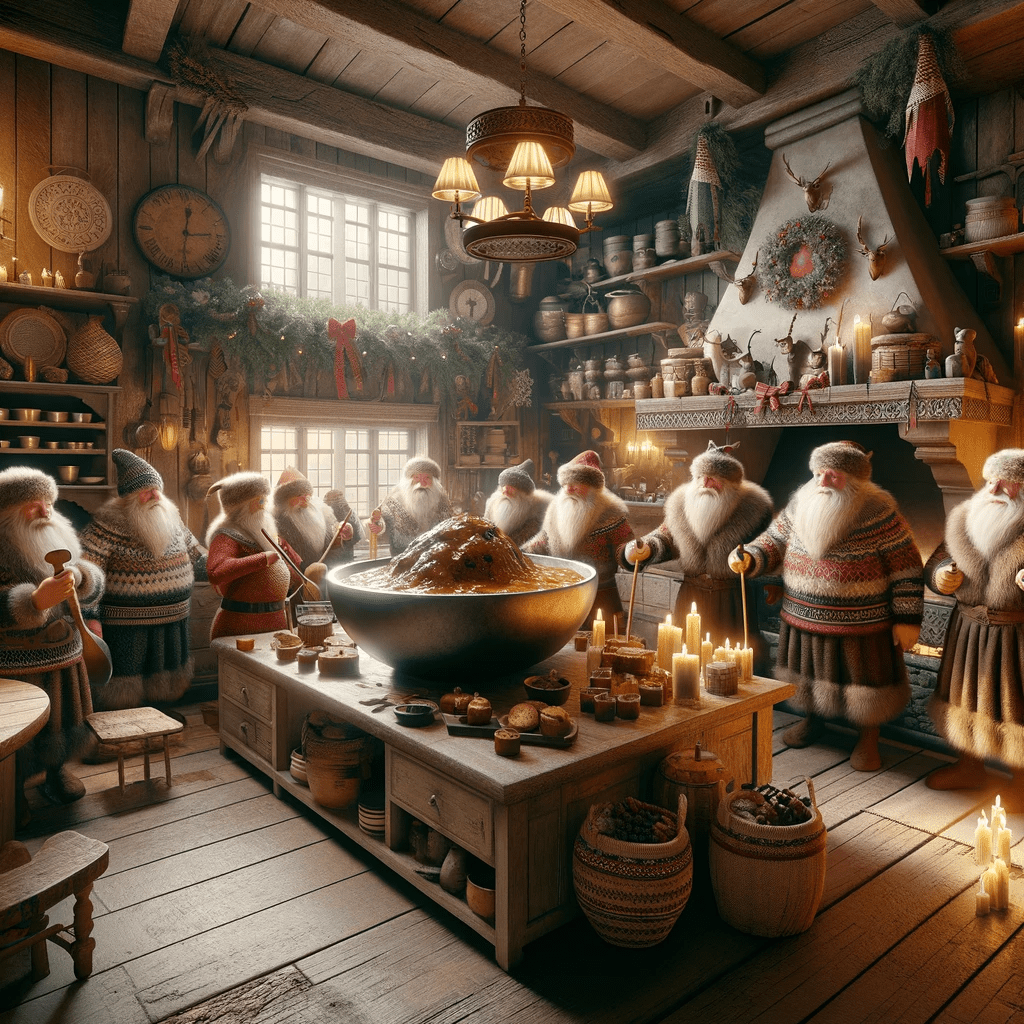
Today, DALL-E 3 has created images of the Yule Lads making Christmas pudding in a British/Icelandic hybrid kitchen.

Leave a comment

Christmas traditions (Advent calendar, Day 16)

What is the origin story of eggnog?

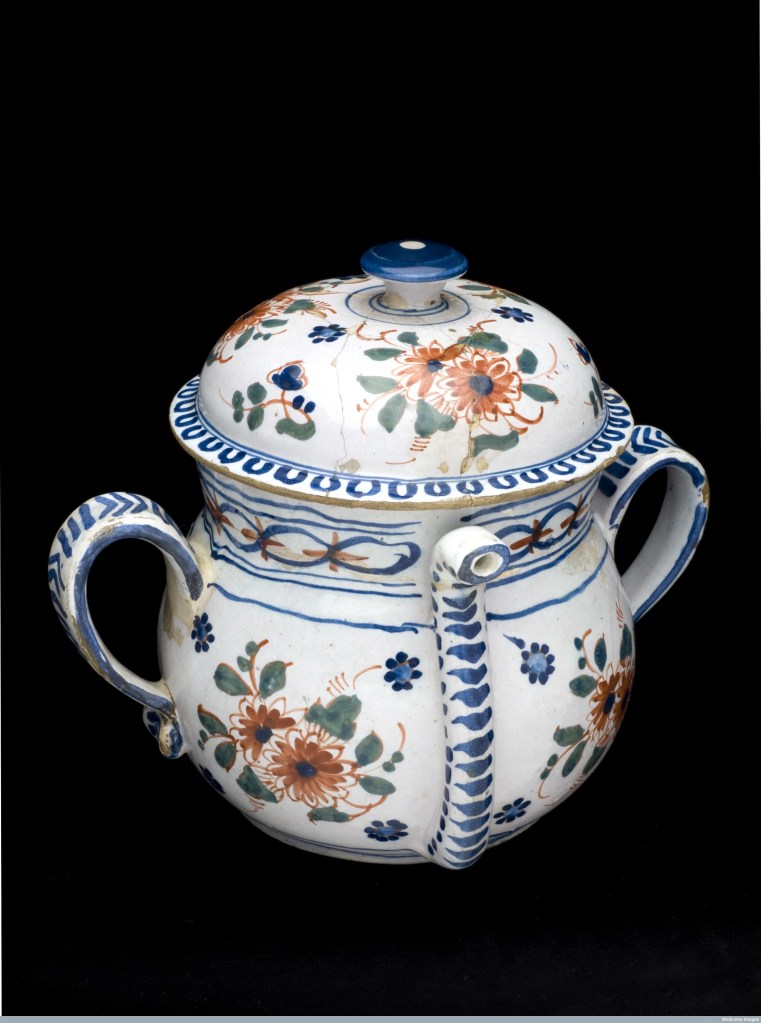
Posset pot with lid, England, 1701-1800. (Wellcome Trust)

Eggnog is a rich and creamy beverage associated with the Christmas season, particularly in the United States and Canada. Its origins can be traced back to medieval Europe, where “posset” was a popular drink made with hot milk, eggs, and ale or wine. Here’s the origin story and some interesting anecdotes about eggnog and how this tradition is used to celebrate Christmas around the world:

  • Medieval origins: The predecessor to eggnog, posset, was a warm, spiced drink made with milk curdled with ale or wine. It was often sweetened and flavoured with spices like nutmeg and cinnamon. Posset was commonly consumed in medieval England.
  • Eggnog in America: Eggnog as we know it today evolved in the American colonies in the 18th century. The name “eggnog” likely comes from “nog,” which was a term for a strong ale. Early American settlers adapted the posset recipe, substituting ale or wine with rum or brandy, which were more readily available.
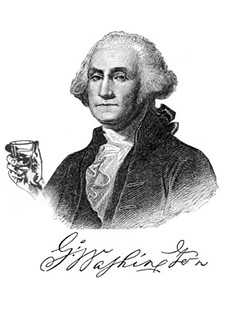
George Washington with drink in hand (Chelsea Wine Co.)

Interesting anecdotes about eggnog

  • Colonial America: Eggnog became a popular holiday drink in colonial America, where it was often made with rum, brandy, or whiskey. It was considered a festive and warming drink, especially during the cold winter months.
  • George Washington’s recipe: It is said that George Washington, the first President of the United States, had his own special recipe for eggnog. His version included rye whiskey, rum and sherry, along with the traditional ingredients of eggs, milk, sugar and nutmeg.
  • Christmas tradition: In the United States and Canada, eggnog is closely associated with Christmas and is often served at holiday gatherings, parties and festivities. Commercially produced eggnog is widely available during the holiday season.
  • Recipe variations: While traditional eggnog recipes include alcohol, non-alcoholic versions are also popular, making the drink suitable for people of all ages. Some variations include bourbon, brandy or cognac.
  • Cultural variations: Eggnog-inspired drinks and beverages are enjoyed in various forms around the world. In Puerto Rico, “Coquito” is a holiday drink made with coconut cream, condensed milk, rum, and spices. In Mexico, “Rompope” is a similar drink made with rum, eggs, milk and vanilla.
  • Eggnog lattes and flavours: In recent years, eggnog flavours have expanded beyond the traditional beverage. Eggnog lattes, ice cream, and even eggnog-flavoured cookies and desserts have become popular during the holiday season.
  • National Eggnog Day: National Eggnog Day is observed on 24 December in the United States, just in time for Christmas Eve celebrations.
  • Eggnog traditions around the world: While eggnog itself is not a widespread tradition outside of North America, similar creamy, spiced drinks can be found in various cultures. These beverages often have regional names and ingredients but share a common theme of warmth and festivity during the holiday season.
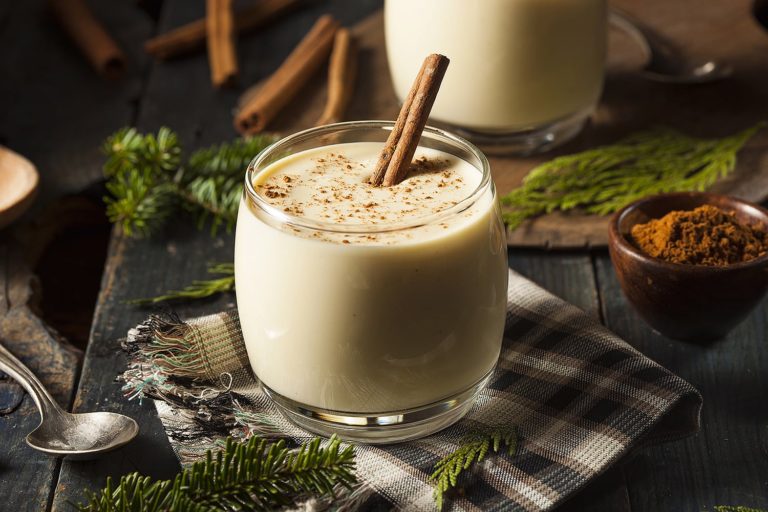
Eggnog (Trinkreif.de)

In a nutshell

Eggnog remains a beloved and indulgent holiday treat, bringing warmth and cheer to Christmas celebrations in North America. Whether enjoyed with or without alcohol, it continues to be a festive tradition that evokes feelings of comfort and nostalgia during the holiday season.

Coda

The Yule Lads are depicted by DALL-E 3 as drinking eggnog at a Christmas party or social gathering in Colonnial-era America.