
What is the origin story of Yule logs?
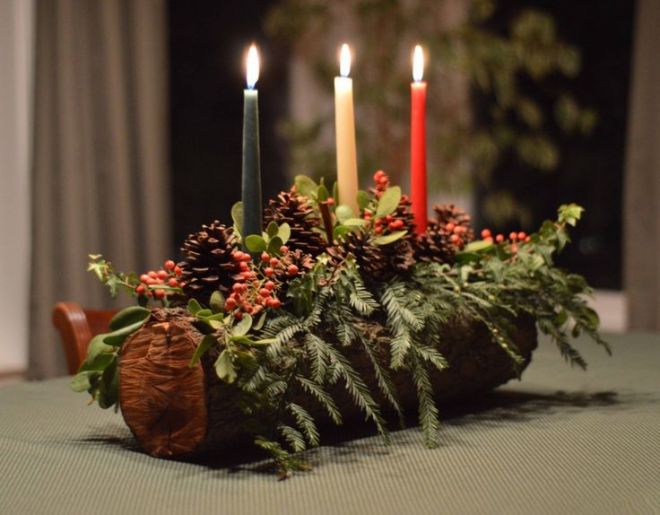
The Yule log, a significant symbol of the Christmas season, has ancient pagan roots and has evolved over time to become a beloved Christmas tradition. Here’s the origin story and some interesting anecdotes about Yule logs and how they are used to celebrate Christmas around the world:
- Ancient pagan origins: The tradition of the Yule log predates Christianity and is believed to have originated with ancient Germanic and Celtic pagan celebrations of the winter solstice, known as Yule. During these festivals, a large, specially selected log, often from a fruit-bearing tree, was burned as a symbol of the sun’s return and the promise of longer days ahead.
- Christian adoption: As Christianity spread across Europe, many pagan customs and traditions were incorporated into Christian celebrations to ease the transition to the new religion. The Yule log became associated with Christmas, symbolizing the light of Christ and the hope of salvation.
Interesting anecdotes about Yule logs

- Yule log cake: In many cultures, especially in France and Belgium, the Yule log tradition has evolved into the creation of a Yule log cake, known as “Bûche de Noël” in French. This cake is shaped to resemble a log and is often made of sponge cake filled with flavored buttercream, rolled into a log shape, and decorated to look like a wooden log.
- Decorating the log: In some regions, especially in France, families decorate the Yule log with candles, greenery, and small figurines to create a festive centrepiece for their Christmas celebrations.
- Ashes for protection: In some traditions, ashes from the burned Yule log were believed to have protective qualities. People would sprinkle the ashes on their fields, homes, or even themselves to guard against evil spirits.
- Three days of burning: In some regions, it was customary to keep the Yule log burning for the entire Christmas season, which traditionally spanned 12 days. The log would be lit on Christmas Eve and left to burn until 6 January, known as Epiphany or Twelfth Night.
- Yule log ceremonies: Some families and communities have Yule log ceremonies, where they gather together to light the log, sing carols, and exchange gifts. This tradition fosters a sense of togetherness and celebration during the holiday season.
- Variations around the world: Different cultures have their unique variations of the Yule log tradition. For example, in Catalonia, Spain, they have the “Caga Tió,” a Christmas log with a smiling face and a red hat. Children “beat” the log with sticks to make it “defecate” small gifts and candies.
- Environmental awareness: In modern times, there has been a growing emphasis on environmentally friendly celebrations. Some people opt for a Yule log made of recycled or sustainable materials, or they choose alternatives like electric Yule log videos that mimic the crackling fire without the need for a physical log.
- Yule log television broadcasts: In some countries, especially in North America, there is a tradition of broadcasting a Yule log video on television during the Christmas season. This tradition started in the 1960s and has become a popular way for people to enjoy the ambiance of a crackling fire even if they don’t have a fireplace.

In a nutshell
The Yule log tradition bridges the gap between ancient pagan celebrations and modern Christian Christmas traditions. It continues to be a symbol of light, hope, and togetherness during the holiday season, celebrated in various forms by people around the world.
Coda
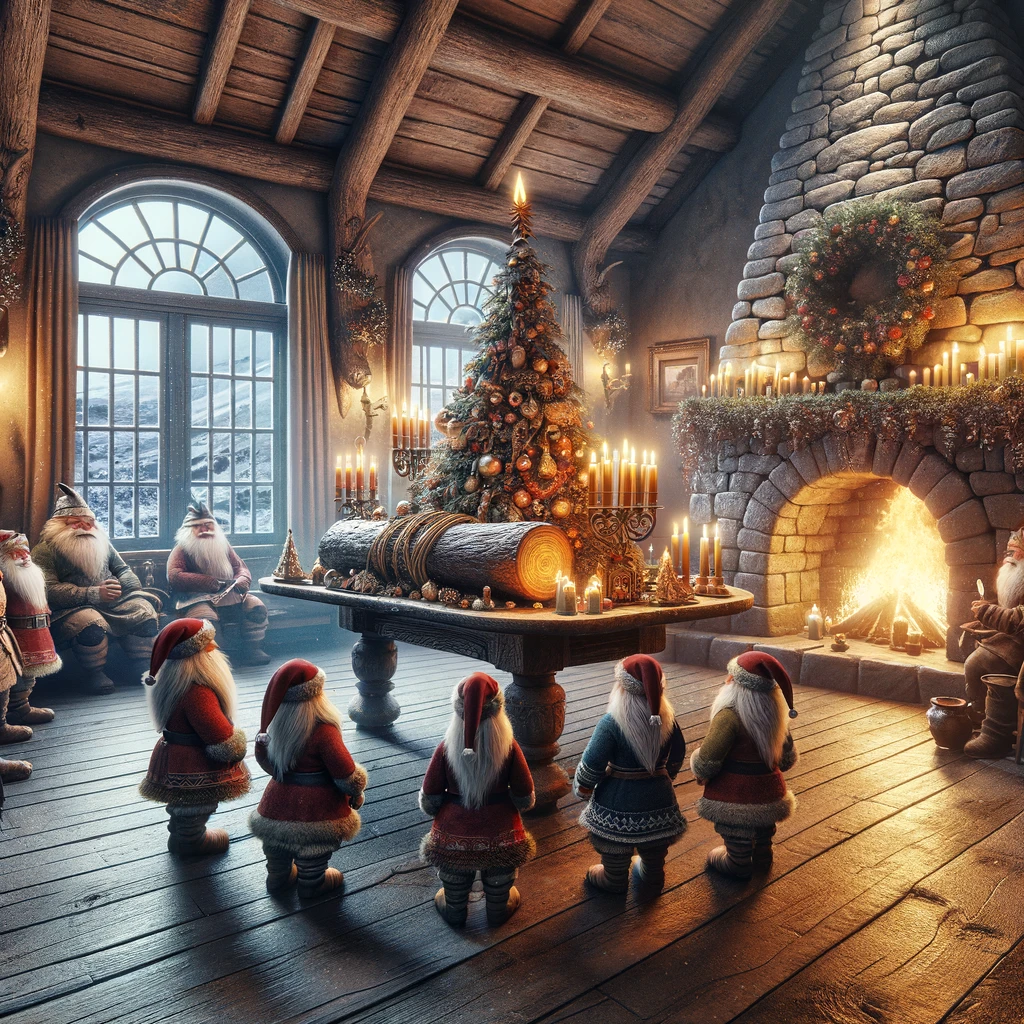
In this DALL-E 3 simulation, the Yule Lads are admiring a Yule log centrepiece on a dining-room table in an Icelandic house, with a roaring log fire in the background.

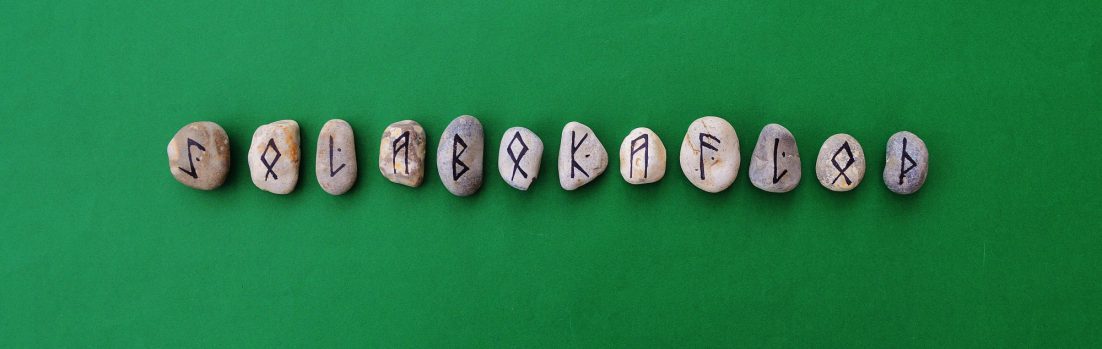
 Jolabokaflod