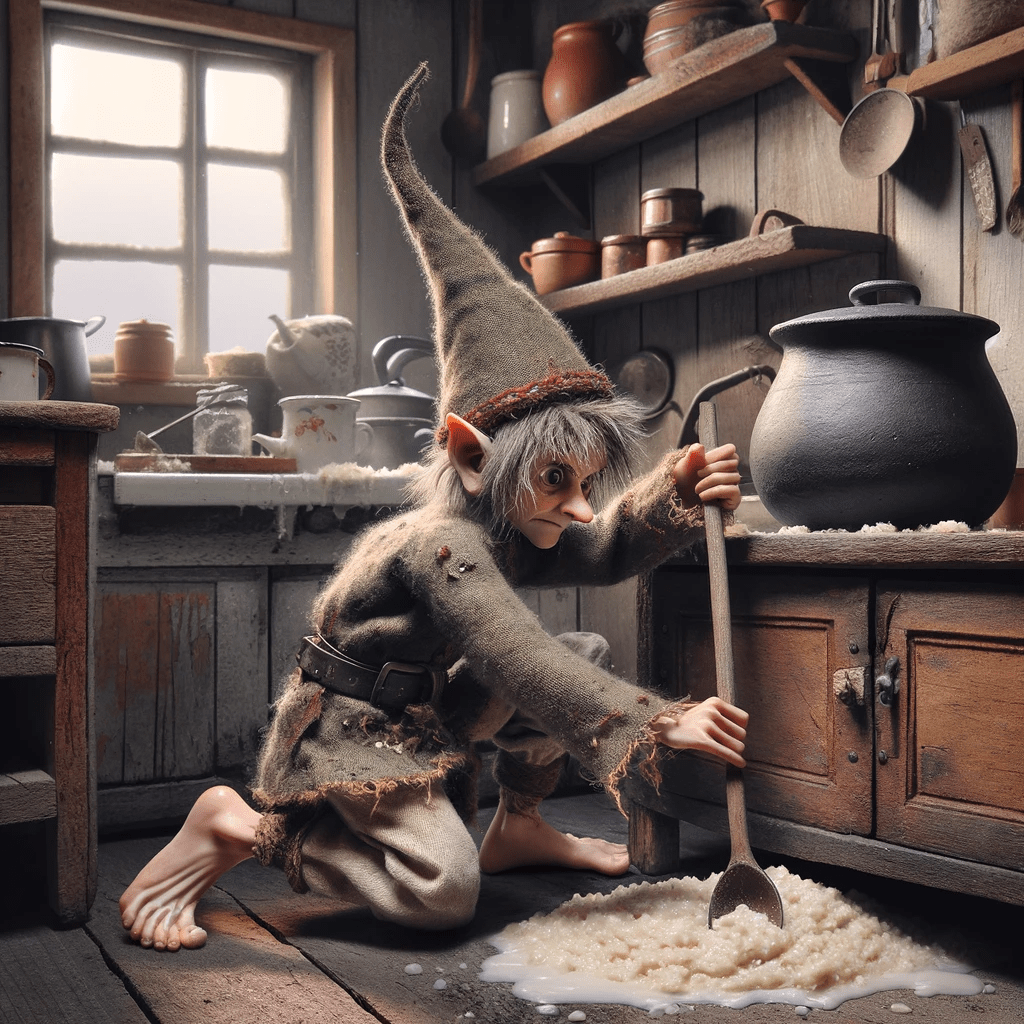
Also known as “Pot-Scraper” in English, Pottaskefill is one of the Icelandic Yule Lads, who makes his appearance on 16 December as part of the Yuletide tradition. These Yule Lads are a group of thirteen mischievous characters, each with their own distinct personalities and behaviour. Let’s explore the specific characteristics and folklore associated with Pottaskefill.
Pottaskefill is often depicted as a peculiar and scruffy-looking figure. He is known for his scraggly appearance, which includes unkempt hair and clothing. His attire is typically ragged, reflecting his dishevelled nature.
His mischievous behaviour revolves around Pottaskefill‘s obsession with food, particularly the remnants of food left in pots and pans. He sneaks into households during the night to scrape the leftover bits of food from cooking utensils, especially pots. His goal is to enjoy any tasty morsels that may be clinging to the cooking implements. Households may find their kitchenware cleaned to an unusual degree or with telltale signs of Pottaskefill‘s late-night visits.
Similar to many of his Yule Lad counterparts, Pottaskefill tends to be cautious and avoids direct contact with humans. He operates quietly and discreetly, sneaking into kitchens under the cover of darkness to carry out his pot-scraping activities.
Christmas wafers, also known as “Oplatki” in Polish, “Oblatky” in Slovak, and “Oblaten” in German, have their origins in Eastern and Central European countries, particularly Poland, Slovakia, and Germany. These thin, unleavened wafers have been used for centuries as part of Christmas traditions. Here’s the origin story and some interesting anecdotes about Christmas wafers and how this tradition is used to celebrate Christmas around the world:
Christmas wafers (Catholic Supply)
Religious origins: The tradition of using wafers during religious ceremonies dates back to medieval times in Europe. The wafers were initially used as a form of sacramental bread in the Christian Eucharist (Holy Communion).
Adaptation for Christmas: Over time, the use of wafers extended beyond the Eucharist and became incorporated into Christmas celebrations. The tradition evolved to include the sharing of wafers among family members and friends as a symbol of unity, forgiveness, and good wishes.
Interesting anecdotes about Christmas wafers
Sharing wafers at Christmas Eve dinner (The Catholic Company)
Oplatki in Poland: In Poland, the Christmas wafer is called “Oplatek.” It is usually a white, rectangular wafer embossed with religious symbols, such as Nativity scenes or depictions of the Holy Family. During the Christmas Eve supper (Wigilia), family members break off a piece of the wafer and share it with each other while offering good wishes and blessings for the coming year.
Slovakia and Germany: Similar traditions involving Christmas wafers exist in Slovakia and Germany, where they are called “Oblatky” and “Oblaten,” respectively. In these countries, families and friends also exchange wafers during the Christmas season.
Communion connection: The use of wafers in Christmas traditions maintains a connection to their original religious purpose as sacramental bread. This connection reinforces the idea of sharing the Eucharist and the spiritual aspect of Christmas.
Personalised wafers: Some families choose to have personalised Christmas wafers made with custom designs, messages, or family names. These personalised wafers add a personal touch to the tradition.
Interfaith and intercultural exchange: In modern times, Christmas wafers have become a symbol of interfaith and intercultural exchange. Families from different backgrounds may exchange wafers as a sign of respect and unity during the holiday season.
Blessings and good wishes: Sharing Christmas wafers is accompanied by the exchange of blessings and good wishes for health, happiness, and prosperity in the coming year. It is a heartfelt moment of connection and reflection.
Continued tradition: Christmas wafers have stood the test of time and continue to be an integral part of Christmas celebrations in the regions where they are practiced. The tradition serves as a reminder of the importance of forgiveness, unity, and goodwill during the holiday season.
Sharing Christmas wafers with loved ones
In a nutshell
Christmas wafers represent a beautiful and meaningful tradition that bridges the religious and cultural aspects of the holiday season. They symbolise the importance of sharing, unity, and extending good wishes to loved ones and neighbours, making them a cherished part of Christmas celebrations in Eastern and Central Europe.
Coda
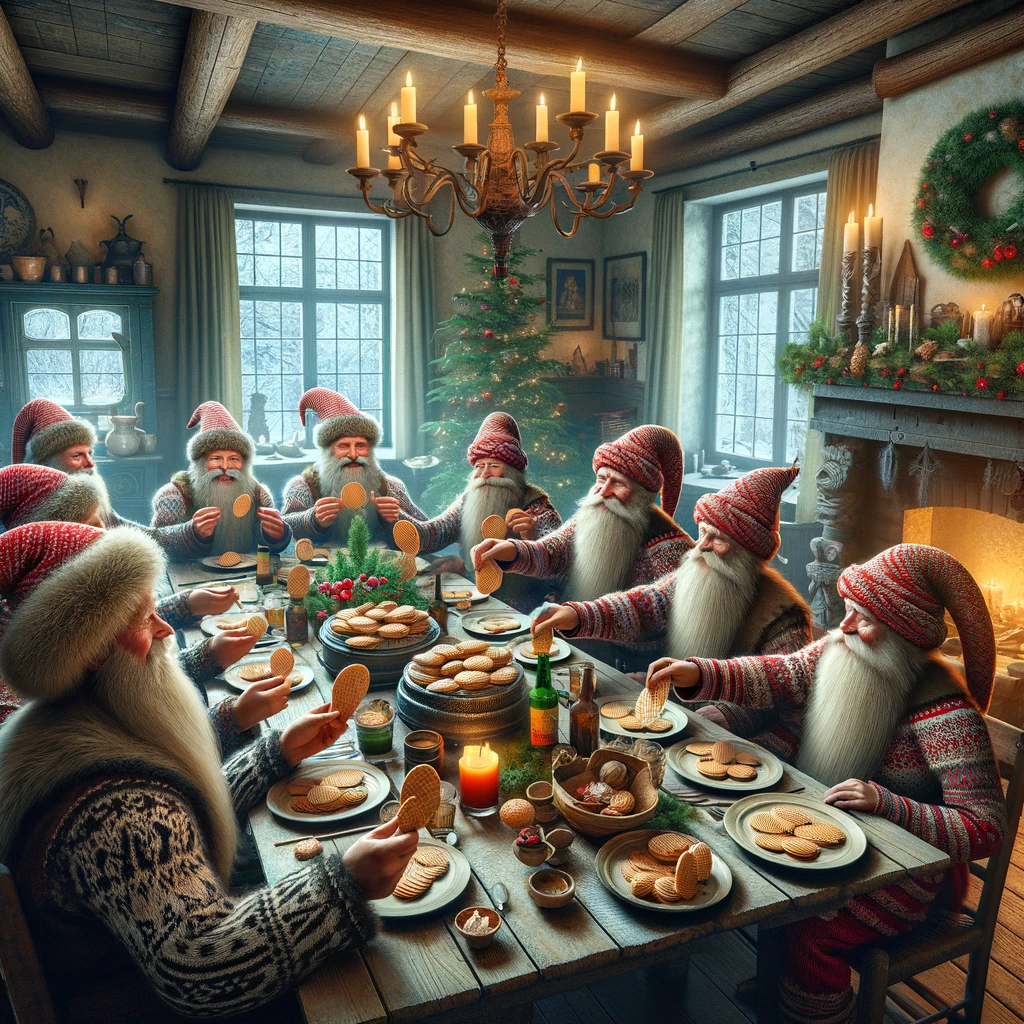
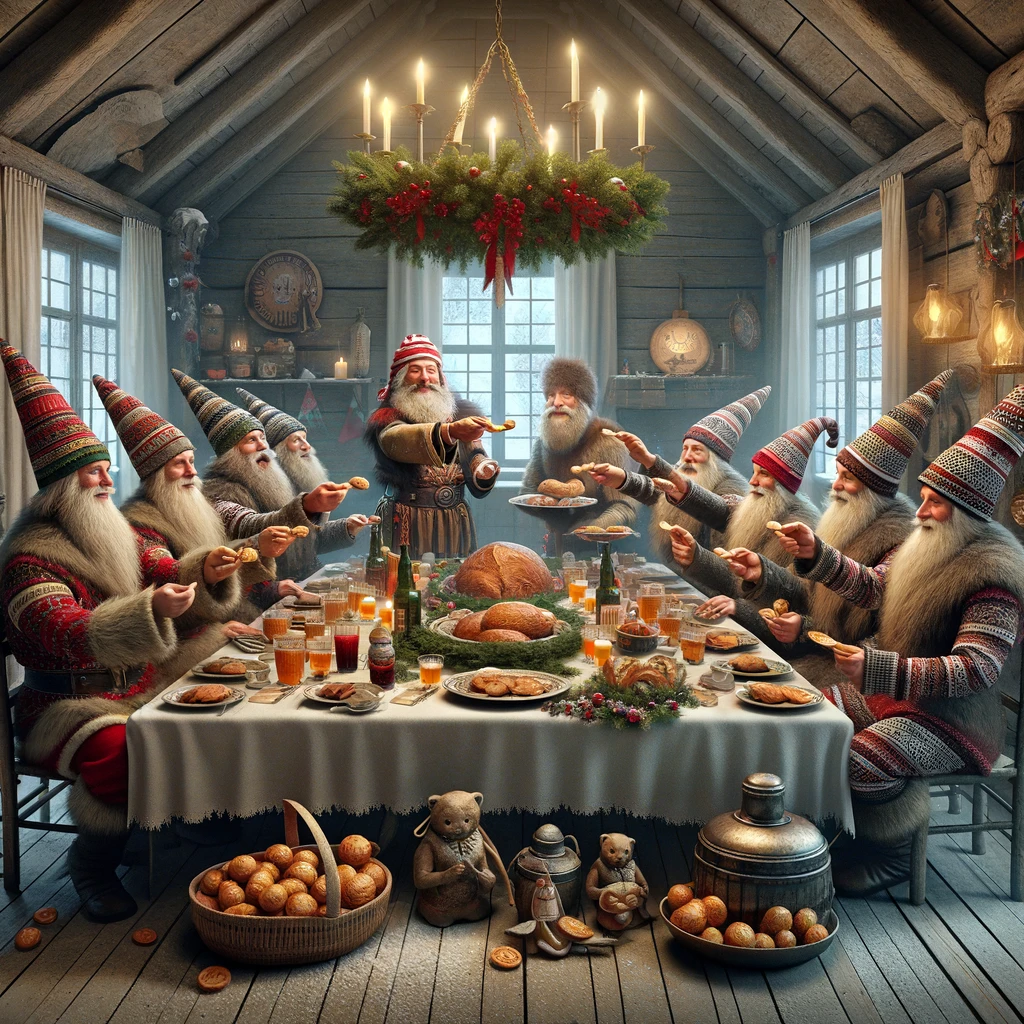
Today, I prompted DALL-E 3 to create a scene in which the Yule Lads are in Poland for Christmas, sharing Christmas wafers with each other while sitting around a table enjoying a special Christmas Eve meal of traditional Polish dishes. Here are the images that were created.
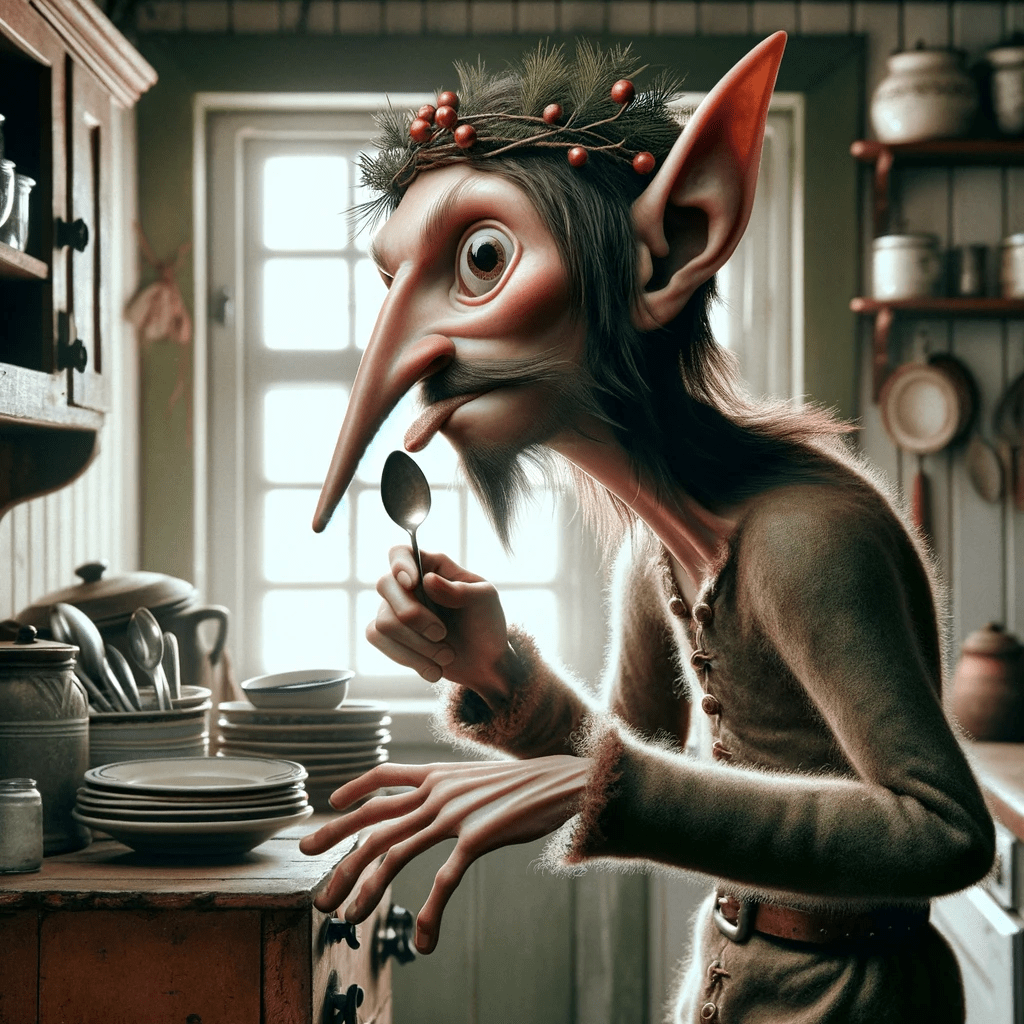
The next Icelandic Yule Lad in sequence of arrival is Þvörusleikir (“Spoon-Licker” in English): he makes his appearance on 15 December. The Yule Lads are a group of 13 mischievous characters, each with their own distinct personalities and behaviours. Let’s delve into the specific characteristics and folklore associated with Þvörusleikir.
Þvörusleikir is often depicted as a lanky and tall figure with an elongated nose and ears, giving him a somewhat comical appearance. His appearance reflects his penchant for spoons and his inclination to use them to get up to mischief.
As his name suggests, Þvörusleikir‘s primary naughty behaviour revolves around spoons. He is notorious for sneaking into households and licking the spoons or utensils used for stirring pots and pans. His intent is not to contaminate the kitchenware but rather to enjoy any remaining scraps of food that may be clinging to them.
Like many of his Yule Lad brethren, Þvörusleikir tends to be shy and cautious around humans. He prefers to operate quietly and unseen while carrying out his spoon-licking activities. This timid nature adds to the intrigue and whimsy surrounding his character.
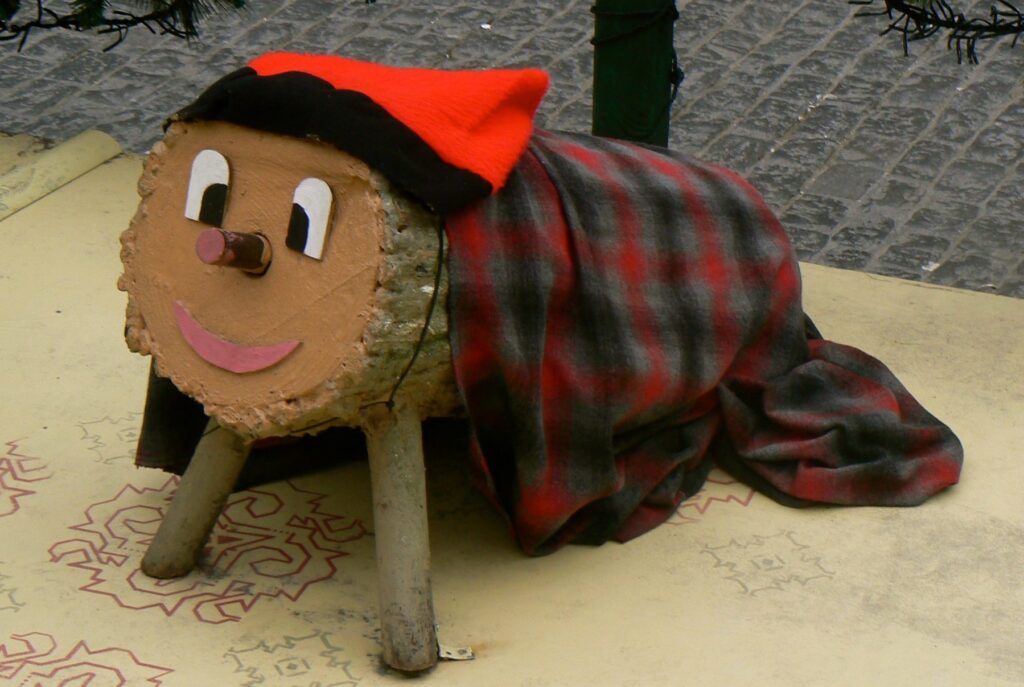
Caga Tió, also known as the “Christmas Log” or “Pooping Log,” is a unique and whimsical Christmas tradition from Catalonia, a region in north-eastern Spain. The tradition is centred around a wooden log with a painted face and legs, often adorned with a red hat. Here’s the origin story and some interesting anecdotes about Caga Tió and how this tradition is used to celebrate Christmas:
Caga Tió
Pagan origins: The origins of Caga Tió are believed to be rooted in ancient pagan traditions, particularly in the Catalan region. It was originally a symbol of fecundity and agricultural fertility, representing the idea of receiving good fortune and prosperity in the coming year.
Christian incorporation: As with many folk traditions, Caga Tió was later incorporated into Christian celebrations at Christmas, much like other customs in Catalonia. The custom became associated with the Christmas season – its symbolism shifted towards the concepts of sharing and generosity.
Interesting anecdotes about Caga Tió
Feeding Caga Tió
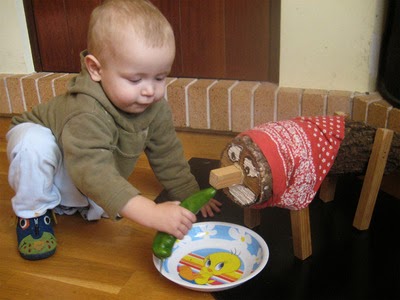
Feeding and caring for Caga Tió: In the days leading up to Christmas, families in Catalonia “feed” Caga Tió by placing small gifts, candies, and nuts under its blanket or by covering it with a piece of cloth. Children are often encouraged to take care of Caga Tió and ensure it stays warm and well-fed.
Caga Tió song: During the Christmas celebration, family members gather around Caga Tió and sing a traditional song called “Caga Tió.” The song typically includes humorous and playful lyrics about coaxing Caga Tió to “defecate” presents.
The beating of Caga Tió: The climax of the celebration occurs when children “beat” Caga Tió with sticks while singing the song. The beating is symbolic and gentle, more akin to tapping than actual violence. This action is believed to help Caga Tió “release” its presents.
What Caga Tió “excretes”: After the song and beating, children reach under the blanket or cloth to find the gifts and treats that Caga Tió has “excreted.” These gifts are usually small toys, turron (nougat candies) and sometimes even coins.
Caga Tió‘s final “excretion”: The tradition concludes when Caga Tió “defecates” the last and biggest gift, often a figurine or a salted herring, representing the grand finale of the celebration.
Variations of Caga Tió: While the basic concept of Caga Tió remains the same, there are regional variations and differences in how the tradition is practised within Catalonia.
Modern adaptations: In modern times, Caga Tió has evolved, and commercial versions of the log are available. Some families still make their own traditional Caga Tió logs, while others purchase ready-made ones.
Caga Tió in popular culture: Caga Tió has made appearances in popular culture and entertainment in Catalonia and beyond. It is often featured in Christmas displays, advertisements, and events.
Hitting Caga Tio to make him poop presents
In a nutshell
Caga Tió is a lighthearted and distinctive Christmas tradition that adds a touch of whimsy to the holiday season in Catalonia. It encourages family togetherness and reinforces the spirit of giving and sharing, while also connecting with the region’s rich cultural heritage and history.
Coda
In these DALL-E 3 images, the Yule Lads are in Catalonia for Christmas, feeding and beating Caga Tió so that it poops candies and presents. The Lads are depicted in a Catalan/Icelandic hybrid interior location.
On 14 December, the Yule Lad who visits households and communities is called Stúfur, or “Stubby”, “Shorty” or “Stumpy” in English. Each Yule Lad has his own unique characteristics and behavior: Stúfur is no different. Here’s what you need to know about him.
Stúfur is often depicted as the shortest Yule Lad. His diminutive stature is reflected in his name: “Stubby”. He is portrayed typically wearing ragged, old clothing and a tattered hat, giving him a disheveled appearance.
Stúfur is renowned for his love of food, particularly the porridge-like dish called “skyr” in Icelandic. However, his voracious appetite is a cause of mischief. Stúfur is notorious for sneaking into kitchens and stealing food, especially skyr, but he has a particular quirk – he is so short that he has trouble reaching pots and pans on high shelves. He uses a long spoon to overcome this challenge, but he often spills more than he manages to eat. So, households might discover their kitchens in disarray, with spilled food and empty containers when Stúfur pays them a visit.
Las Posadas is a traditional Christmas celebration primarily observed in Mexico and some other Latin American countries. The term “posada” means “inn” or “lodging” in Spanish, and the celebration reenacts Mary and Joseph’s search for a place to stay in Bethlehem before the birth of Jesus. Here’s the origin story and some interesting anecdotes about Las Posadas and how it is used to celebrate Christmas:
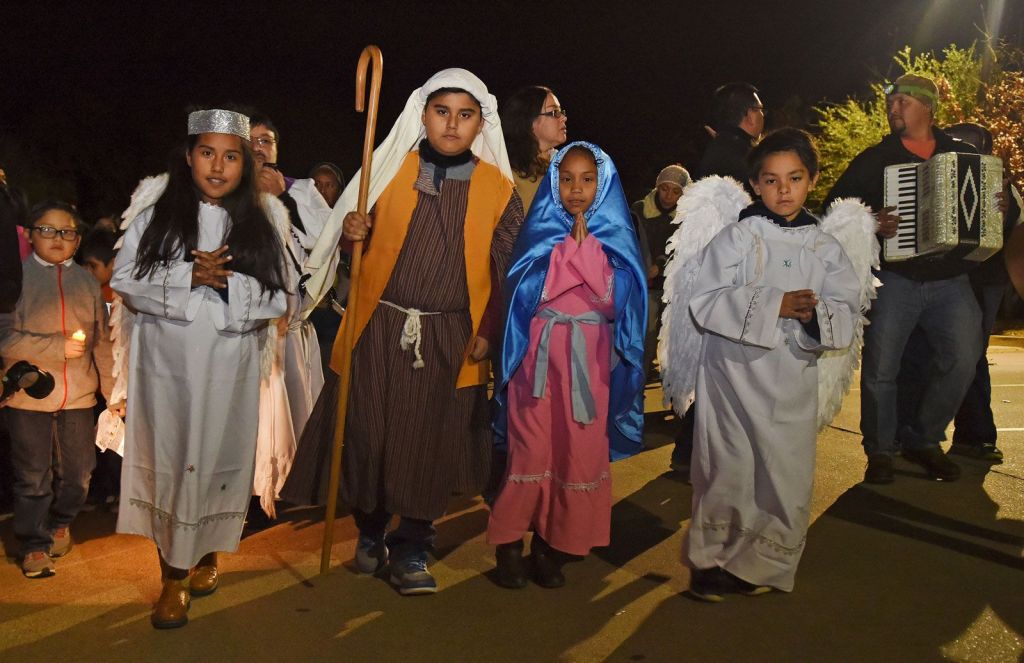
Children in a procession (Britannica)
Spanish influence: Las Posadas has its origins in the Spanish colonisation of Latin America. When Spanish missionaries arrived in the Americas in the 16th century, they sought to convert indigenous populations to Christianity. To make the religious teachings more accessible, they incorporated indigenous traditions into Christian rituals and celebrations.
Simulating Mary and Joseph’s journey: Las Posadas re-enacts the biblical journey of Mary and Joseph as they sought shelter in Bethlehem. Participants, often in costumes, form a procession that goes from house to house, representing the couple’s search for lodging. At each stop, they sing carols and request shelter, but they are usually turned away until they reach the final “inn.”
Interesting anecdotes about Las Posadas
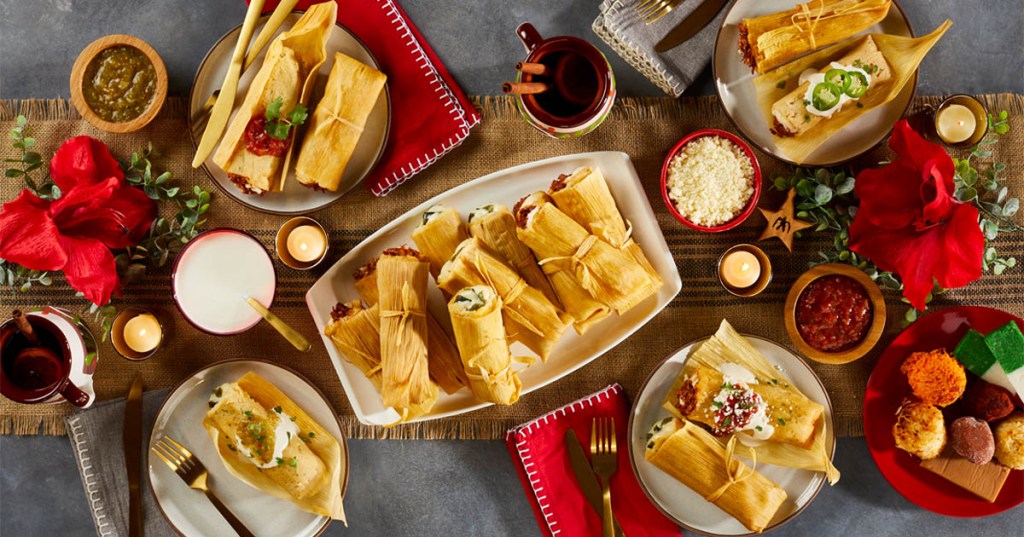
Traditional food and drink (Cacique Foods)
Duration of the celebration: Las Posadas typically begins on 16 December and continues for nine consecutive nights, culminating on 24 December, Christmas Eve. Each night’s procession is known as a “posada.”
Traditional songs: Special songs, known as “villancicos,” are sung during Las Posadas. These songs often include lyrics that reflect Mary and Joseph’s journey and their plea for lodging.
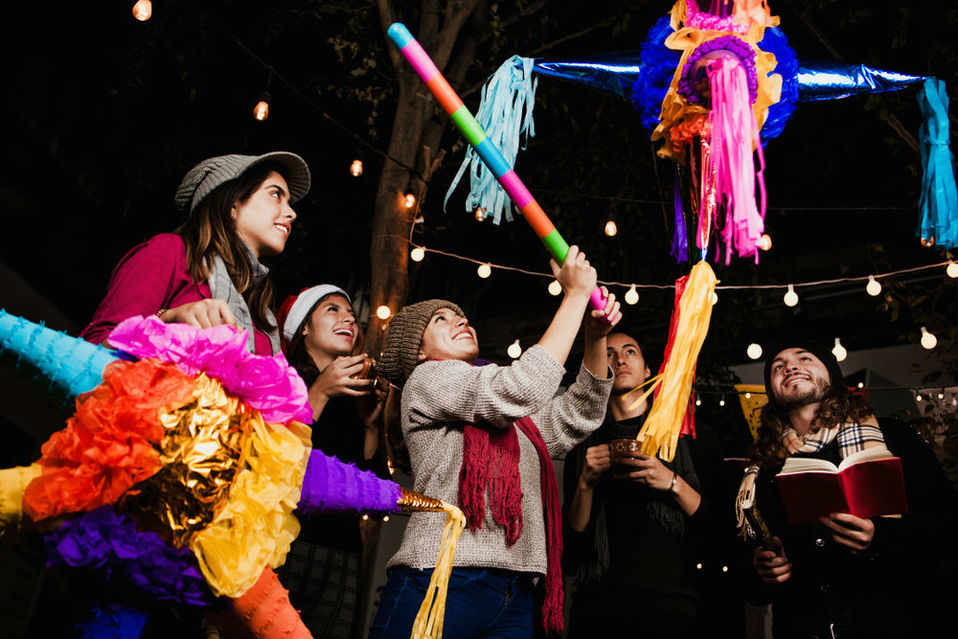
Piñatas: Piñatas are a common feature of Las Posadas celebrations. The traditional piñata represents the devil, and breaking it symbolizes overcoming evil. Piñatas are filled with candies and small toys that spill out when the piñata is broken.
Party and refreshments: After the final “inn” has accepted Mary and Joseph, a party often takes place, featuring traditional foods and drinks such as tamales, ponche (fruit punch), and atole (a warm, thick beverage made from masa or corn flour).
Religious significance: Las Posadas is not only a cultural celebration but also a religious one. It serves as a way for communities to come together to reflect on the nativity story and to prepare for the birth of Jesus on Christmas.
Community bonding: Las Posadas fosters a strong sense of community and togetherness. Neighbors and friends often participate in the processions and open their homes to fellow community members, reinforcing bonds and solidarity.
Variations in Latin America: While Las Posadas is most closely associated with Mexico, variations of the celebration exist in other Latin American countries, each with its unique customs and traditions.
Modern adaptations: In some urban areas, Las Posadas processions have taken on a more modern form, with participants riding in cars or buses rather than walking from house to house. However, the core elements of the celebration, including singing, prayer and fellowship remain intact.
Hitting a traditional piñata (Milenio)
In a nutshell
Las Posadas is a meaningful and festive Christmas tradition that combines cultural heritage with religious devotion. It serves as a way for communities to come together, reflect on the nativity story, and prepare for the joyous celebration of the birth of Jesus.
Coda
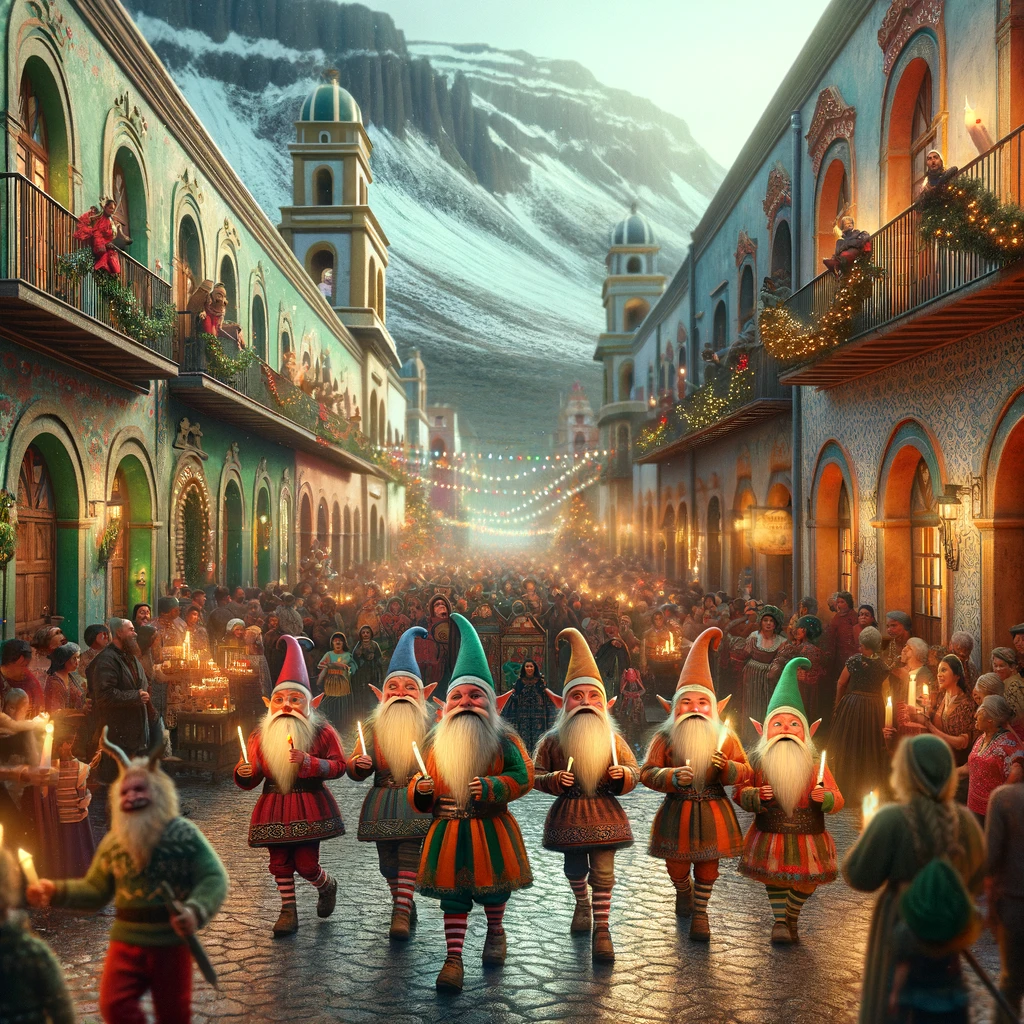
Today’s prompt allowed DALL-3 to really flex its muscles. I asked the image AI generator to show the Yule Lads in Mexico for Christmas, taking part in a Las Posadas street procession where a few of the Lads are hitting a traditional piñata. I requested a backdrop of a Mexican/Icelandic hybrid landscape in a village. Here are the results.
The Yule Lad who visits Icelandic households on 13 December is called Giljagaur, which translates to “Gully Gawk” in English. Here are the unique set of characteristics and behaviours associated wit.
Giljagaur is often depicted as a tall and skinny figure with a somewhat hunched back. He wears a grayish-white or light blueish robe and is known for being somewhat creepy in appearance.
Giljagaur’s main mischievous behavior revolves around the act of stealthily sneaking into cowsheds to steal milk from the cows. He is particularly interested in the frothy, creamy part of the milk called “gil” in Icelandic, from which he gets his name: “Giljagaur.” He is said to have an affinity for fresh milk, going to great lengths to obtain it.
However, Giljagaur is generally considered one of the shyer, more timid Yule Lads. He prefers to stay out of sight and avoids direct confrontation with humans.
KFC Christmas (also known in its long form as Kentucky Fried Chicken Christmas) is a unique and somewhat unexpected Christmas tradition that originated in Japan. Here’s the story behind how KFC Christmas came about:
Sunburst KFC Christmas advertising in Japan
Early promotion in Japan: The tradition of KFC Christmas began in Japan in the 1970s. At the time, Japan did not have a strong tradition of celebrating Christmas, which was seen as a foreign holiday. KFC saw an opportunity to introduce its brand and products to the Japanese market by associating them with Christmas.
The “Kurisumasu ni wa kentakkii!” campaign: In 1974, KFC Japan launched a marketing campaign with the slogan “Kurisumasu ni wa kentakkii!” which translates to “Kentucky for Christmas!” The campaign promoted KFC’s fried chicken as a special Christmas meal, with an emphasis on sharing and celebration.
Success and continued tradition: The marketing campaign was a massive success, and the idea of having KFC for Christmas caught on quickly in Japan. It became a popular tradition for families to order KFC chicken buckets for Christmas Eve or Christmas Day.
Interesting anecdotes about KFC Christmas
Colonel Sanders with a Japanese twist
Pre-ordering KFC: Due to the popularity of KFC Christmas in Japan, it’s common for people to place their orders well in advance, sometimes weeks ahead of Christmas. KFC locations may even offer special Christmas-themed meal packages.
Festive packaging: KFC Japan often packages its Christmas meals in special holiday-themed packaging to enhance the festive atmosphere.
Christmas party barrels: One of the most popular items during KFC Christmas in Japan is the “Christmas party barrel,” which includes a variety of fried chicken pieces, side dishes, and even a Christmas cake.
Colonel Sanders as Santa: During the Christmas season, Colonel Sanders, the founder of KFC, is sometimes dressed up as Santa Claus in advertisements and decorations at KFC locations in Japan.
Promotional merchandise: KFC Japan has occasionally released limited-edition Christmas-themed merchandise, such as ornaments and collectibles featuring Colonel Sanders in holiday attire.
Global spread: While KFC Christmas is most closely associated with Japan, the tradition has also been embraced in other countries, especially in some Asian nations. In these places, people may enjoy KFC as part of their Christmas celebrations.
Alternative to home cooking: KFC Christmas has become a convenient alternative to cooking a traditional Christmas meal at home, especially for busy families.
KFC Charity: In some locations, KFC Christmas promotions include charitable initiatives, such as providing meals for those in need during the holiday season.
Dressing up for a KFC dinner
In a nutshell
KFC Christmas in Japan is a testament to the power of effective marketing and the adaptability of holiday traditions. What started as a promotional campaign has become a beloved and enduring Christmas tradition for many in Japan, offering a unique way to celebrate the holiday season with family and friends over a bucket of fried chicken.
Coda
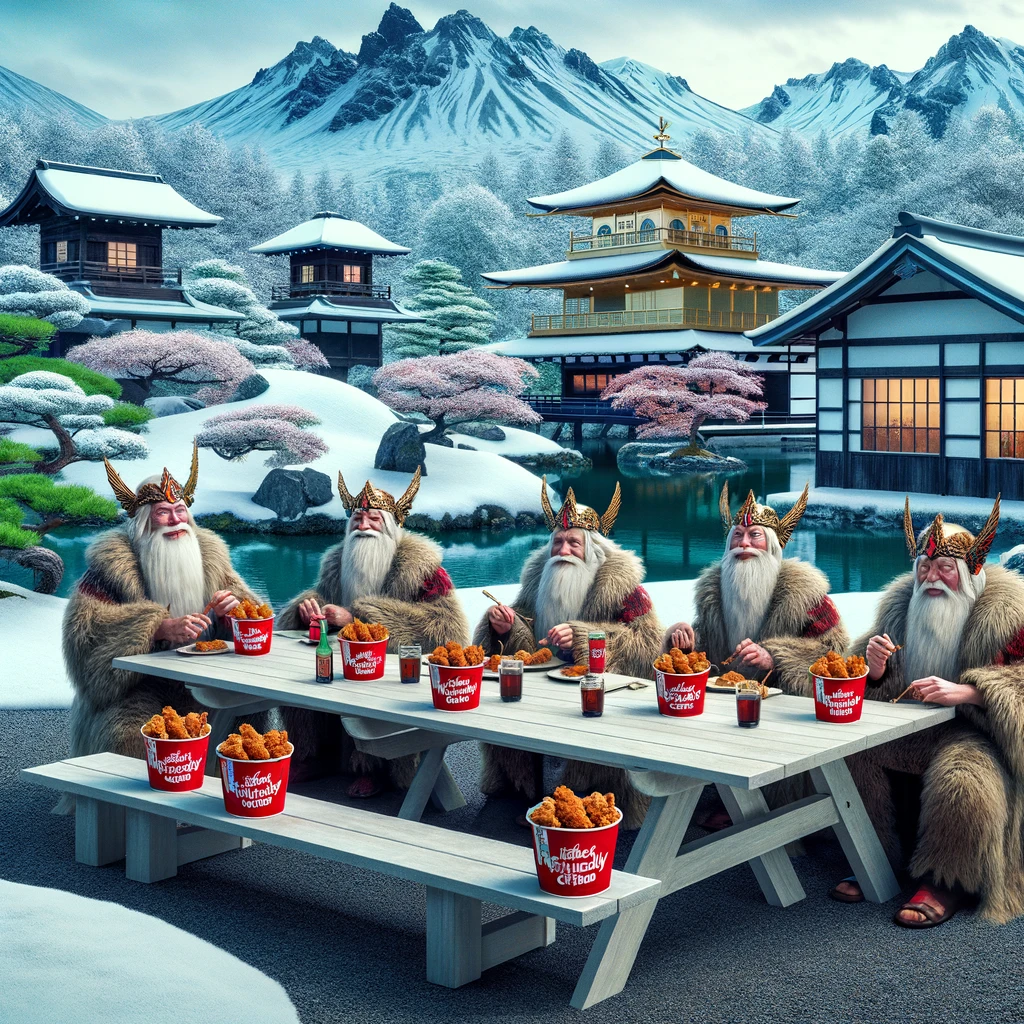
No prompt seems to be too tricky for DALL-E 3 to address. This time, imagine the Yule Lads on tour over Christmas in a Japanese/Icelandic hybrid landscape, enjoying a KFC Christmas along with the locals. Here are the results.
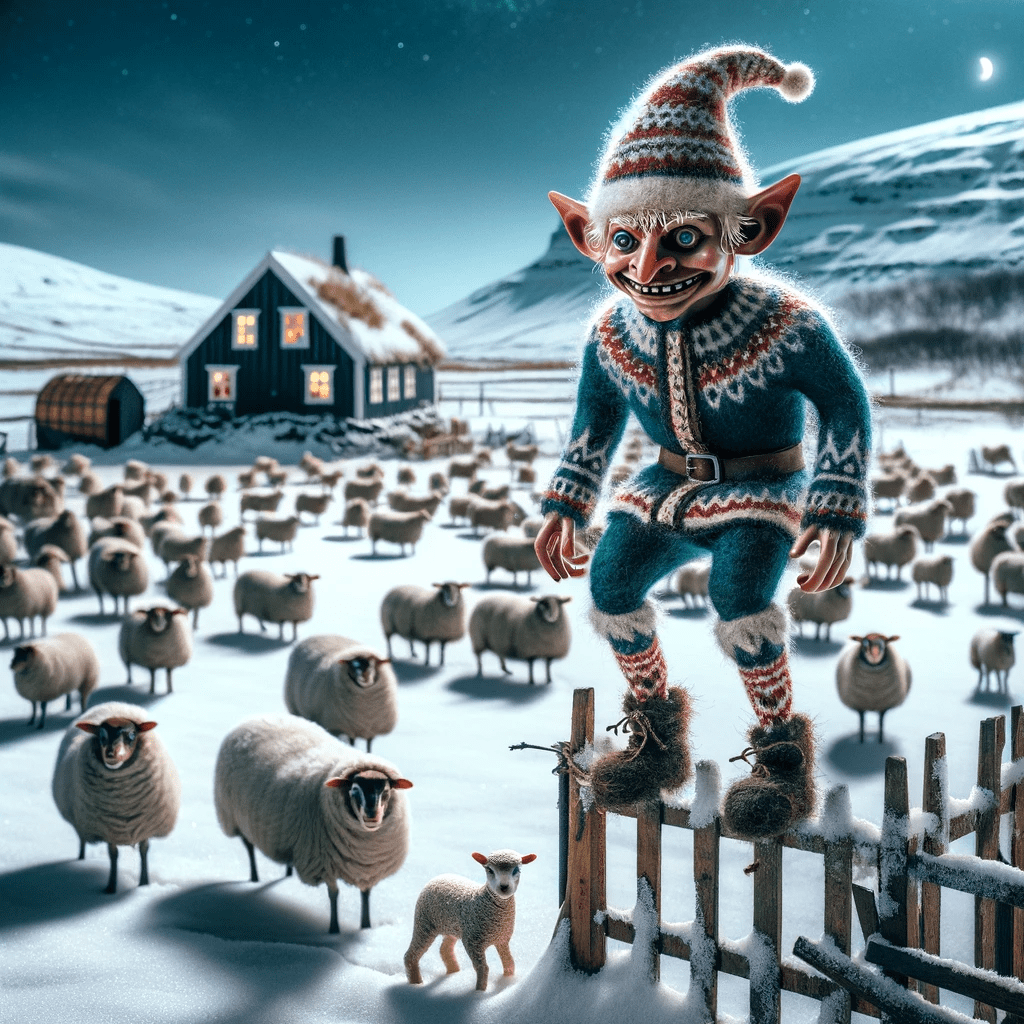
Stekkjarstaur, whose name translates to “Sheep-Cote Clod” in English, is the first Yule Lad to arrive in Icelandic communities. He begins his visits on 12 December.
Sheep-Cote Clod is characterised by his tendency to harass sheep and is often depicted with stiff, peg-like legs, which he uses to scale fences and reach the sheep pens. His primary purpose during his visit is to steal milk from the ewes by suckling on them or simply causing trouble among the livestock.
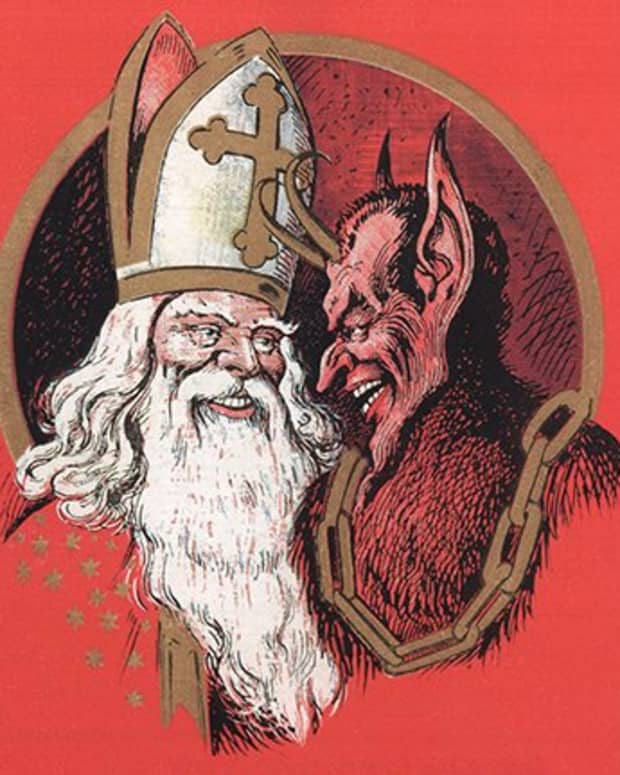
Krampus is a folklore character with roots in Central European and Alpine traditions, particularly in Austria, Bavaria, and other German-speaking regions. Unlike Santa Claus, who rewards good children with gifts, Krampus is a dark and sinister figure who punishes naughty children during the Christmas season. Here’s the origin story and some interesting anecdotes about Krampus and how this character is used to celebrate Christmas around the world:
Celebrating St Nicholas’ Day
Pagan origins: Krampus’ origins can be traced back to pre-Christian pagan beliefs in the Alpine regions of Europe. In these areas, it was believed that during the winter solstice, evil spirits roamed the earth, and people performed rituals to drive them away.
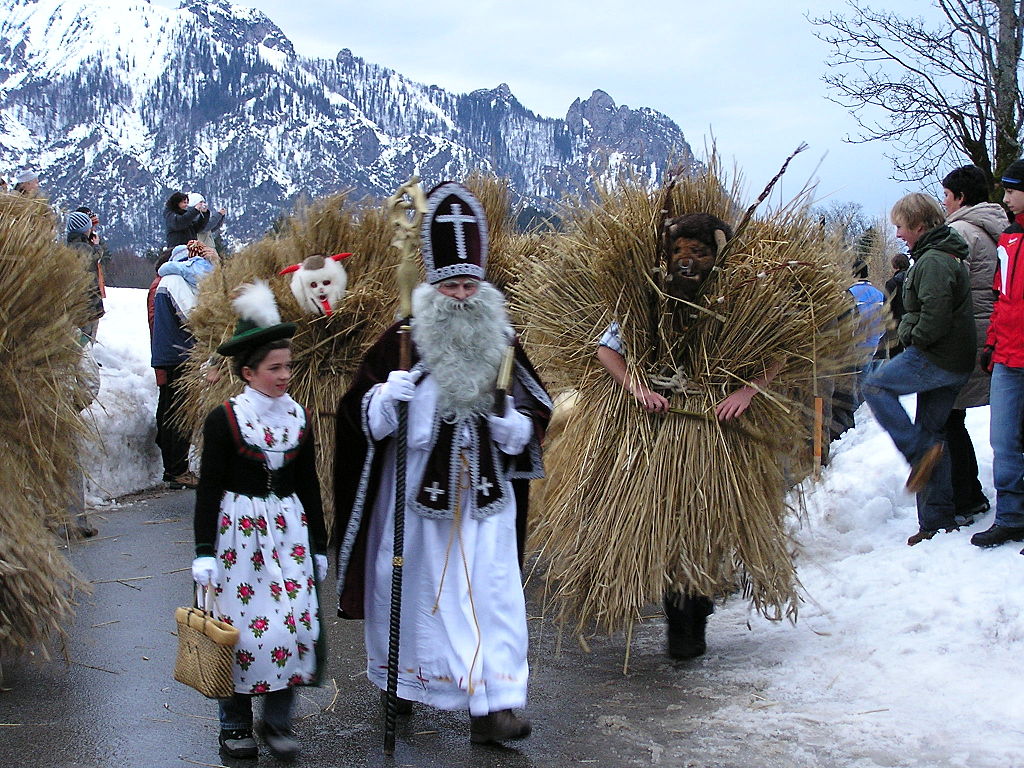
Christian adaptation: With the spread of Christianity, many pagan traditions were incorporated into Christian holidays. Krampus became associated with St Nicholas, who rewarded good children and punished the bad. The date 6th December, known as St Nicholas Day, became the occasion when Krampus would visit homes.
Interesting anecdotes about Krampus
St Nicholas’ Day procession in Bavaria
Krampusnacht: On the night of 5th December, known as Krampusnacht, people in Alpine regions dress up as Krampus and roam the streets, scaring children and adults alike. In some places, parades featuring elaborate Krampus costumes are held.
Krampuslauf: “Krampuslauf” refers to Krampus runs or processions that take place in various Austrian and German towns. Participants dress as Krampus and roam the streets, often engaging in mock confrontations with spectators. These events have gained popularity and are now attended by tourists.
Krampus cards: In the early 20th century, greeting cards featuring Krampus, known as Krampuskarten, became popular in Austria and Bavaria. These cards often depicted Krampus frightening children and included humorous or rhyming verses.
Austrian folklore: In Austrian folklore, Krampus is sometimes accompanied by a counterpart known as “Perchten,” who are female creatures that represent the wild and untamed aspects of nature. The Perchten also participate in processions and festivities during the holiday season.
Modern pop culture: Krampus has made appearances in modern pop culture, including movies, television shows, and even a dedicated “Krampusnacht” event at Universal Studios’ Halloween Horror Nights.
Krampuslauf in the United States: In recent years, Krampus-themed events and parades have gained popularity in the United States. Cities like Los Angeles and Philadelphia host Krampus-themed runs and festivals.
Krampusnacht celebrations: Some people have embraced Krampusnacht as a playful and slightly subversive alternative to traditional Christmas celebrations. It’s a time to dress up as Krampus, indulge in dark humour, and celebrate the darker side of the holiday season.
Krampus’ punishments: In the legend, Krampus is often depicted carrying chains and a bundle of birch branches, which he uses to swat and whip naughty children. In some traditions, he might also stuff misbehaving children into his sack and carry them away.
Krampusnacht DC
In a nutshell
Krampus adds a unique and slightly eerie dimension to the Christmas season in certain European cultures. While he may be a fearsome character, he also serves as a reminder to children to behave and a source of entertainment for those who embrace the tradition of Krampusnacht.
Coda
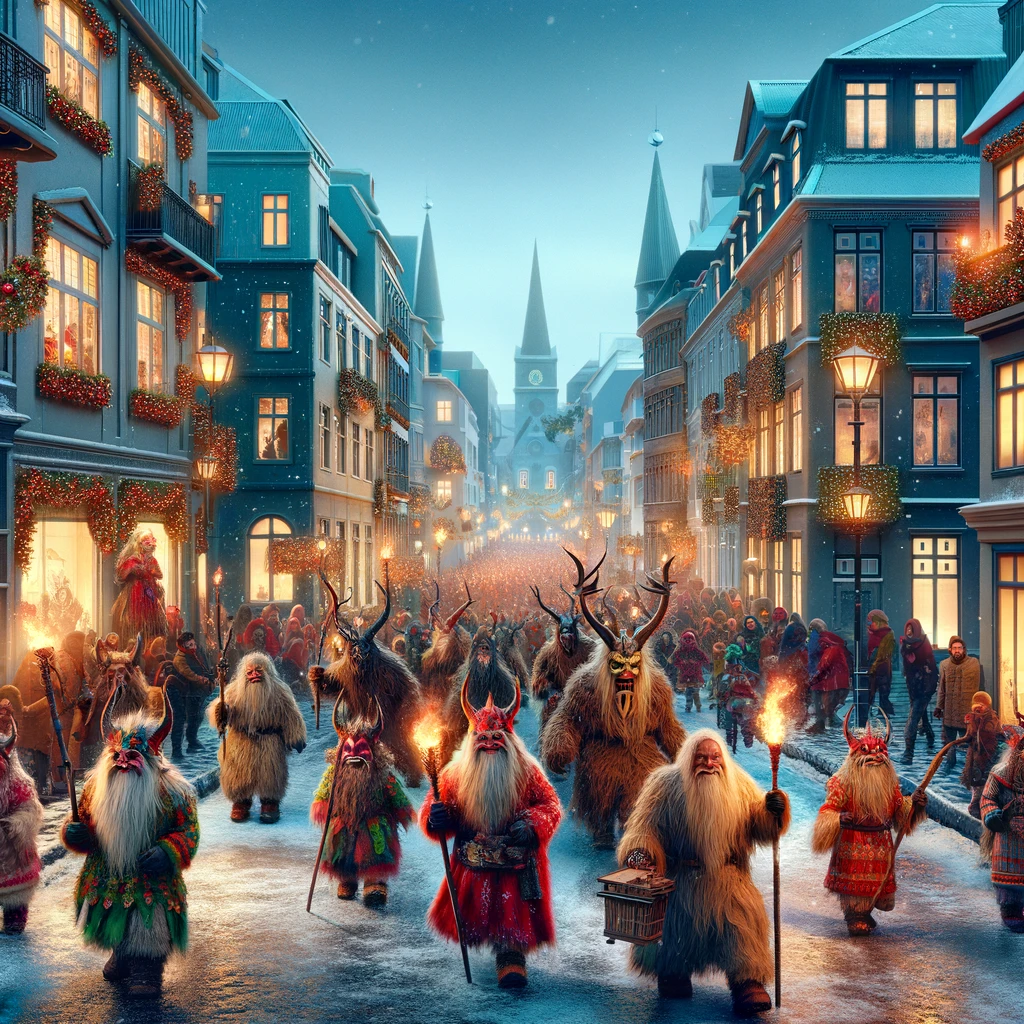
In these hypothetical tableaux, DALL-E 3 images the Yule Lads taking part in a Krampusnacht procession taking place in a street in Reykjavík, the capital of Iceland.
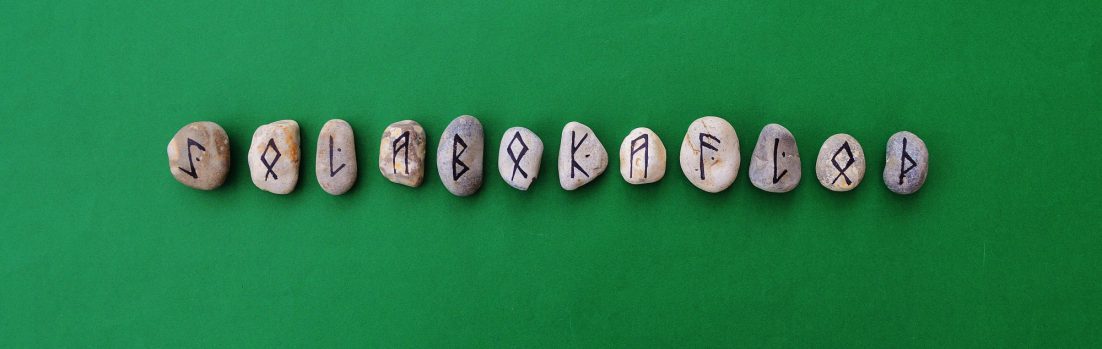





















 Jolabokaflod