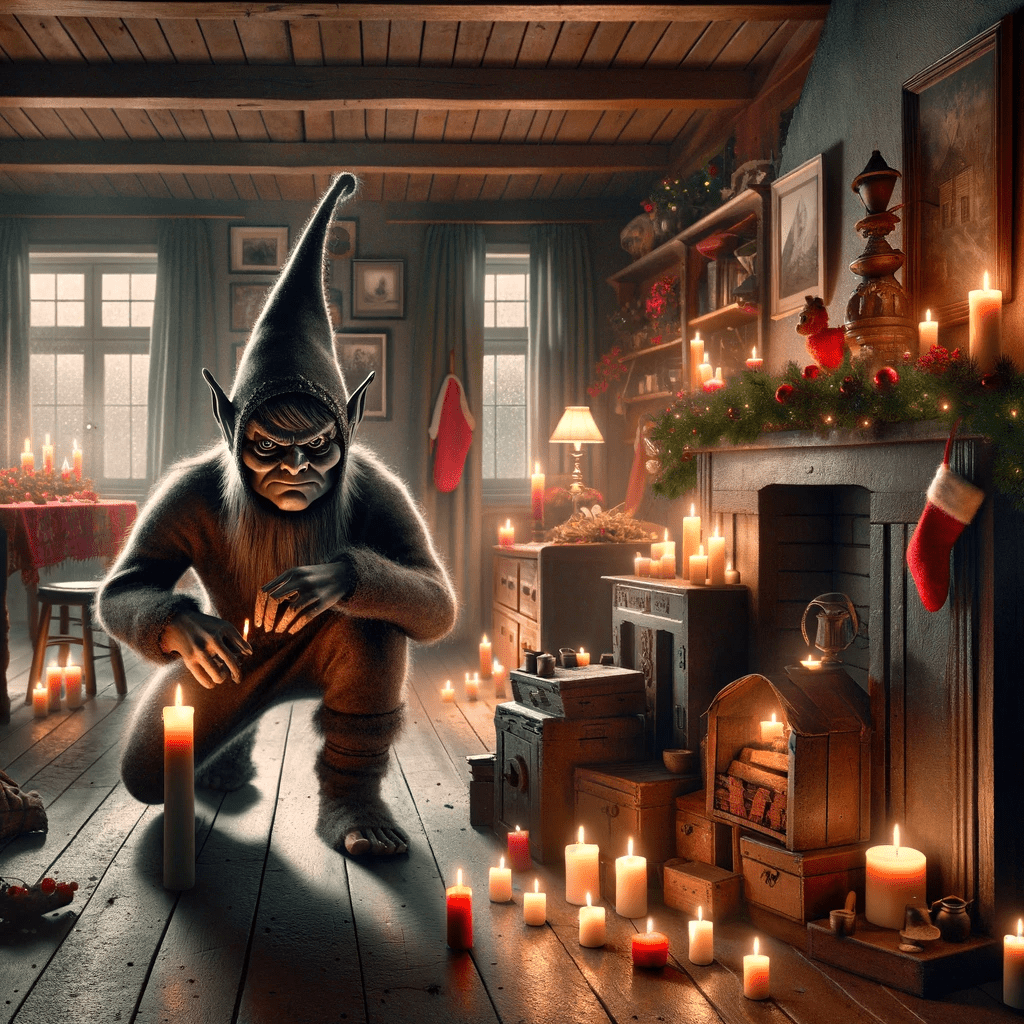
Kertasníkir is also known as “Candle Beggar” or “Candle Stealer” in English. He is one of the Yule Lads, known as “Jólasveinarnir” in Icelandic. Kertasníkir makes his visit to Icelandic households on 24 December and is the final Yule Lad to arrive. His name reflects his unique behaviour. Let’s explore the specific characteristics and folklore associated with Kertasníkir:
This Yule Lad is often depicted as a somewhat solemn and dark figure, which is fitting for his role as the last visitor. His appearance suggests his association with the darkest night of the year.
Kertasníkir‘s mischievous behaviour revolves around candles. He is known for sneaking into houses on Christmas Eve to steal candles. In olden times, candles were a precious source of light during the long, dark Icelandic winters. Kertasníkir‘s goal is to take these candles, possibly leaving the household in darkness or depriving them of their Christmas candlelight.
Kertasníkir collects candles by secretly taking them from the homes he visits. The more candles he can take, the darker he leaves the house.
Simbang Gabi, which means “Night Mass” in Filipino, is a cherished Christmas tradition in the Philippines. This novena (sequence of nine) dawn Masses leading up to Christmas Eve is a unique and significant part of Filipino festive celebrations. Here’s the origin story and some interesting anecdotes about Simbang Gabi and how this tradition is used to celebrate Christmas:
“Misa de Gallo” in Manila, Philippines (Reuters)
Spanish influence: Simbang Gabi can trace its origins to the Spanish colonial period in the Philippines, which lasted for over 300 years. The tradition was introduced by Spanish friars who wanted to accommodate the agrarian schedules of Filipino farmers. The early morning Masses allowed farmers to attend before going to work in the fields.
Aguinaldo Mass: Simbang Gabi was initially called “Aguinaldo Masses” or “Misa de Gallo” (Rooster’s Mass) because it was traditionally held at dawn, symbolising the coming of the new day and the rooster’s crow. The custom of attending these pre-dawn Masses spread rapidly throughout the Philippines.
Interesting anecdotes about Simbang Gabi
Parish leaders with parols in church (Crosscut)
Nine mornings: Simbang Gabi consists of a series of nine Masses celebrated on consecutive days, usually starting on 16 December and culminating on Christmas Eve, 24 December. This nine-day novena is a significant spiritual preparation for Christmas.
Diverse traditions: Simbang Gabi is celebrated with regional and local variations throughout the Philippines. Each region may have its unique customs and practices associated with the Masses.
Filipino cuisine: One of the highlights of Simbang Gabi is the availability of Filipino delicacies and treats sold outside churches and along the streets, especially after the Masses. Vendors offer a wide variety of food, including bibingka (rice cake), puto bumbong (purple rice cake), tsokolate (chocolate), and various rice and noodle dishes.
Community and fellowship: Simbang Gabi brings communities together. Families, friends and neighbours attend the Masses as a group, fostering a sense of togetherness and solidarity. It is also a time for social gatherings and reunions.
Dress code: It is customary for attendees to wear their best clothes to Simbang Gabi Masses. Many people choose to wear traditional Filipino attire, such as the barong tagalog for men and the Filipiniana dress for women.
Christmas music: Traditional Filipino Christmas carols, known as “Simbang Gabi” songs, are sung during the Masses. These songs add a festive and joyous atmosphere to the novena.
Midnight Mass: Simbang Gabi culminates with the Midnight Mass on Christmas Eve, known as “Misa de Gallo.” This is when Christmas officially begins in the Philippines, and it is one of the most well-attended Masses of the year.
Candlelit processions: In some regions, candlelit processions and parades are held after the Masses, creating a luminous and visually stunning spectacle.
Faith and devotion: Simbang Gabi is not only a cultural tradition but also a deeply religious and spiritual experience for Filipinos. It is a time for prayer, reflection, and strengthening one’s faith.
Traditional food at Simbang Gabi
In a nutshell
Simbang Gabi is a beautiful and spiritually enriching tradition that captures the essence of Filipino Christmas. It is a time of devotion, community, and celebration that prepares the faithful to welcome the birth of Jesus Christ on Christmas Day.
Coda
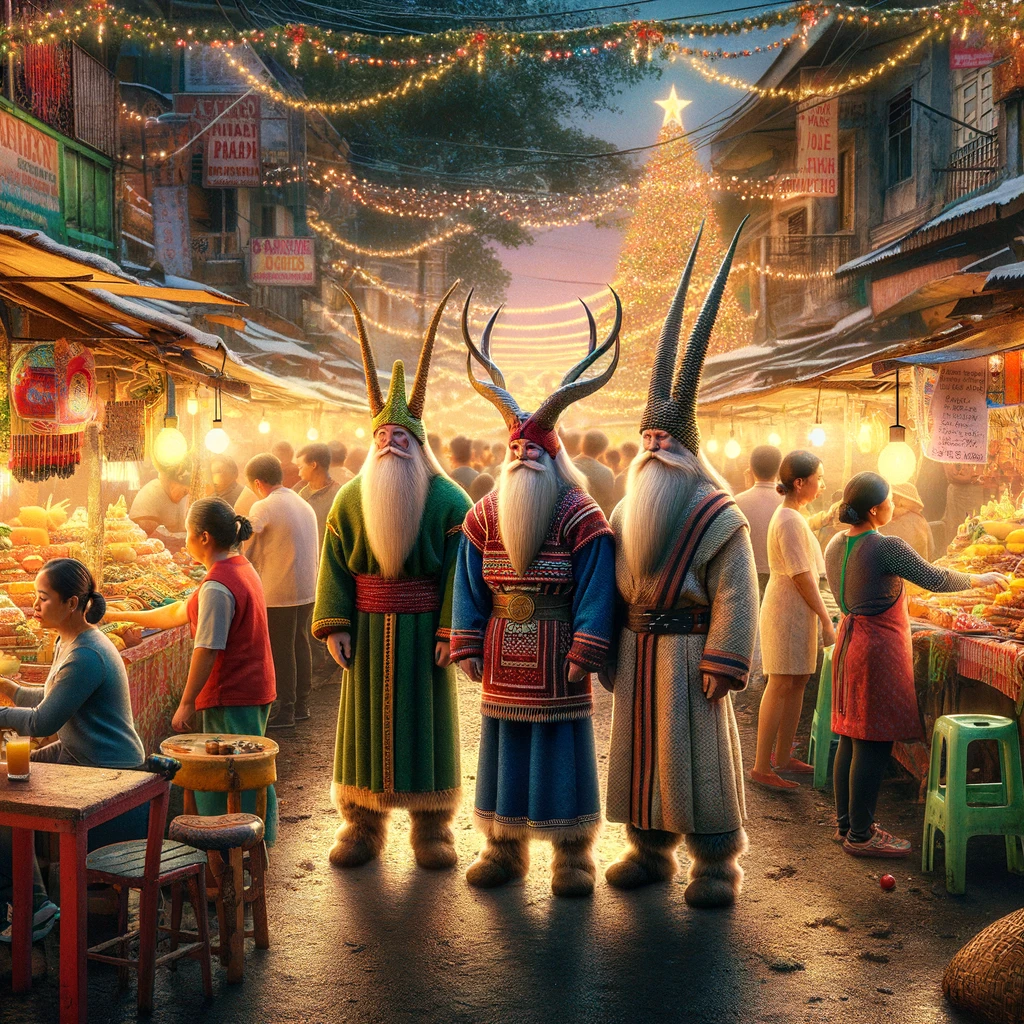
In order to capture the exuberance of Simbang Gabi in the Philippines, DALL-E 3 imagines the Yule Lads wearing traditional clothes walking in a Manila street full of street vendors selling traditional food.
Ketkrókur, also known as “Meat-Hook” in English, is one of the Icelandic Yule Lads who makes his visit to houses and communities on 23 December. The Yule Lads are a group of 13 mischievous characters, each with their unique personalities and behaviour. Let’s explore the specific characteristics and folklore associated with Ketkrókur.
Ketkrókur is often depicted as a tall and menacing figure with a long, curved hook, resembling a meat hook. His appearance reflects his penchant for stealing meat.
His naughty behaviour centres around his love of meat. During his nighttime visits to Icelandic homes, he uses his hook to steal meat, especially any meat that may be hanging or stored in a larder or pantry. His goal is to savour the meaty delicacies, leaving the family without their intended culinary delights.
Ketkrókur is known for his skill in silently and skillfully snatching meat, making him a proficient meat thief.
A nisse (Denmark and Norway), also known as a tomte (Sweden), and a tonttu (Finland), is a mythical creature with a long history in Scandinavian folklore. These small, humanoid beings are associated typically with the rural countryside and are considered guardians of the farmsteads. The tradition of the tomte or nisse is deeply rooted in the cultures of Sweden, Denmark, Finland and Norway. While they are not directly associated with Christmas celebrations worldwide, they do have some connections to the holiday season in the Scandinavian countries. Here is the origin story and characteristics of these gnome-like creatures.
Living in a barn
Ancient beliefs: The concept of nisse or tomte has its origins in ancient Norse and Scandinavian folklore. These beings were believed to be protective spirits of the farm and household, ensuring the well-being of the family and livestock.
Appearance: Nisse and tomte are often depicted as small, bearded men wearing traditional Scandinavian clothing, including a pointed red hat. They are usually portrayed as friendly and kind-hearted but can also be mischievous if they feel neglected or disrespected.
Interesting anecdotes about nisse and tomte
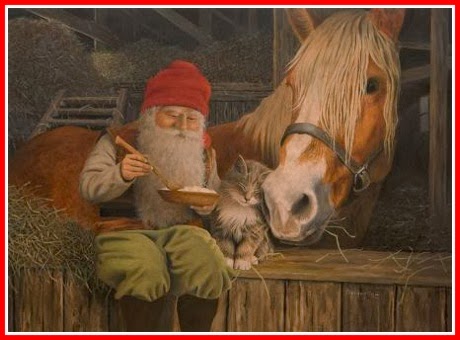
Rice pudding offering
Christmas connections: While the nisse/tomte tradition is not directly tied to Christmas, it has become intertwined with holiday customs in Scandinavia. In Sweden and Denmark, it is common to include a nisse or tomato figurine or ornament as part of Christmas decorations. These figurines are often placed on Christmas trees or around the home.
Rice pudding offering: In Denmark, it is a tradition to leave a bowl of rice pudding or porridge out for the nisse or tomte on Christmas Eve as a gesture of goodwill. It is believed that the nisse or tomte would turn mischievous or even angry if this offering is neglected.
Gift-giver role: In some regions of Scandinavia, the nisse or tomte is associated with gift-giving during the holiday season. Children may believe that the nisse/tomte brings them gifts on Christmas Eve. This role is similar to that of Santa Claus in other cultures.
Guardian of the farm: Traditionally, the nisse and tomte were considered the guardians of farms and their inhabitants. Farmers would leave offerings of food, such as porridge, in the barn to ensure the nisse/tomte protection and goodwill.
Farm superstitions: Farmers believed that it was essential to treat the nisse and tomte with respect and kindness. They would avoid using harsh language, refrain from playing pranks, and make sure the nisse/tomte had a comfortable place to stay within the farm, often a small nook or barn loft.
Modern interpretations: Today, the nisse/tomte tradition remains alive in Scandinavian countries, and these creatures are celebrated as part of the cultural heritage. Modern interpretations include figurines, ornaments and decorations that are popular during the holiday season.
Modern figurine
In a nutshell
While the nisse/tomte tradition is deeply rooted in Scandinavian folklore and customs, it has influenced some Christmas practices in the region. These mythical beings, with their distinctive red hats and benevolent yet mischievous nature, add a touch of whimsy and cultural richness to the holiday season in Scandinavia.
Coda
Today, DALL-E 3 imagines the Yule Lads disguised as nisse and tomte, guardian a farmstead nestled in an Icelandic landscape.
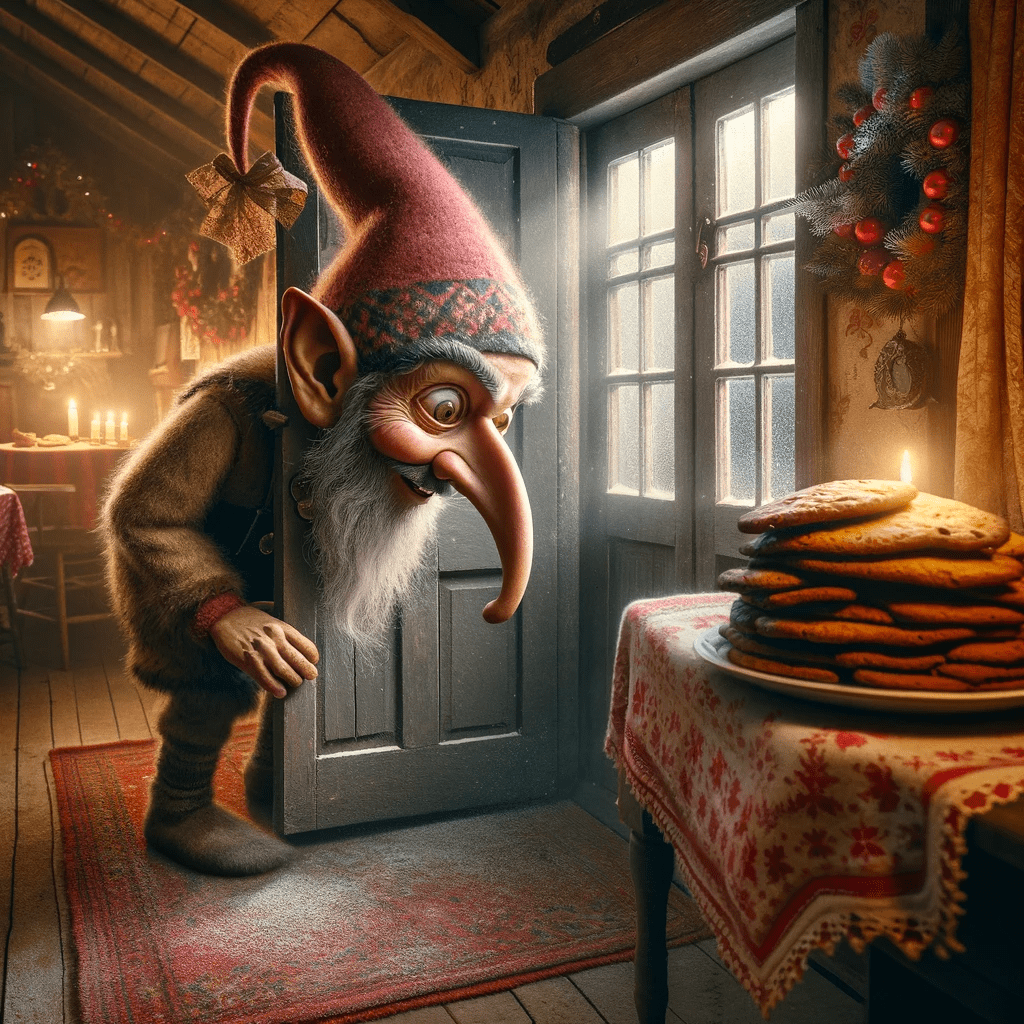
Gáttaþefur, also known as “Doorway-Sniffer” in English, is one of the Yule Lads; he makes his visit to Icelandic households and communities on 22 December. The Yule Lads are a group of 13 mischievous characters, each with their unique personalities and behaviour. Let’s explore the specific characteristics and folklore associated with Gáttaþefur:
Gáttaþefur is often depicted as a peculiar figure with an elongated and prominent nose, which reflects his unique ability to sniff out his favorite treats.
His primary mischievous behaviour revolves around his keen sense of smell. He is known for his habit of sniffing around doorways and windows to detect the aroma of traditional Icelandic holiday bread called “laufabrauð” or “leaf bread.” When he detects the tempting scent of this crispy, paper-thin bread, he can’t resist entering the household to enjoy a bite.
Gáttaþefur‘s exceptional sense of smell allows him to locate “laufabrauð” even if it’s well hidden. He will find a way to follow the tantalising aroma to its source.
The Elf on the Shelf is a relatively modern Christmas tradition that originated in the United States. It was created by Carol Aebersold and her daughter Chanda Bell, who wrote a children’s book titled The Elf on the Shelf: A Christmas Tradition. The book was self-published in 2005 and has since become a popular holiday tradition. Here’s the origin story and some interesting anecdotes about the Elf on the Shelf and how this tradition is used to celebrate Christmas:
Book front cover
The book’s creation: The idea for the Elf on the Shelf tradition was inspired by Carol Aebersold’s family tradition of an elf who would visit during the Christmas season. She and her daughter Chanda Bell decided to turn this family tradition into a children’s book to share with others.
The story: The Elf on the Shelf tells the story of Santa Claus sending Scout Elves to children’s homes to watch over them during the Christmas season. The elves return to the North Pole each night to report to Santa about the children’s behaviour and then return to a different spot in the house before morning.
Interesting anecdotes about the Elf on the Shelf
Elves toasting marshmallows
Scout Elf’s arrival: In many households, the Elf on the Shelf tradition begins with the arrival of the Scout Elf in early December. Parents often stage a grand arrival, and children are encouraged to give the elf a name.
Daily elf moves: The central aspect of the tradition involves the Scout Elf moving to a different location in the house each night. Children wake up and search for the elf’s new hiding spot, adding an element of excitement to each day during Advent leading up to Christmas.
Good behaviour: The Elf on the Shelf is often used to encourage good behaviour in children. The idea is that the elf is reporting to Santa, and children are more likely to be on their best behaviour to ensure they make it onto Santa’s “nice” list.
Letters to Santa: Some families incorporate letter-writing into the tradition, with children leaving notes for the Scout Elf to deliver to Santa, expressing their Christmas wishes and gratitude.
Elf adventures: Many families get creative with the Elf on the Shelf’s daily locations and poses. The elf might be found engaged in playful activities, reading books, baking mini cookies, or even participating in tiny adventures.
North Pole breakfast: Some families kick off the Elf on the Shelf tradition with a North Pole breakfast, where they serve festive foods and the elf is revealed to have returned for the holiday season.
Elf farewell: On Christmas Eve, the Scout Elf typically returns to the North Pole with Santa Claus. Families often say farewell to their elf with gratitude and anticipation for their return the following year.
Expanding traditions: The Elf on the Shelf tradition has expanded to include various themed elf accessories, clothing and props, allowing families to customise the experience.
Controversy: While the tradition is beloved by many families, it has also faced some criticism. Some argue that it promotes surveillance and behavioural control, while others simply find it tiresome to come up with daily elf scenarios.
North Pole breakfast
In a nutshell
The Elf on the Shelf tradition has gained widespread popularity in the United States and beyond, becoming a cherished part of many families’ holiday celebrations. It combines storytelling, creativity, and the magic of Christmas to create a unique and interactive experience for children during the holiday season.
Coda
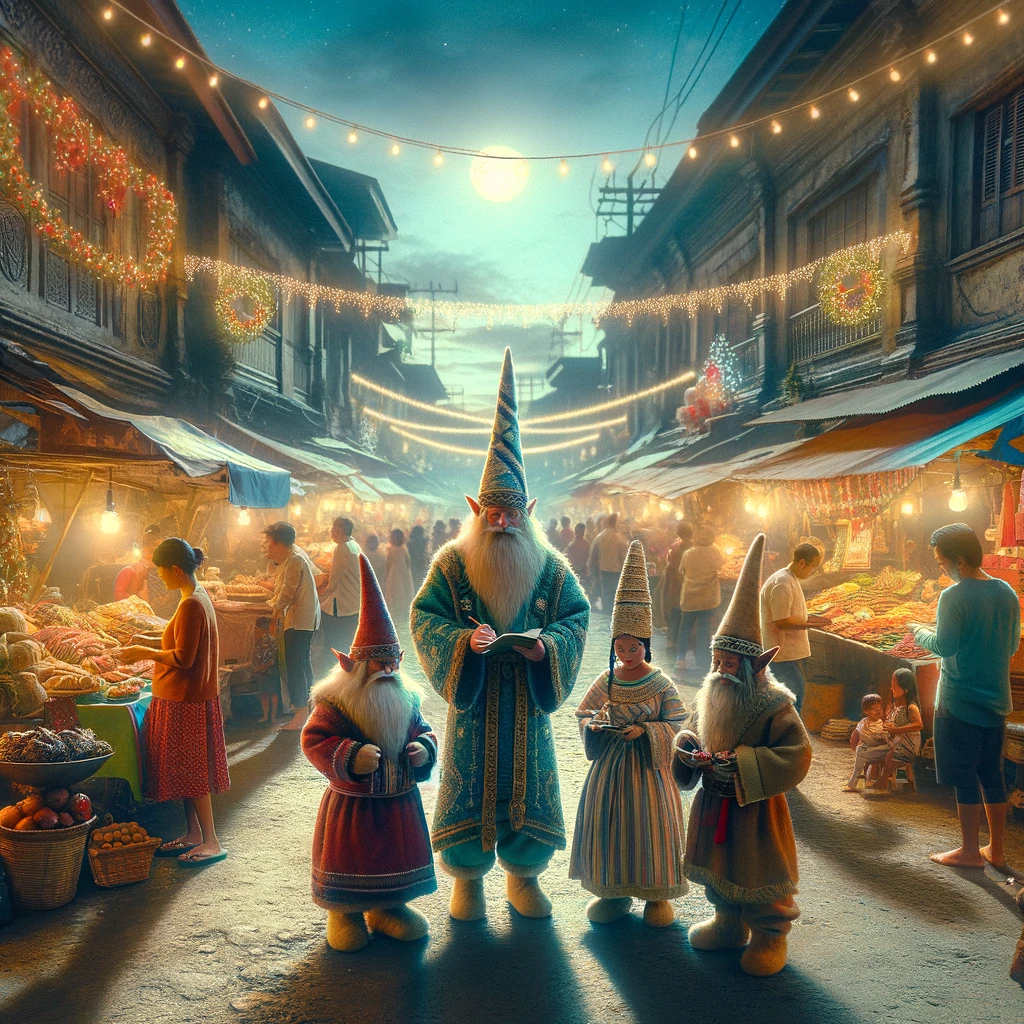
Today, DALL-E 3 has imagined the Yule Lads as hybrid Scout Elves, taking part in the new Advent tradition in American households of the Elf on the Shelf.
The next Yule Lad to make a visit to Icelandic homes is Gluggagægir, also known as “Window-Peeper” in English. He arrives on 21 December. The Yule Lads are a group of 13 mischievous characters, each with their unique personalities and behaviour. Let’s explore the specific characteristics and folklore associated with Gluggagægir
Gluggagægir is often depicted as a curious and nosy figure, reflecting his habit of peering through windows to observe the activities inside Icelandic households.
His naughty behaviour centres around his fascination with windows. He is known for his habit of peeping through windows to catch a glimpse of what’s happening inside the homes he visits. His inquisitiveness knows no bounds, and he is particularly active during the dark winter nights when it’s easier to go unnoticed.
Gluggagægir has honed his peeping skills to perfection. He can peer through windows without being detected, allowing him to observe the residents of each house he visits without their knowledge.
Mummering, also known as “mumming,” is a centuries-old Christmas tradition with origins in various European countries (including England and Ireland) and in Newfoundland, Canada. The practice involves individuals dressing in disguise, often in elaborate costumes and masks, and going door-to-door to perform plays, songs, and other forms of entertainment. Here’s the origin story and some interesting anecdotes about mummering and how this tradition is used to celebrate Christmas around the world:
Medieval mummering
Medieval roots: The roots of mumming can be traced back to medieval Europe when it was associated with various seasonal celebrations, including Christmas and New Year. Mummers, as participants were called, would perform plays and skits in exchange for food, drink, or money.
Christmas connection: Mummering became closely associated with Christmas in many regions, where it became a common practice during the holiday season. It was often a way for communities to come together and celebrate the festive period.
Interesting anecdotes about mummering
Boxing Day mummering performance of St George and the Dragon: St Albans, UK
Elaborate disguises: Mummers typically wear elaborate disguises, including using masks, costumes and props. The purpose is to conceal their identity and take on a character role during their visit to a neighbour’s home.
Plays and performances: Mummering often involves the performance of short plays or sketches that are meant to entertain and amuse the hosts. These plays often feature exaggerated characters, humorous dialogue, and sometimes even a bit of social commentary.
Mummering songs: In addition to plays, mummers may also sing songs or recite poetry as part of their performance. These songs can be traditional or improvised, depending on the region and the specific mumming group.
Hospitality and charity: When mummers visit a home, they are typically offered food and drink by the hosts. In some cases, mummers may collect donations for charity during their visits.
Guessing the identities: Part of the fun of mummering is for the hosts to try to guess the identities of the disguised visitors. This guessing game adds an element of mystery and excitement to the tradition.
Mummers’ parade: In some places, mummering has evolved into large-scale parades and festivals, particularly in Newfoundland, Canada. The Mummers Festival in St John’s, Newfoundland, is a notable example where people don elaborate costumes and masks for a lively and colorful parade.
Revival efforts: In recent years, there has been a revival of mummering traditions in various regions. Efforts to preserve and celebrate this folk tradition aim to ensure that mummering continues to be a cherished part of the holiday season.
Regional variations: While the basic concept of mummering is consistent, there are regional variations in how it is practiced, the types of costumes and disguises used, and the specific customs associated with it.
In a nutshell
Mummers Festival in St John’s, Newfoundland
Mummering is a unique and festive Christmas tradition that celebrates the spirit of community, creativity, and entertainment. It provides an opportunity for people to come together, express themselves through performance and disguise, and bring laughter and joy to the holiday season.
Coda
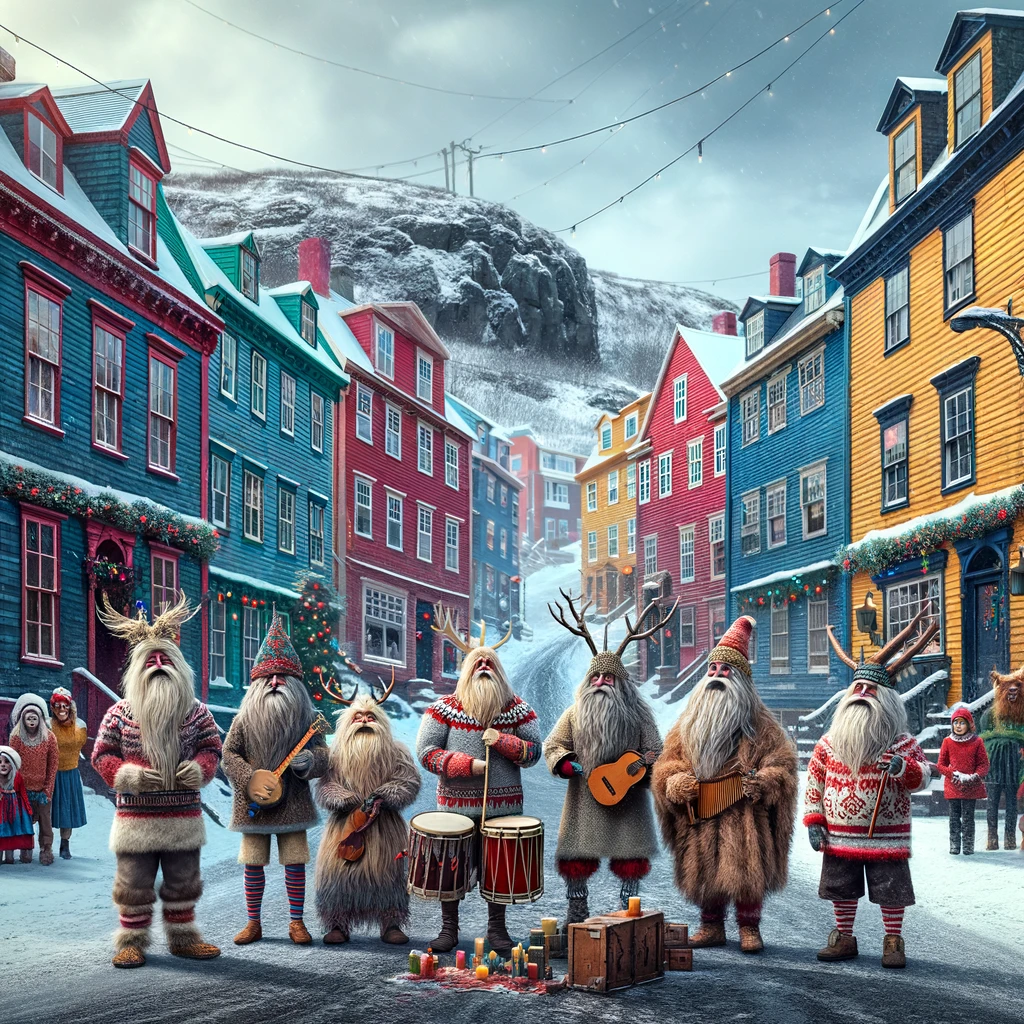
Today, DALL-E 3 imagines the Yule Lads taking part in the Mummers Festival in St John’s, Newfoundland, dressed up in costumed to take part in a street performance.
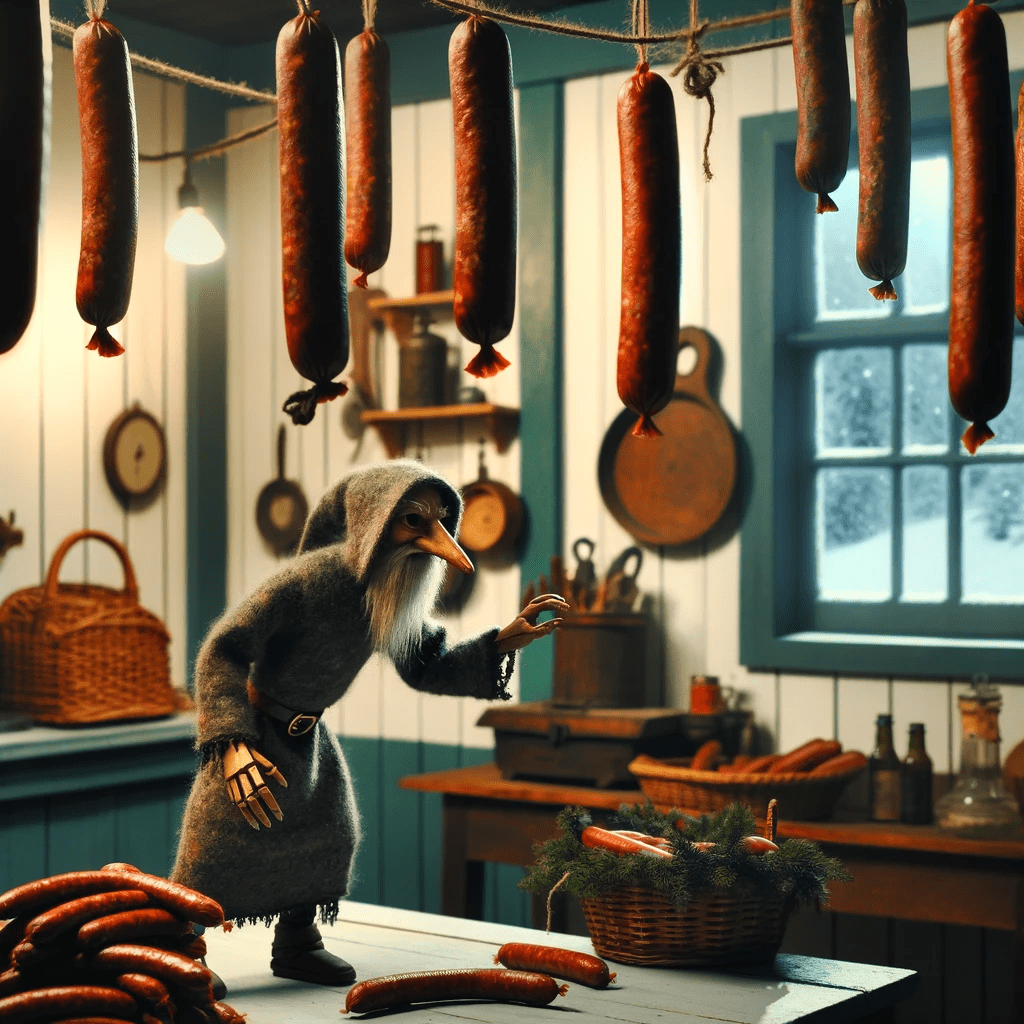
Also known as “Sausage-Swiper” in English, Bjúgnakrækir is one of the Yule Lads. He visits Icelandic households and communities on 20 December. The Yule Lads are a group of 13 mischievous characters, each with their unique personalities and behaviours. Let’s explore the specific characteristics and folklore associated with Bjúgnakrækir:
Bjúgnakrækir is often depicted as a tall and skinny figure with a ravenous appetite for sausages. His emaciated appearance reflects his love for this particular food.
Bjúgnakrækir‘s gets up to mischief primarily because of his love for sausages. During his nighttime visits to Icelandic homes, he seeks out sausages that have been hung up to smoke or dry. He is known for his ability to stealthily snatch sausages, leaving the household without its intended culinary delight.
He displays notorious sausage-thieving prowess: Bjúgnakrækir‘s talent lies in his ability to grab sausages from their designated hanging places without being detected. This thieving skill makes him particularly skilled at absconding with sausages.
The tradition of using wreaths during the Christmas season has ancient roots that date back to pagan times. Wreaths, circular in shape, have always symbolised eternity and the cycle of life. As Christianity spread across Europe, wreaths were adapted for use in festive celebrations, incorporating Christian symbolism. Here’s the origin story and some interesting anecdotes about Christmas wreaths and how this tradition is used to celebrate Christmas around the world:
Pagan origins: The use of wreaths as decorative elements predates Christianity. In ancient Rome, for example, wreaths of evergreen foliage, such as laurel and holly, were worn as crowns during festivals and celebrations, including the winter solstice.
Adaptation for Christmas: As Christianity gained prominence in Europe, wreaths began to be associated with Christmas. The circular shape of the wreath came to mean the eternity of God’s love, with no beginning or end. The evergreen foliage used in wreaths symbolised life and hope.
Interesting anecdotes about Christmas wreaths
Advent wreath(Catholic Supply of St. Louis, Inc.)
Advent wreaths: In Christian tradition, the Advent wreath is a significant symbol of the Advent season, which begins on the fourth Sunday before Christmas. Advent wreaths typically consist of a circular evergreen wreath with four candles, one for each Sunday of Advent. Each candle is lit on its respective Sunday to mark the countdown to Christmas.
Candles and colours: The Advent wreath candles are often three purple or blue candles, representing penance and preparation, and one pink or rose candle, symbolising joy. A white centre candle, called the Christ candle, is lit on Christmas Eve or Christmas Day to represent the birth of Jesus.
Decorative elements: Christmas wreaths are typically adorned with various decorative elements, such as red ribbons, pinecones, ornaments, and artificial berries. These elements add colour and festive flair to the wreaths.
Welcoming symbol: In many cultures, the Christmas wreath is placed on the front door or displayed in windows as a symbol of welcome and hospitality. It is a way to greet visitors and share the joy of the season.
Wreath-making: Making or decorating Christmas wreaths is a popular holiday craft activity. Many families and communities gather to create their own wreaths, customising them with personal touches.
Global variations: While the basic concept of the Christmas wreath is consistent, different cultures and regions may have unique variations and customs associated with wreath-making and display.
Outdoor decorations: In some regions with colder climates, Christmas wreaths may be placed outdoors to withstand the winter weather. They are often adorned with lights and serve as festive outdoor decorations.
Holiday markets: Christmas wreaths are commonly sold at holiday markets and craft fairs, where they are available in various sizes and styles to suit individual preferences.
Memorial wreaths: In addition to festive wreaths, there are also memorial wreaths that are used to honour and remember loved ones during the holiday season. These wreaths may be displayed at cemeteries or other meaningful locations.
Door wreath(Mano Mano)
In a nutshell
Christmas wreaths, with their timeless symbolism and versatility, continue to be an integral part of Christmas celebrations worldwide. They bring beauty, warmth, and a sense of tradition to homes and communities during the holiday season, serving as a visual reminder of the spirit of Christmas.
Coda
Today, DALL-E 3 has imagined the Yule Lads inside an Icelandic home, lighting a candle on an Advent wreath for Christmas.
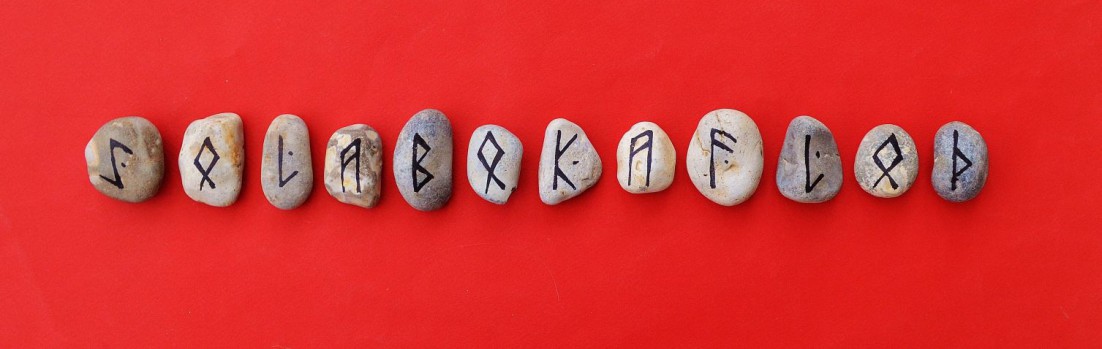

















 Jolabokaflod