
Jolabokaflod

Christmas Book Flood • Reading for Pleasure


Leave a comment

Christmas traditions (Advent calendar, Day 20)

What is the origin story of mummering?

Mummering, also known as “mumming,” is a centuries-old Christmas tradition with origins in various European countries (including England and Ireland) and in Newfoundland, Canada. The practice involves individuals dressing in disguise, often in elaborate costumes and masks, and going door-to-door to perform plays, songs, and other forms of entertainment. Here’s the origin story and some interesting anecdotes about mummering and how this tradition is used to celebrate Christmas around the world:

Medieval mummering
  • Medieval roots: The roots of mumming can be traced back to medieval Europe when it was associated with various seasonal celebrations, including Christmas and New Year. Mummers, as participants were called, would perform plays and skits in exchange for food, drink, or money.
  • Christmas connection: Mummering became closely associated with Christmas in many regions, where it became a common practice during the holiday season. It was often a way for communities to come together and celebrate the festive period.

Interesting anecdotes about mummering

Boxing Day mummering performance of St George and the Dragon: St Albans, UK
  • Elaborate disguises: Mummers typically wear elaborate disguises, including using masks, costumes and props. The purpose is to conceal their identity and take on a character role during their visit to a neighbour’s home.
  • Plays and performances: Mummering often involves the performance of short plays or sketches that are meant to entertain and amuse the hosts. These plays often feature exaggerated characters, humorous dialogue, and sometimes even a bit of social commentary.
  • Mummering songs: In addition to plays, mummers may also sing songs or recite poetry as part of their performance. These songs can be traditional or improvised, depending on the region and the specific mumming group.
  • Hospitality and charity: When mummers visit a home, they are typically offered food and drink by the hosts. In some cases, mummers may collect donations for charity during their visits.
  • Guessing the identities: Part of the fun of mummering is for the hosts to try to guess the identities of the disguised visitors. This guessing game adds an element of mystery and excitement to the tradition.
  • Mummers’ parade: In some places, mummering has evolved into large-scale parades and festivals, particularly in Newfoundland, Canada. The Mummers Festival in St John’s, Newfoundland, is a notable example where people don elaborate costumes and masks for a lively and colorful parade.
  • Revival efforts: In recent years, there has been a revival of mummering traditions in various regions. Efforts to preserve and celebrate this folk tradition aim to ensure that mummering continues to be a cherished part of the holiday season.
  • Regional variations: While the basic concept of mummering is consistent, there are regional variations in how it is practiced, the types of costumes and disguises used, and the specific customs associated with it.

In a nutshell

Mummers Festival in St John’s, Newfoundland

Mummering is a unique and festive Christmas tradition that celebrates the spirit of community, creativity, and entertainment. It provides an opportunity for people to come together, express themselves through performance and disguise, and bring laughter and joy to the holiday season.

Coda

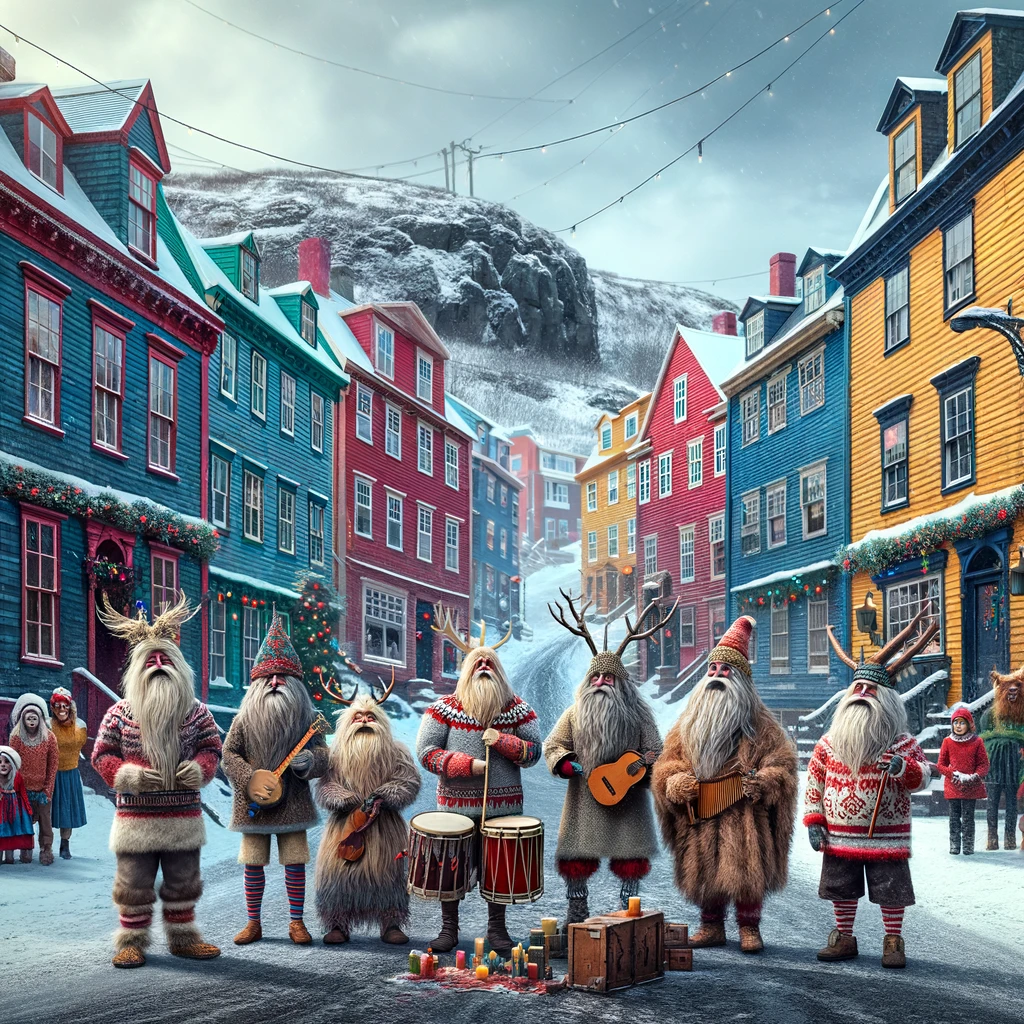
Today, DALL-E 3 imagines the Yule Lads taking part in the Mummers Festival in St John’s, Newfoundland, dressed up in costumed to take part in a street performance.

Leave a comment

Christmas traditions (Advent calendar, Day 10)

What is the origin story of carolling?

Carolling, or carol singing, is a cherished Christmas tradition with deep historical roots. It involves groups of people, known as carollers, singing festive songs and hymns, often going door to door or performing in public spaces during the holiday season. Here’s the origin story and some interesting anecdotes about caroling and how it is used to celebrate Christmas around the world:

Medieval carolling
  • Medieval origins: The tradition of carolling can be traced back to medieval Europe. During the Middle Ages, traveling minstrels and musicians would go from village to village, singing songs and spreading news and entertainment. Some of these songs were religious in nature and related to Christmas.
  • Carols as a form of worship: The word “carol” originally referred to a circle dance, but it eventually came to signify a festive song or hymn. Carols were used in both religious and secular contexts, with some being specifically associated with Christmas.
  • Early Christmas carols: Early Christmas carols were primarily religious and focused on the Nativity story. They were sung in churches and homes as part of Christmas worship and festivities.

Interesting anecdotes about carolling

Historical re-enactment of Victorian carol singing
  • St Francis of Assisi: St Francis of Assisi is often credited with popularizing the singing of Christmas carols in church services during the 13th century. He encouraged the use of carols in religious celebrations to make the Nativity story more accessible to ordinary people.
  • Banning of carols: During the Protestant Reformation in the 16th and 17th centuries, many Christmas customs, including carol singing, were banned in some regions. However, the tradition persisted, and carolling experienced a revival in the Victorian era.
  • Carol revival in the Victorian era: In the 19th century, the Victorian era saw a resurgence of interest in Christmas traditions, including carolling. Many famous carols that we still sing today, such as “O Holy Night” and “Silent Night,” were written during this period.
  • “Good King Wenceslas”: The popular Christmas carol “Good King Wenceslas” tells the story of a kind-hearted king who goes out on the Feast of Stephen (26 December) to help a poor man. The carol was based on the historical figure of King Wenceslaus I of Bohemia.
  • Diverse repertoire: Over the centuries, carollers have sung a wide range of Christmas songs, from traditional religious carols like “O Come, All Ye Faithful” to secular classics like “Jingle Bells.”
  • Carolling around the world: Carolling is a global tradition, with variations in different countries. In England, carolers often go door to door and are rewarded with treats or donations. In Latin American countries, “Posadas” involve processions and carol singing to re-enact Mary and Joseph’s search for lodging.
  • Carolling for charity: In many places, carolling is used as a way to raise money for charity during the Christmas season. Carollers may sing in public spaces or go door to door, collecting donations for a worthy cause.
  • Record for carolling: In 2018, a group of carollers in the UK set a Guinness World Record for the largest group of carol singers, with over 15,000 participants.
  • Modern carolling: In the digital age, carolling has adapted to new technologies. Virtual carolling events, where people sing together over video calls, became popular during the Covid-19 pandemic.
Virtual carol singing over Zoom during the Covid-19 pandemic

In a nutshell

Carolling continues to be a beloved Christmas tradition, fostering a sense of community and spreading holiday cheer. Whether performed by professional choirs, church groups, or enthusiastic neighbors, carolling brings people together to celebrate the joyous spirit of Christmas through music and song.

Coda

In these fantasy tableaux, the Yule Lads sing carols in the street outside a house in Reykjavík, the capital of Iceland.


Leave a comment

Christmas traditions (Advent calendar, Day 5)

What is the origin story of Christmas cards?

First Christmas card h/t V&A

The tradition of sending Christmas cards dates back to the 19th century in England, with its roots firmly planted in the British Isles. Here’s how this beloved tradition began:

  • Early card sending: The concept of exchanging cards during the Christmas season existed for centuries before the first official Christmas card was created. People would send handwritten notes, letters, and small tokens of goodwill to friends and family during the holidays.
  • Sir Henry Cole and the first Christmas card: The credit for the first Christmas card goes to Sir Henry Cole, a British civil servant, and John Horsley, a well-known illustrator. In 1843, Cole found himself too busy to write individual Christmas greetings to friends and family. To save time, he commissioned Horsley to design a card that could be mass-produced.
  • The design: The resulting card featured a simple design with a central panel depicting a family enjoying Christmas festivities. The card’s greeting read, “A Merry Christmas and a Happy New Year to You.” It was printed in a small quantity and was initially met with mixed reactions due to the depiction of a child drinking wine.
  • Popularity and spread: Despite the initial controversy, Christmas cards gained popularity in Britain over the years. The introduction of the penny postage system in the 1840s made it more affordable to send mail, contributing to the growth of the tradition.

Interesting anecdotes about Christmas cards

Unusual Christmas cards h/t DesignByTenisha (via Jayce-O-Yesta)
  • Early cards were expensive: Early Christmas cards were not accessible to everyone. They were often handmade or hand-colored and were considered a luxury item affordable only by the affluent.
  • Influence of Queen Victoria: Queen Victoria and Prince Albert played a significant role in popularizing the Christmas card tradition. They exchanged Christmas cards with their family and friends, and this royal endorsement further popularized the practice.
  • Louis Prang, the “Father of the American Christmas card”: Louis Prang, a German immigrant to the United States, is often credited with popularizing the Christmas card tradition in America in the late 19th century. He is known as the “Father of the American Christmas card.”
  • Record for the most Christmas cards sent: The record for sending the most Christmas cards in a single year is held by Robin Smith from the United Kingdom. In 1990, he sent 205,000 Christmas cards, earning him a place in the Guinness World Records.
  • Charitable Christmas cards: Many organisations produce Christmas cards with the proceeds going to charity. Purchasing and sending these cards is a way for people to support various causes during the holiday season.
  • Digital Christmas cards: In the digital age, e-cards and digital Christmas greetings have become increasingly popular. People send electronic cards via email or social media to connect with loved ones, especially if they are far away.
  • Worldwide variations: While Christmas cards are a well-known tradition in many countries, each culture may have its unique customs and designs. For example, Japanese New Year’s cards (nengajo) are similar to Christmas cards but are sent for the New Year holiday.
  • The Christmas Card Act: In the United Kingdom, the Postal Services Act 2000 legally required Royal Mail to deliver all Christmas cards for the price of a standard stamp. This ensures that cards are accessible to all.
  • Personalised cards: Many people now personalise their Christmas cards with family photos and custom messages, making each card unique and special.

In a nutshell

Christmas e-cards h/t eCO2

Christmas cards have become an integral part of the holiday season, allowing people to connect with friends and family near and far, exchange warm wishes, and spread joy and goodwill during this festive time of year. The tradition has evolved and adapted with technology, but the sentiment of sharing holiday greetings remains at its core.

Coda

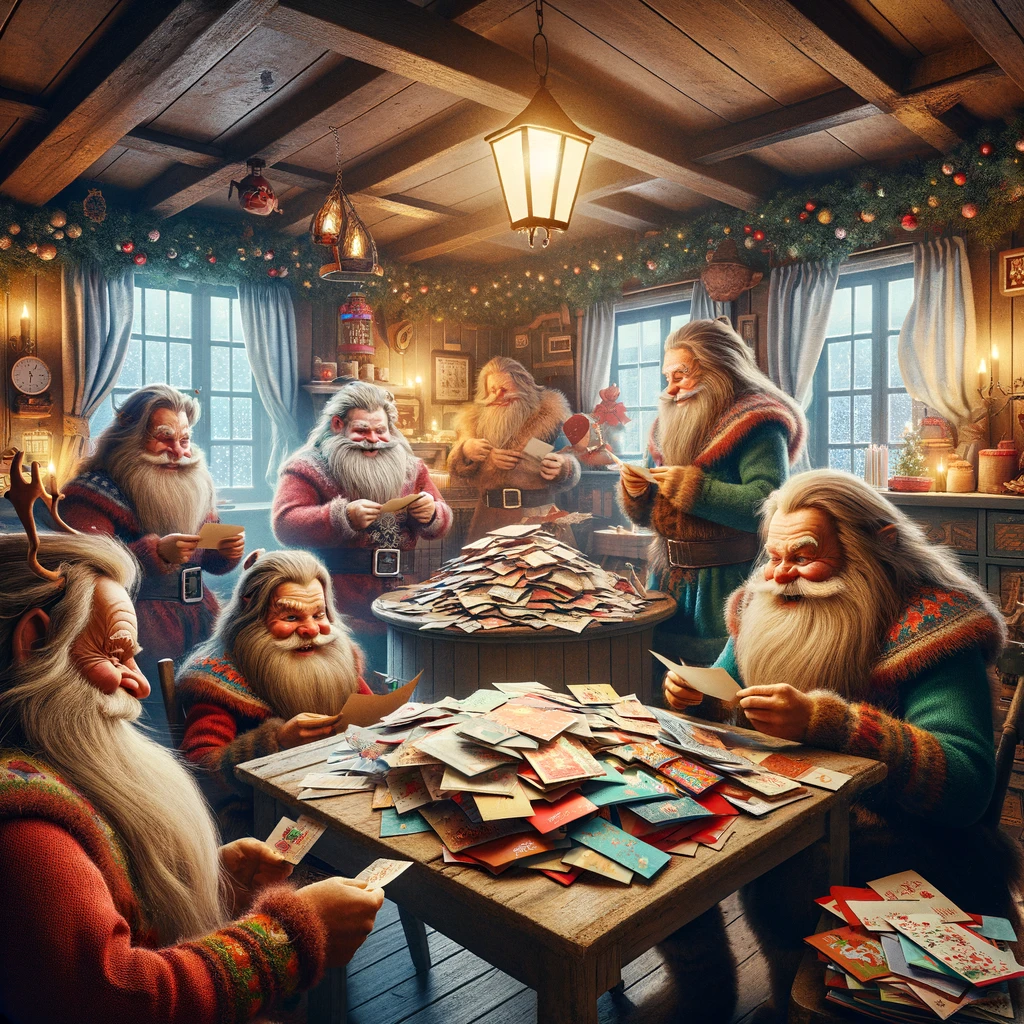
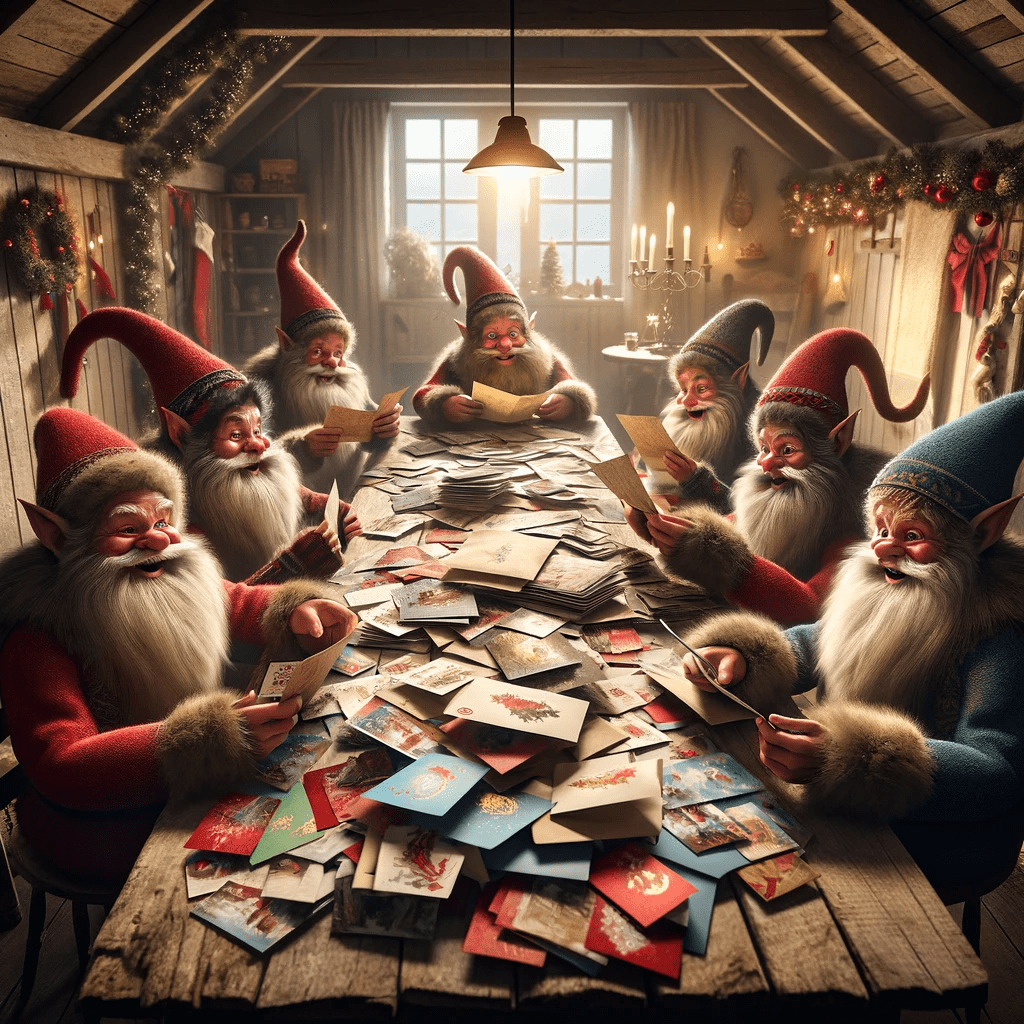
Here is DALL-E 3’s take on the Yule Lads receiving and opening Christmas cards sent to them in the post to their home in Iceland.


Leave a comment

Christmas traditions (Advent calendar, Day 1)

What is the origin story of the Advent calendar?

The tradition of advent calendars can be traced back to Germany in the 19th century. The word “Advent” comes from the Latin word “adventus,” which means “coming” or “arrival.” Advent calendars were created as a way for Christians to mark the 24 days leading up to Christmas, which is the celebration of the birth of Jesus Christ. It served as a way to build anticipation and prepare spiritually for the Christmas season.

The earliest advent calendars were simple chalk lines drawn on doors or walls, with a chalk mark made each day to count down to Christmas. Eventually, this practice evolved into the use of candles, where a new candle would be lit each day. The modern advent calendar, as we know it today, with small doors or compartments containing hidden treats or pictures, emerged in the early 20th century.

Interesting anecdotes about Advent calendars

  • Invention of the first printed Advent calendar: In the early 20th century, a German named Gerhard Lang is often credited with producing the first printed advent calendar. He was inspired by a childhood memory of a calendar his mother made for him with 24 small candies attached to a piece of cardboard.
  • Religious and secular Advent calendars: While advent calendars have their origins in the Christian tradition of counting down to Christmas, many modern advent calendars are secular and may contain chocolates, toys, or other small gifts. Some advent calendars even feature popular non-religious symbols like Santa Claus.
  • Variety of designs: Advent calendars come in a wide variety of designs and themes. Some are traditional, featuring nativity scenes and religious imagery. Others may showcase winter scenes, Santa Claus, or beloved characters from books and movies. There are even DIY advent calendars that people create with personalized themes.
  • International appeal: The use of advent calendars has spread beyond Germany and is now popular in many countries around the world. Each culture may have its unique take on the tradition. For example, in Sweden, it’s common to have an advent candle, and in Iceland, there’s a tradition of giving books on Christmas Eve, which aligns with the advent season.
  • Advent calendar records: In 2007, a Guinness World Record was set for the largest advent calendar. It was created in the UK and measured over 71 meters in length, with each day’s door measuring about 3.5 meters high.
  • Advent calendars in pop culture: Advent calendars have made their way into pop culture, with many companies producing special advent calendars featuring products like makeup, skincare, and gourmet foods. These calendars have become highly sought-after collector’s items.
  • Charity Advent calendars: Some advent calendars are designed to promote charitable giving. Instead of receiving gifts or chocolates, each day may reveal a charitable act or donation to be made, encouraging kindness and generosity during the holiday season.

In a nutshell

Advent calendars have evolved over the years from simple chalk marks to complex and creative designs. They continue to be a beloved tradition that brings joy and anticipation to the Christmas season for people of all ages, both for religious and secular celebrations.


Leave a comment

Merry Jolabokaflod – get involved with a new grassroots, interactive generic book campaign

It’s beginning to look a lot like Christmas … at least according to the book trade calendar, with Super Thursday already in distant memory. But how do we pay tribute to the festive season as an industry in the UK, apart from the publication of the Booksellers Association Christmas Books Catalogue, the giving of National Book Tokens as presents, and the marketing efforts of individual companies (such as Quercus for Christmas 2014)?

We can learn to celebrate Christmas (and other ‘Festivals of Light’) the Icelandic way, and help to promote books into the bargain. With more books published and read per citizen than anywhere else in the world (BBC News Magazine), our friends in the ‘Land of Fire and Ice’ clearly know how to get people reading!*

This is where Jólabókaflóð comes in.

Every year, virtually all the new books in Iceland are published in a narrow window in the run up to Christmas. The season starts with the autumn publication of a new books’ catalogue – the bókatíðindi – and ends with the giving of presents on 24 December. Tradition has it that everyone in Iceland spends Christmas Eve reading.

How fabulous is that!

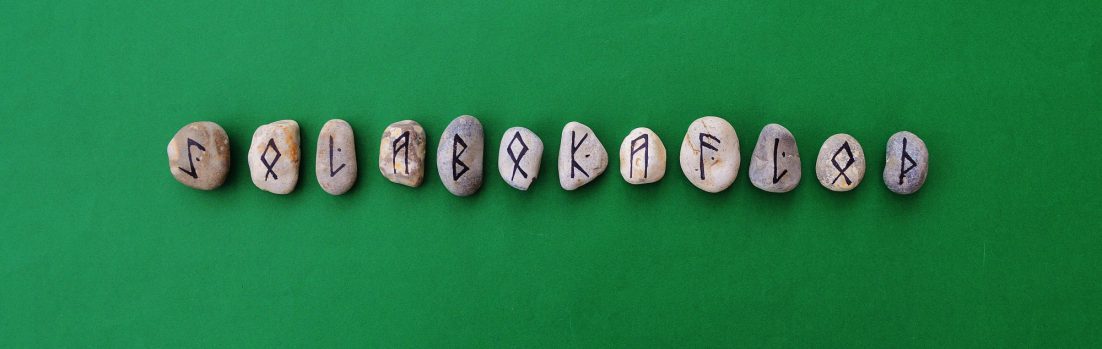
The whole festive rush, from publication dates to getting books into readers’ hands, is called Jólabókaflóð, which translates roughly in English to ‘Christmas book flood’.

There is no reason why the Jólabókaflóð phenomenon should remain a well-kept secret in Iceland. A series of digital platforms were launched on 16 November 2015 to make it happen here, too, via an article at BookMachine and via an RSA Bounce event in London

Here is the plan to start to make an Anglicised version – ‘Jolabokaflod’ – a fixture in the hearts and minds of book lovers like us in the UK and beyond. We can have fun at the same time.

In the run up to the festive season in 2015, join in pledging to get into the spirit of celebrating Jolabokaflod by doing the following:

  1. Buy books to give to your nearest and dearest as presents.
  2. Encourage your loved ones to start reading your gift books during the Christmas holiday season.
  3. Copy and paste the Jolabokaflod name and slogan – as shown below – into your email signatures between now and Christmas:
    Jolabokaflod | Buy * Give * Read | Books are not just for Christmas
  4. Mention Jolabokaflod in your emails and on social media. Use the hashtag #Jolabokaflod whenever you chat about the campaign online. Name-drop Jolabokaflod liberally at Twitter (@Jolabokaflod), Facebook (/jolabokaflod), etc., ‘Like’ the campaign wherever it exists online, and encourage your family, friends and followers to do the same.
  5. Download and print out this Jolabokaflod bookplate PDF to insert into the books you give as gifts over the Christmas period this year.

The core message of Jolabokaflod is a three-stage invitation for everyone to ‘Buy’, ‘Give’ and ‘Read’. Jolabokaflod is a generic retail and reading campaign rolled into one.

For Christmas 2016, here is how you can play an active part in taking Jolabokaflod from a trickle to a flood. Take control and be a star in your local community and networks:

  1. Run a crowdfunding campaign, join one as a volunteer and/or donate money at the Jolabokaflod CrowdPatch for an event or project to help disadvantaged people and vulnerable groups in your local neighbourhood.
  1. Champion Jolabokaflod in your place of work or study to encourage everyone to get involved. This is a campaign where everyone can join in.
  1. Tell me your Jolabokaflod news, write for the various branded websites, add comments on blogs, make contacts, and share stories on social media.

Here are the places where you can find Jolabokaflod online:

Join in the conversation, get actively involved and share your enthusiasm for Jolabokaflod both online and face-to-face.

Get in touch with Jolabokaflod via email at jolabokaflod@gmail.com to share your news, stories, photos, videos, suggestions, comments and opportunities about the campaign.

Let’s have fun with the Jolabokaflod campaign this year and next – as has already been said, it’s beginning to feel a lot like Christmas.