
Jolabokaflod

Christmas Book Flood • Reading for Pleasure


Leave a comment

Christmas traditions (Advent calendar, Day 10)

What is the origin story of carolling?

Carolling, or carol singing, is a cherished Christmas tradition with deep historical roots. It involves groups of people, known as carollers, singing festive songs and hymns, often going door to door or performing in public spaces during the holiday season. Here’s the origin story and some interesting anecdotes about caroling and how it is used to celebrate Christmas around the world:

Medieval carolling
  • Medieval origins: The tradition of carolling can be traced back to medieval Europe. During the Middle Ages, traveling minstrels and musicians would go from village to village, singing songs and spreading news and entertainment. Some of these songs were religious in nature and related to Christmas.
  • Carols as a form of worship: The word “carol” originally referred to a circle dance, but it eventually came to signify a festive song or hymn. Carols were used in both religious and secular contexts, with some being specifically associated with Christmas.
  • Early Christmas carols: Early Christmas carols were primarily religious and focused on the Nativity story. They were sung in churches and homes as part of Christmas worship and festivities.

Interesting anecdotes about carolling

Historical re-enactment of Victorian carol singing
  • St Francis of Assisi: St Francis of Assisi is often credited with popularizing the singing of Christmas carols in church services during the 13th century. He encouraged the use of carols in religious celebrations to make the Nativity story more accessible to ordinary people.
  • Banning of carols: During the Protestant Reformation in the 16th and 17th centuries, many Christmas customs, including carol singing, were banned in some regions. However, the tradition persisted, and carolling experienced a revival in the Victorian era.
  • Carol revival in the Victorian era: In the 19th century, the Victorian era saw a resurgence of interest in Christmas traditions, including carolling. Many famous carols that we still sing today, such as “O Holy Night” and “Silent Night,” were written during this period.
  • “Good King Wenceslas”: The popular Christmas carol “Good King Wenceslas” tells the story of a kind-hearted king who goes out on the Feast of Stephen (26 December) to help a poor man. The carol was based on the historical figure of King Wenceslaus I of Bohemia.
  • Diverse repertoire: Over the centuries, carollers have sung a wide range of Christmas songs, from traditional religious carols like “O Come, All Ye Faithful” to secular classics like “Jingle Bells.”
  • Carolling around the world: Carolling is a global tradition, with variations in different countries. In England, carolers often go door to door and are rewarded with treats or donations. In Latin American countries, “Posadas” involve processions and carol singing to re-enact Mary and Joseph’s search for lodging.
  • Carolling for charity: In many places, carolling is used as a way to raise money for charity during the Christmas season. Carollers may sing in public spaces or go door to door, collecting donations for a worthy cause.
  • Record for carolling: In 2018, a group of carollers in the UK set a Guinness World Record for the largest group of carol singers, with over 15,000 participants.
  • Modern carolling: In the digital age, carolling has adapted to new technologies. Virtual carolling events, where people sing together over video calls, became popular during the Covid-19 pandemic.

Virtual carol singing over Zoom during the Covid-19 pandemic

In a nutshell

Carolling continues to be a beloved Christmas tradition, fostering a sense of community and spreading holiday cheer. Whether performed by professional choirs, church groups, or enthusiastic neighbors, carolling brings people together to celebrate the joyous spirit of Christmas through music and song.

Coda

In these fantasy tableaux, the Yule Lads sing carols in the street outside a house in Reykjavík, the capital of Iceland.


Leave a comment

Christmas traditions (Advent calendar, Day 9)

What is the origin story of gingerbread houses?

The tradition of gingerbread houses has its origins in medieval Europe, particularly in Germany, and has evolved over centuries to become a popular Christmas tradition. Here’s the origin story and some interesting anecdotes about gingerbread houses and how they are used to celebrate Christmas around the world:

Tudor rose, medieval gingerbread
  • Medieval origins: Gingerbread itself has ancient roots, dating back to ancient Egypt and Greece, where ginger was used for its medicinal properties. In medieval Europe, gingerbread was made by monks and used for various purposes, including religious ceremonies and as a treat for special occasions.
  • Gingerbread in Europe: Gingerbread recipes and techniques spread throughout Europe, with each region adding its unique flavors and shapes. In some cultures, gingerbread was often shaped into intricate figures and cookies.
  • Gingerbread artistry: The practice of creating elaborate gingerbread sculptures and houses gained popularity during the 16th century in Germany. Nuremberg, Germany, became known for its highly detailed and decorated gingerbread creations.

Interesting anecdotes about gingerbread houses

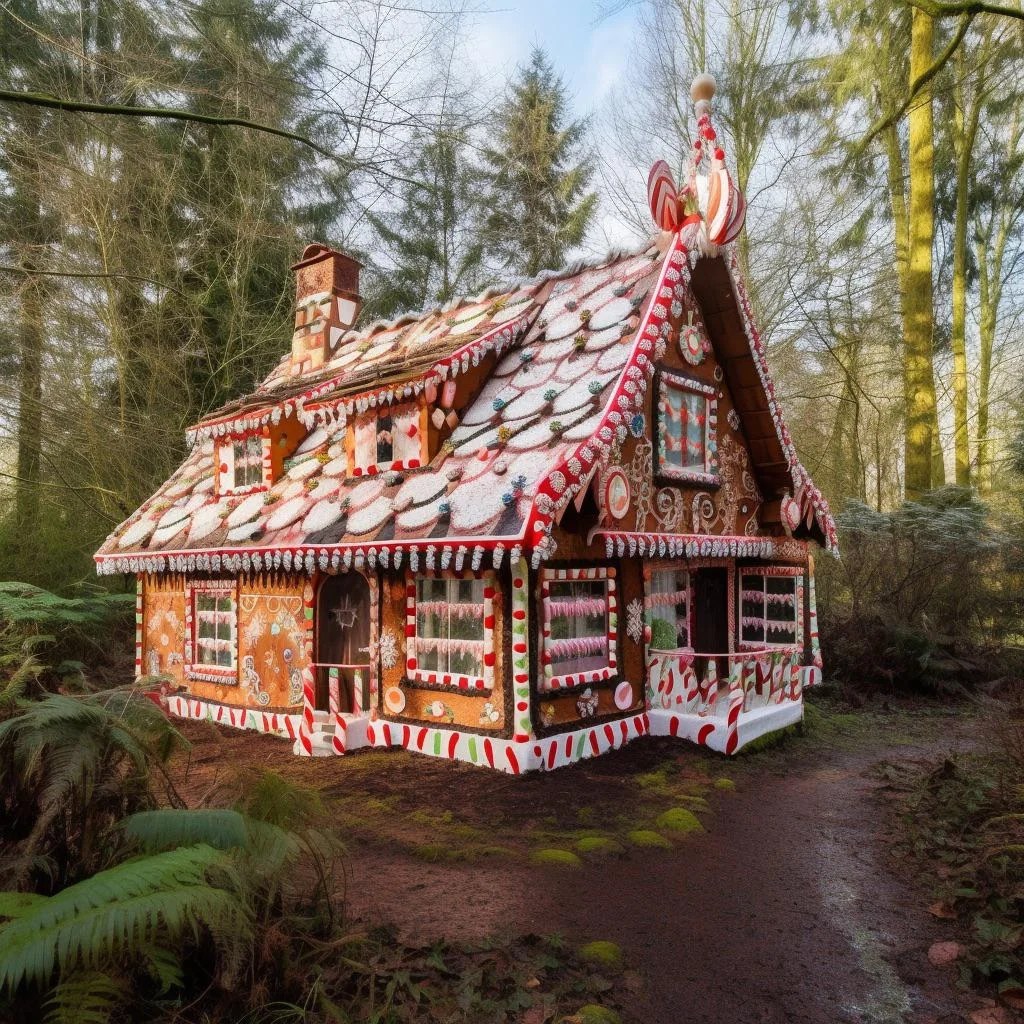
Zillow listing for witch’s cottage in Hansel and Gretel (h/t Midjourney)
  • Hansel and Gretel: The famous Brothers Grimm fairy tale “Hansel and Gretel,” published in the early 19th century, featured a witch’s house made of gingerbread, candy, and other sweets. This story helped solidify the association of gingerbread houses with childhood and fairy tales.
  • Gingerbread house traditions: Gingerbread houses are a beloved Christmas tradition in many countries, including Germany, the United States, and the Nordic countries. They are often made as part of holiday festivities and used as decorations.
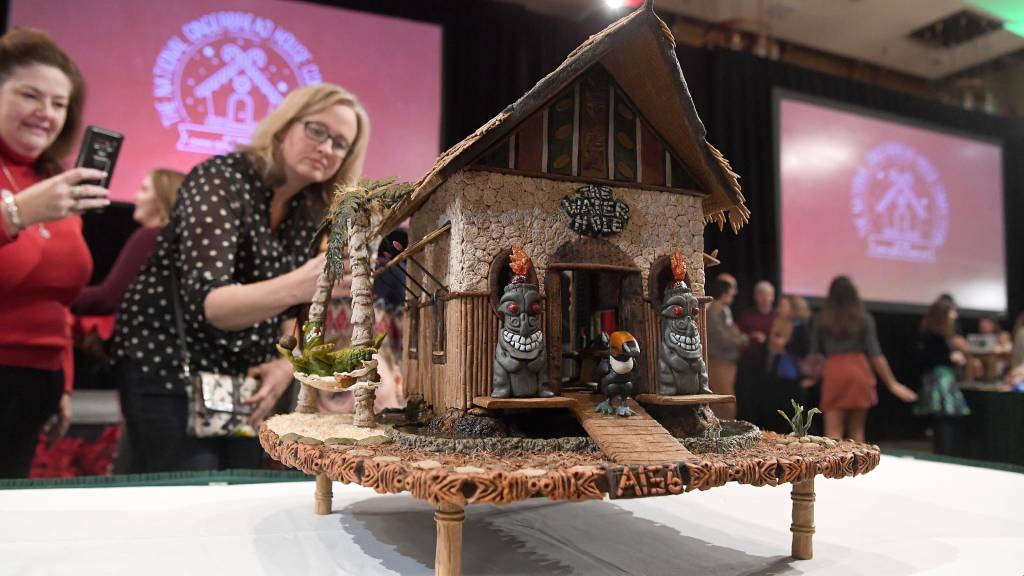
  • National Gingerbread House Competition: The National Gingerbread House Competition held annually at The Omni Grove Park Inn in Asheville, North Carolina, is one of the most prestigious gingerbread house competitions in the world. Contestants create intricate and edible gingerbread masterpieces.
  • Gingerbread house festivals: Many towns and cities host gingerbread house festivals during the holiday season, where local bakers and community members create gingerbread houses for display. These festivals often include competitions, gingerbread house tours, and charity auctions.
  • The largest gingerbread house: In 2013, the world’s largest gingerbread house was constructed in Texas, USA. It measured 60 feet by 42 feet (18.3 metres by 12.8 metres) and was made with thousands of pounds of gingerbread, icing, and candy. It served as a fundraiser for a local hospital.
  • DIY gingerbread kits: Gingerbread house kits, which include pre-baked gingerbread pieces, icing, and candy decorations, have become popular for families to assemble their gingerbread houses at home. They offer a convenient way to participate in the tradition.
  • Gingerbread house displays: Many institutions, such as museums, hotels, and shopping centers, create elaborate gingerbread house displays during the holiday season, attracting visitors from near and far to marvel at the edible art.
  • Gingerbread house decorating parties: Hosting gingerbread house decorating parties has become a popular holiday activity. Friends and family gather to decorate gingerbread houses with colorful icing, candy, and other creative embellishments.
  • Edible architecture: Gingerbread houses have evolved into an art form, with some creations replicating famous buildings and landmarks, such as the White House and iconic European structures.
National Gingerbread House Competition

In a nutshell

Gingerbread houses are a delightful and creative way to celebrate the holiday season, allowing people of all ages to exercise their artistic skills and indulge in sweet, festive treats. The tradition continues to evolve, with bakers and decorators pushing the boundaries of what can be achieved with gingerbread and confectionery.

Coda

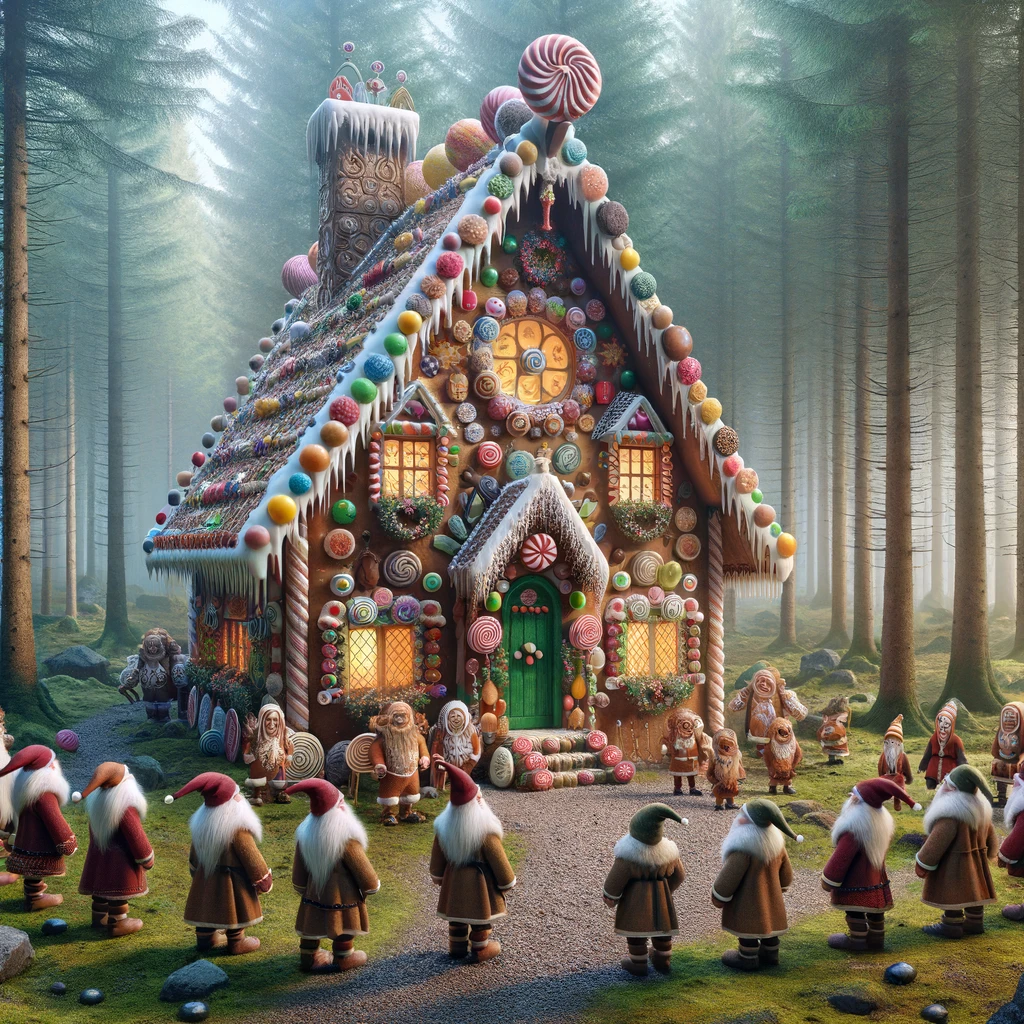
In this dreamlike scene, the Yule Lads visit the gingerbread house in the woods owned by the witch in the Hansel and Gretel fairy tale, first collected and published in 1812 by the Brothers Grimm.


Leave a comment

Christmas traditions (Advent calendar, Day 8)

What is the origin story of Yule logs?

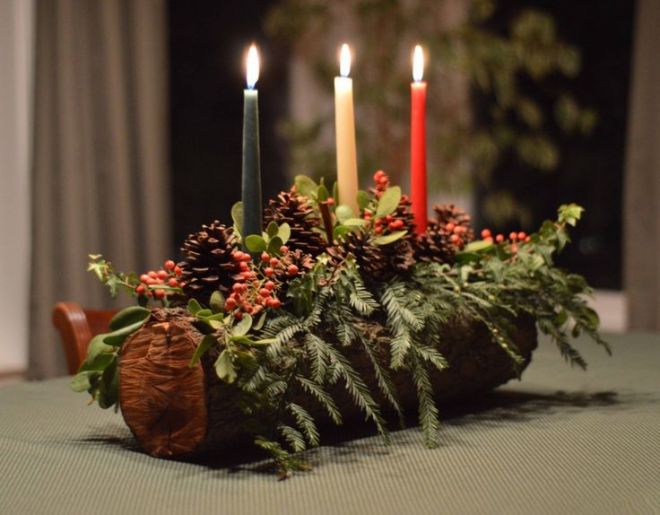
Winter Solstice centrepiece (Mark Green, Atheopaganism)

The Yule log, a significant symbol of the Christmas season, has ancient pagan roots and has evolved over time to become a beloved Christmas tradition. Here’s the origin story and some interesting anecdotes about Yule logs and how they are used to celebrate Christmas around the world:

  • Ancient pagan origins: The tradition of the Yule log predates Christianity and is believed to have originated with ancient Germanic and Celtic pagan celebrations of the winter solstice, known as Yule. During these festivals, a large, specially selected log, often from a fruit-bearing tree, was burned as a symbol of the sun’s return and the promise of longer days ahead.
  • Christian adoption: As Christianity spread across Europe, many pagan customs and traditions were incorporated into Christian celebrations to ease the transition to the new religion. The Yule log became associated with Christmas, symbolizing the light of Christ and the hope of salvation.

Interesting anecdotes about Yule logs

Bûche de Noël , French Christmas Yule Log Cake (Crafty Baking)
  • Yule log cake: In many cultures, especially in France and Belgium, the Yule log tradition has evolved into the creation of a Yule log cake, known as “Bûche de Noël” in French. This cake is shaped to resemble a log and is often made of sponge cake filled with flavored buttercream, rolled into a log shape, and decorated to look like a wooden log.
  • Decorating the log: In some regions, especially in France, families decorate the Yule log with candles, greenery, and small figurines to create a festive centrepiece for their Christmas celebrations.
  • Ashes for protection: In some traditions, ashes from the burned Yule log were believed to have protective qualities. People would sprinkle the ashes on their fields, homes, or even themselves to guard against evil spirits.
  • Three days of burning: In some regions, it was customary to keep the Yule log burning for the entire Christmas season, which traditionally spanned 12 days. The log would be lit on Christmas Eve and left to burn until 6 January, known as Epiphany or Twelfth Night.
  • Yule log ceremonies: Some families and communities have Yule log ceremonies, where they gather together to light the log, sing carols, and exchange gifts. This tradition fosters a sense of togetherness and celebration during the holiday season.
  • Variations around the world: Different cultures have their unique variations of the Yule log tradition. For example, in Catalonia, Spain, they have the “Caga Tió,” a Christmas log with a smiling face and a red hat. Children “beat” the log with sticks to make it “defecate” small gifts and candies.
  • Environmental awareness: In modern times, there has been a growing emphasis on environmentally friendly celebrations. Some people opt for a Yule log made of recycled or sustainable materials, or they choose alternatives like electric Yule log videos that mimic the crackling fire without the need for a physical log.
  • Yule log television broadcasts: In some countries, especially in North America, there is a tradition of broadcasting a Yule log video on television during the Christmas season. This tradition started in the 1960s and has become a popular way for people to enjoy the ambiance of a crackling fire even if they don’t have a fireplace.
Yule log TV channel

In a nutshell

The Yule log tradition bridges the gap between ancient pagan celebrations and modern Christian Christmas traditions. It continues to be a symbol of light, hope, and togetherness during the holiday season, celebrated in various forms by people around the world.

Coda

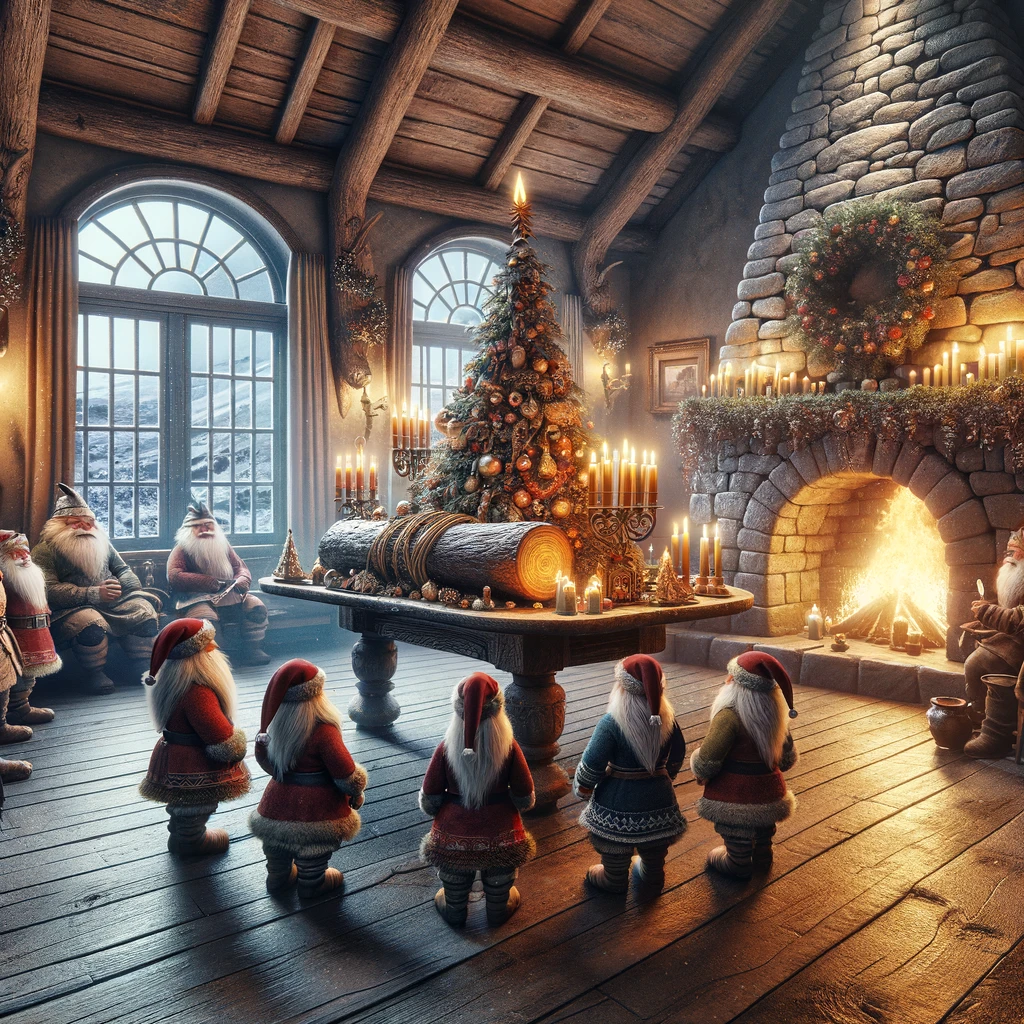
In this DALL-E 3 simulation, the Yule Lads are admiring a Yule log centrepiece on a dining-room table in an Icelandic house, with a roaring log fire in the background.


Leave a comment

Christmas traditions (Advent calendar, Day 7)

What is the origin story of Christmas markets?

The tradition of Christmas markets, also known as Christkindlmarkts or Weihnachtsmärkte, originated in Europe during the late Middle Ages. Here’s the origin story and some interesting anecdotes about Christmas markets and how they are used to celebrate Christmas around the world:

Medieval Christmas market, Durlach
  • Medieval fairs: The concept of Christmas markets can be traced back to medieval fairs and markets that took place in towns and cities across Europe. These fairs were not specifically Christmas-themed but provided an opportunity for people to buy and sell goods, especially as the holiday season approached.
  • First documented market: The first documented Christmas market was in Vienna, Austria, in 1294. These early markets were often associated with Advent, a period of fasting and preparation leading up to Christmas, and served as a place for people to stock up on supplies for the winter.
  • Cologne, Germany: One of the most famous Christmas markets is the one in Cologne, Germany. It dates back to the early 14th century and has a rich history. During the Middle Ages, the market was held to help fund the construction of the Cologne Cathedral.
  • Craftsmen and artisans: Christmas markets were originally places for craftsmen and artisans to sell their wares, which often included handmade ornaments, toys, candles, and seasonal foods.

Interesting anecdotes about Christmas markets

Ice-skating rink, Christmas market, Cologne
  • Mulled wine and seasonal treats: Christmas markets are known for their delicious seasonal treats and beverages. One popular drink is mulled wine (glühwein in German), a warm, spiced wine often served in decorative mugs. You can also find gingerbread cookies, roasted chestnuts, sausages, and other festive snacks.
  • Ornaments and decorations: Christmas markets are a treasure trove of unique ornaments and decorations. Visitors can find handcrafted ornaments, tree toppers, and nativity scenes, often made by local artisans.
  • Ice skating: Many Christmas markets feature ice skating rinks, providing a fun and festive activity for families and visitors. Skating amid twinkling lights and holiday decorations adds to the magical atmosphere.
  • Gift shopping: Christmas markets are ideal places to shop for holiday gifts. Visitors can discover a wide range of items, including handmade jewelry, textiles, pottery, and wooden crafts.
  • Live entertainment: Some Christmas markets feature live performances, including choirs, musicians, and theatrical presentations. These performances add to the festive ambiance and entertain visitors of all ages.
  • Market themes: Some Christmas markets have specific themes or traditions unique to their region. For example, the Nuremberg Christmas Market in Germany is famous for its gingerbread cookies (Lebkuchen) and has a “Christkind” (Christmas angel) who opens the market.
  • Worldwide popularity: While Christmas markets originated in Europe, they have gained popularity worldwide. You can find Christmas markets in cities and towns across North America, Asia, and other continents.
  • Holiday lights: Christmas markets are renowned for their beautiful holiday lighting displays. Markets often feature thousands of twinkling lights, making the evening atmosphere particularly enchanting.
  • Community and tradition: Christmas markets play an important role in fostering a sense of community and preserving cultural traditions. Many markets are organized and run by local communities and volunteers.
  • Environmental awareness: In recent years, there has been a growing awareness of sustainability and reducing waste at Christmas markets. Some markets have introduced eco-friendly practices, such as using reusable mugs and encouraging recycling.
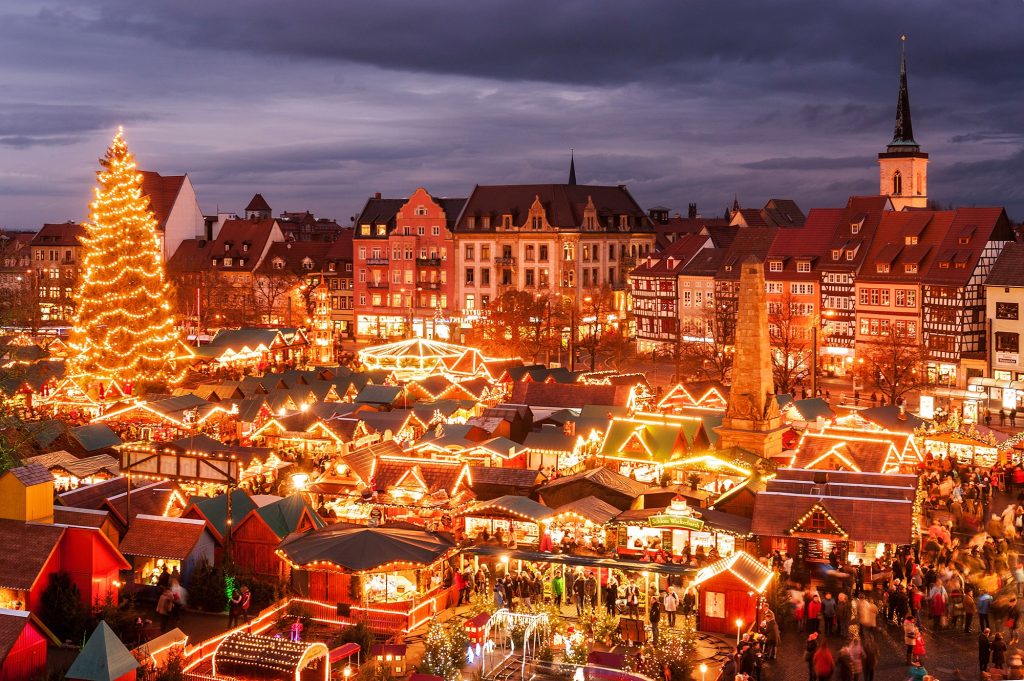
Festive lights, Christmas market, Erfurt

In a nutshell

Christmas markets continue to be a beloved tradition that brings communities together and ushers in the festive spirit of the holiday season. Whether you’re shopping for gifts, savoring seasonal treats, or simply soaking up the enchanting atmosphere, Christmas markets offer a delightful way to celebrate Christmas around the world.

Coda

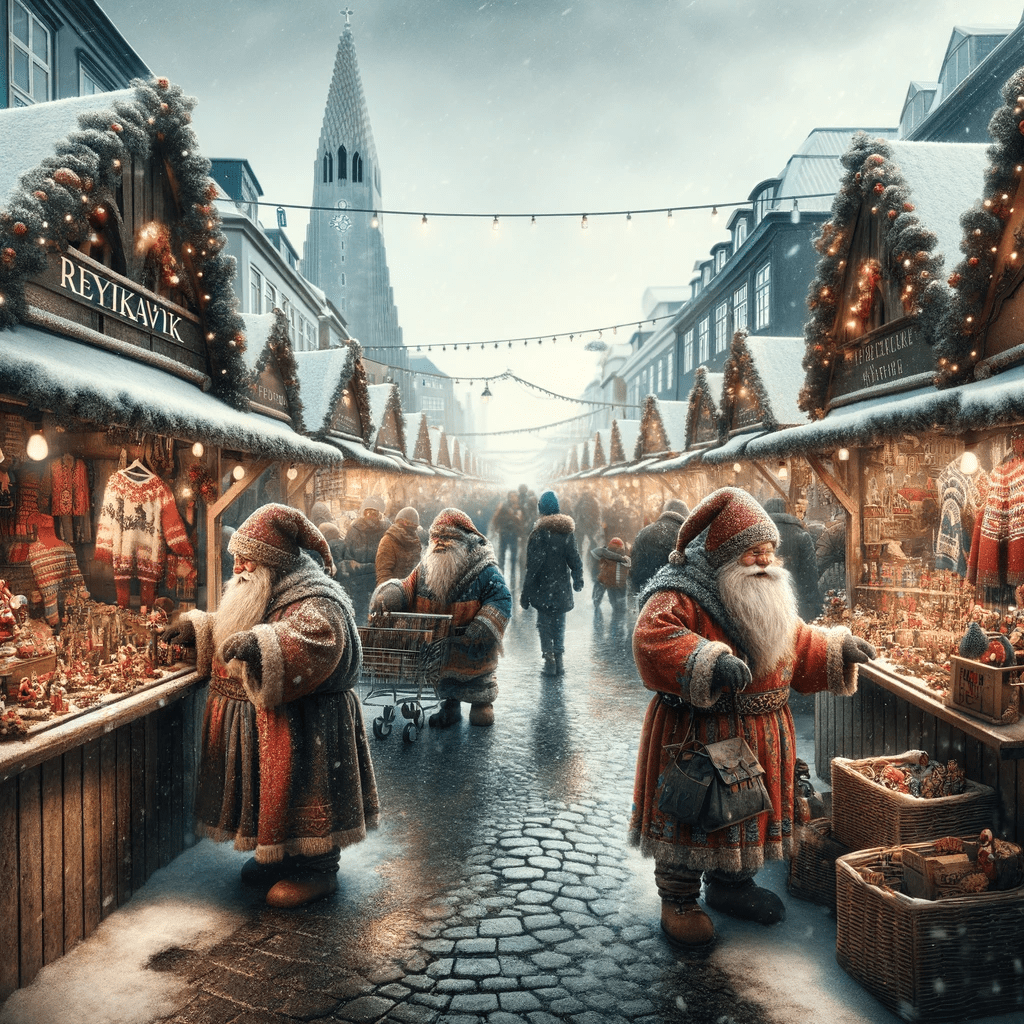
Here is DALL-E 3’s interpretation of the Yule Lads browsing the stalls at a Christmas market in Reykjavík, the capital of Iceland. The market is located in Skólavörðustígur street with Hallgrímskirkja Lutherian parish church in the far distance, with its distinctive geyser-shaped spire.


Leave a comment

Christmas traditions (Advent calendar, Day 6)

What is the origin story of mistletoe‘s role at Christmas?

Mistletoe, a symbol of love, fertility, and renewal, has a rich history dating back to ancient times. Here’s the origin story of mistletoe and how it became associated with Christmas:

“Baldur’s Death” by Christoffer Wilhelm Eckersberg (1817)
  • Ancient origins: Mistletoe was revered by various ancient cultures, including the Druids of the British Isles, the Norse, and the Greeks. It was considered a magical plant due to its ability to grow high in trees without apparent roots.
  • Druidic rituals: The Druids, Celtic religious leaders, considered mistletoe a sacred plant. During the winter solstice, they would climb oak trees to harvest mistletoe with a golden sickle, believing it had healing properties and could bring good luck.
  • Norse mythology: In Norse mythology, the mistletoe was associated with the goddess Frigg. The story of Balder, the god of light and purity, involves mistletoe. He was killed with an arrow made of mistletoe, which had been overlooked in Frigg’s attempt to make everything in the world promise not to harm him. Balder’s death brought tears of sorrow from Frigg, and she declared mistletoe a symbol of love and peace.
  • Christian adoption: As Christianity spread across Europe, some of the traditions associated with mistletoe were incorporated into Christmas celebrations. Mistletoe’s evergreen nature and associations with renewal and love made it a fitting symbol for the Christmas season.
  • Kissing under the mistletoe: The tradition of kissing under the mistletoe likely has multiple sources. One theory is that it originated from the Norse myth of Balder, where the mistletoe became a symbol of love and reconciliation after the tragic event. Another theory is that it evolved from British and Celtic customs of using mistletoe in marriage ceremonies.

Interesting anecdotes about mistletoe

Parasite (Photo by Daniel Jolivet licensed under CC BY 2.0)
  • Kissing tradition: The custom of kissing under the mistletoe is one of the most enduring and popular Christmas traditions associated with mistletoe. According to the tradition, when two people stand beneath the mistletoe, they are supposed to share a kiss. It’s considered bad luck to refuse a kiss under the mistletoe.
  • Mistletoe as a parasite: Mistletoe is a semi-parasitic plant that grows on the branches of trees, drawing nutrients from its host. While it can harm its host tree, it also provides food and shelter for birds and insects.
  • Mistletoe varieties: There are several species of mistletoe, but the one most commonly associated with Christmas is European mistletoe (Viscum album). It has distinctive pairs of evergreen leaves and white berries.
  • Medicinal uses: In traditional folk medicine, mistletoe was used for various medicinal purposes, though it can be toxic if ingested in large quantities. Today, it is sometimes used in complementary and alternative medicine for its potential anti-cancer properties.
  • Mistletoe in art and literature: Mistletoe has been featured in numerous works of art, literature, and folklore throughout history, often as a symbol of love, renewal, and protection.
  • Christmas decorations: Mistletoe is commonly used as a decoration during the Christmas season. It can be found in wreaths, garlands, and as standalone decorations in homes and public spaces.
  • Mistletoe markets: In some regions, especially in Europe, there are Christmas markets where mistletoe is sold along with other holiday decorations.
  • Mistletoe removal: In some parts of the world, there are organized mistletoe removal programs to protect trees from the potential harm caused by mistletoe growth.
Sprig of mistletoe

In a nutshell

Mistletoe’s role in Christmas celebrations reflects its rich history and the blending of cultural traditions over time. Today, it remains a beloved symbol of love, renewal, and goodwill during the holiday season.

Coda

Here are the Yule Lads, according to DALL-E 3’s imagination, collecting mistletoe from trees in a mythical Icelandic landscape, ready to leave sprigs in houses when they pay their visits over the Christmas period.


Leave a comment

Christmas traditions (Advent calendar, Day 5)

What is the origin story of Christmas cards?

First Christmas card h/t V&A

The tradition of sending Christmas cards dates back to the 19th century in England, with its roots firmly planted in the British Isles. Here’s how this beloved tradition began:

  • Early card sending: The concept of exchanging cards during the Christmas season existed for centuries before the first official Christmas card was created. People would send handwritten notes, letters, and small tokens of goodwill to friends and family during the holidays.
  • Sir Henry Cole and the first Christmas card: The credit for the first Christmas card goes to Sir Henry Cole, a British civil servant, and John Horsley, a well-known illustrator. In 1843, Cole found himself too busy to write individual Christmas greetings to friends and family. To save time, he commissioned Horsley to design a card that could be mass-produced.
  • The design: The resulting card featured a simple design with a central panel depicting a family enjoying Christmas festivities. The card’s greeting read, “A Merry Christmas and a Happy New Year to You.” It was printed in a small quantity and was initially met with mixed reactions due to the depiction of a child drinking wine.
  • Popularity and spread: Despite the initial controversy, Christmas cards gained popularity in Britain over the years. The introduction of the penny postage system in the 1840s made it more affordable to send mail, contributing to the growth of the tradition.

Interesting anecdotes about Christmas cards

Unusual Christmas cards h/t DesignByTenisha (via Jayce-O-Yesta)
  • Early cards were expensive: Early Christmas cards were not accessible to everyone. They were often handmade or hand-colored and were considered a luxury item affordable only by the affluent.
  • Influence of Queen Victoria: Queen Victoria and Prince Albert played a significant role in popularizing the Christmas card tradition. They exchanged Christmas cards with their family and friends, and this royal endorsement further popularized the practice.
  • Louis Prang, the “Father of the American Christmas card”: Louis Prang, a German immigrant to the United States, is often credited with popularizing the Christmas card tradition in America in the late 19th century. He is known as the “Father of the American Christmas card.”
  • Record for the most Christmas cards sent: The record for sending the most Christmas cards in a single year is held by Robin Smith from the United Kingdom. In 1990, he sent 205,000 Christmas cards, earning him a place in the Guinness World Records.
  • Charitable Christmas cards: Many organisations produce Christmas cards with the proceeds going to charity. Purchasing and sending these cards is a way for people to support various causes during the holiday season.
  • Digital Christmas cards: In the digital age, e-cards and digital Christmas greetings have become increasingly popular. People send electronic cards via email or social media to connect with loved ones, especially if they are far away.
  • Worldwide variations: While Christmas cards are a well-known tradition in many countries, each culture may have its unique customs and designs. For example, Japanese New Year’s cards (nengajo) are similar to Christmas cards but are sent for the New Year holiday.
  • The Christmas Card Act: In the United Kingdom, the Postal Services Act 2000 legally required Royal Mail to deliver all Christmas cards for the price of a standard stamp. This ensures that cards are accessible to all.
  • Personalised cards: Many people now personalise their Christmas cards with family photos and custom messages, making each card unique and special.

In a nutshell

Christmas e-cards h/t eCO2

Christmas cards have become an integral part of the holiday season, allowing people to connect with friends and family near and far, exchange warm wishes, and spread joy and goodwill during this festive time of year. The tradition has evolved and adapted with technology, but the sentiment of sharing holiday greetings remains at its core.

Coda

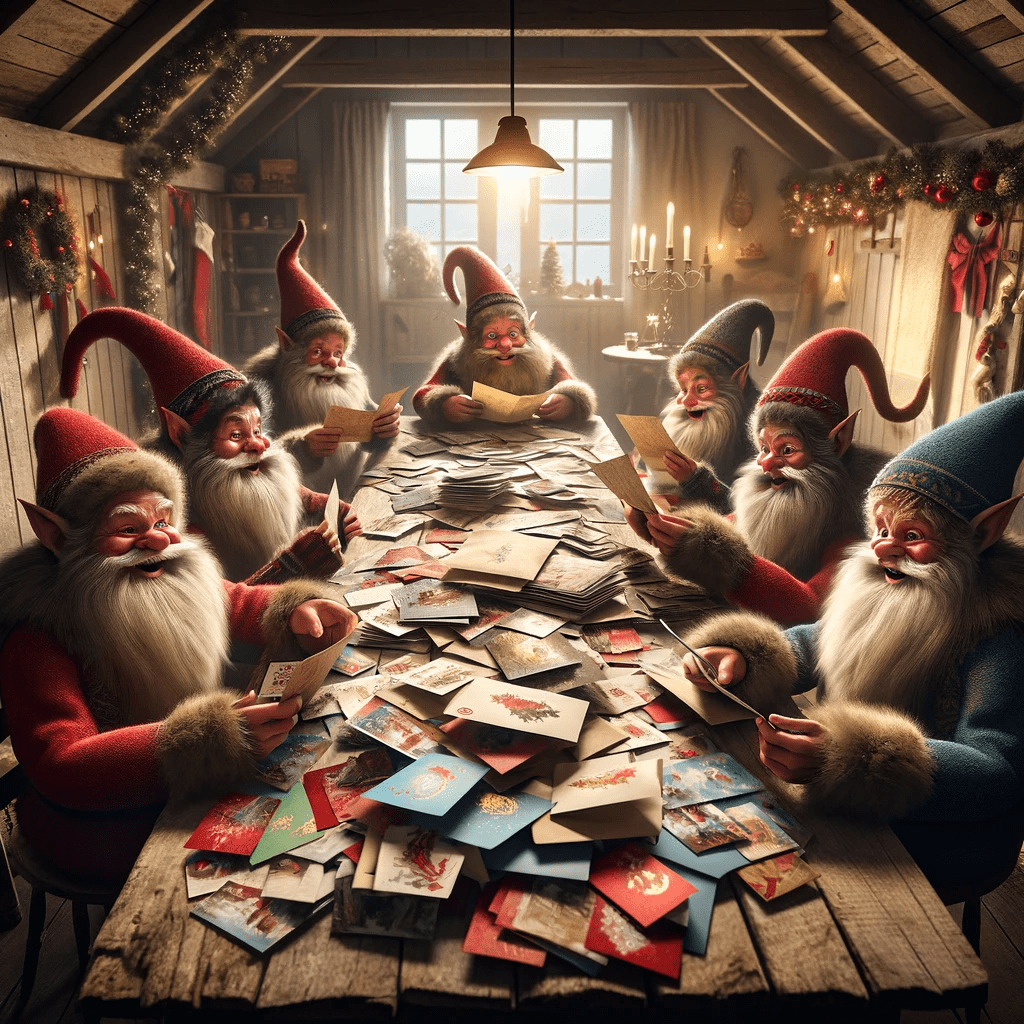
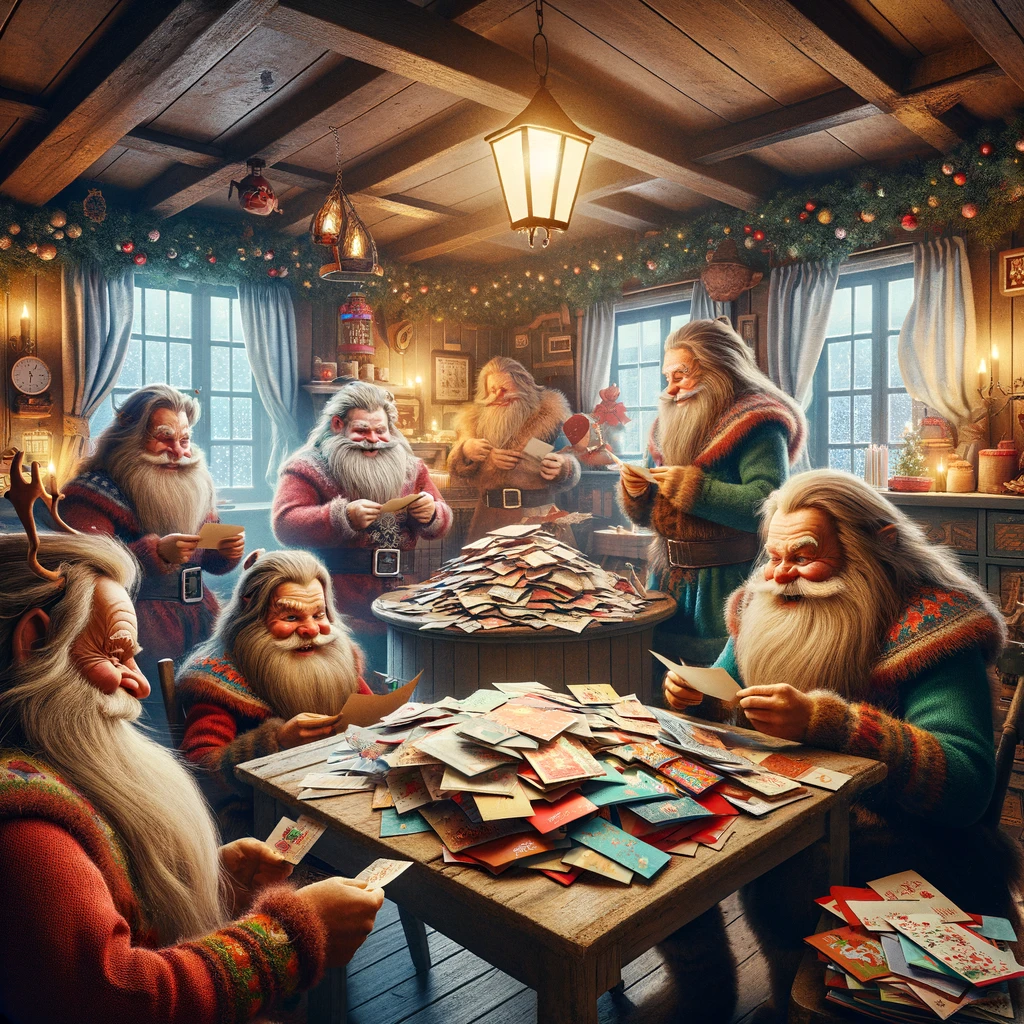
Here is DALL-E 3’s take on the Yule Lads receiving and opening Christmas cards sent to them in the post to their home in Iceland.

Leave a comment

Christmas traditions (Advent calendar, Day 4)

What is the origin story of Christmas stockings?

Christmas stockings h/t Fruugo

The tradition of hanging Christmas stockings by the fireplace for Santa Claus to fill with gifts on Christmas Eve has a charming origin story. Here’s how it is believed to have begun:

  • Saint Nicholas and the three sisters: The origins of the Christmas stocking tradition are often traced back to Saint Nicholas, the 4th-century Christian bishop known for his generosity. According to legend, Saint Nicholas heard about a poor man who couldn’t afford dowries for his three daughters, and he feared they would be forced into a life of destitution.
  • Saint Nicholas’ secret gift: Saint Nicholas wanted to help but didn’t want to draw attention to the family’s plight. So, he decided to secretly assist them. One night, he threw three bags of gold coins down the chimney of the family’s home. The bags landed in stockings hung by the fireplace to dry, providing the dowries needed for the daughters’ marriages.
  • Evolution of the tradition: Over time, the story of Saint Nicholas’s secret gift-giving evolved, and the practice of children hanging stockings by the fireplace in the hope of receiving gifts on Christmas Eve became widespread.

Interesting anecdotes about Christmas stockings

Christmas sacks h/t Mamas & Papas (via Marks & Spencer)
  • Different names for Santa: The figure who fills Christmas stockings goes by various names worldwide. In the United States and Canada, he is known as Santa Claus. In the United Kingdom and some other English-speaking countries, he is Father Christmas. In France, he is Père Noël, and in Italy, he is Babbo Natale.
  • Hung by the fireplace: The tradition of hanging stockings by the fireplace remains strong in many countries. The idea is that Santa Claus enters the house through the chimney and fills the stockings with gifts.
  • Stocking stuffers: Stockings are typically filled with small gifts and treats, such as candy, chocolates, small toys, and fruit. These are often referred to as “stocking stuffers”.
  • Personalised stockings: Many families have personalised stockings for each member of the household, often with names embroidered or written on them. These stockings are reused year after year.
  • Socks for stockings: In some countries, children use socks instead of stockings. These socks are often hung on a bedpost or other suitable location.
  • Santa sacks: In Australia, it’s common to use large, decorative sacks instead of stockings to hold Christmas gifts.
  • Norwegian tradition: In Norway, there is a charming tradition called “Julestrømpe” or “Christmas stocking.” It involves children secretly crafting a stocking for their parents and filling it with small gifts as a way to express love and appreciation.
  • Santa’s Naughty List: In some variations of the tradition, children who have misbehaved throughout the year may find a lump of coal in their stockings as a playful reminder to be better behaved.
  • International variations: While the Christmas stocking tradition is widely recognised, each country may have its unique customs related to stockings or similar traditions. For example, in some parts of Europe, children leave out shoes instead of stockings.
  • Christmas charity: Many charitable organisations and community groups collect stockings filled with gifts to distribute to those in need during the holiday season, embodying the spirit of giving and generosity.
Santa’s Naughty List h/t The Sun

In a nutshell

The tradition of hanging Christmas stockings is a heartwarming part of the holiday season, symbolizing the joy of receiving and giving to loved ones. It continues to be a beloved tradition in many cultures, with each family adding its personal touches and variations to make it special.

Coda

Here is DALL-E 3’s idea of the Yule Lads in the process of hanging up their own Christmas stockings from the mantlepiece of a fireplace inside an Icelandic house.


Leave a comment

Christmas traditions (Advent calendar, Day 3)

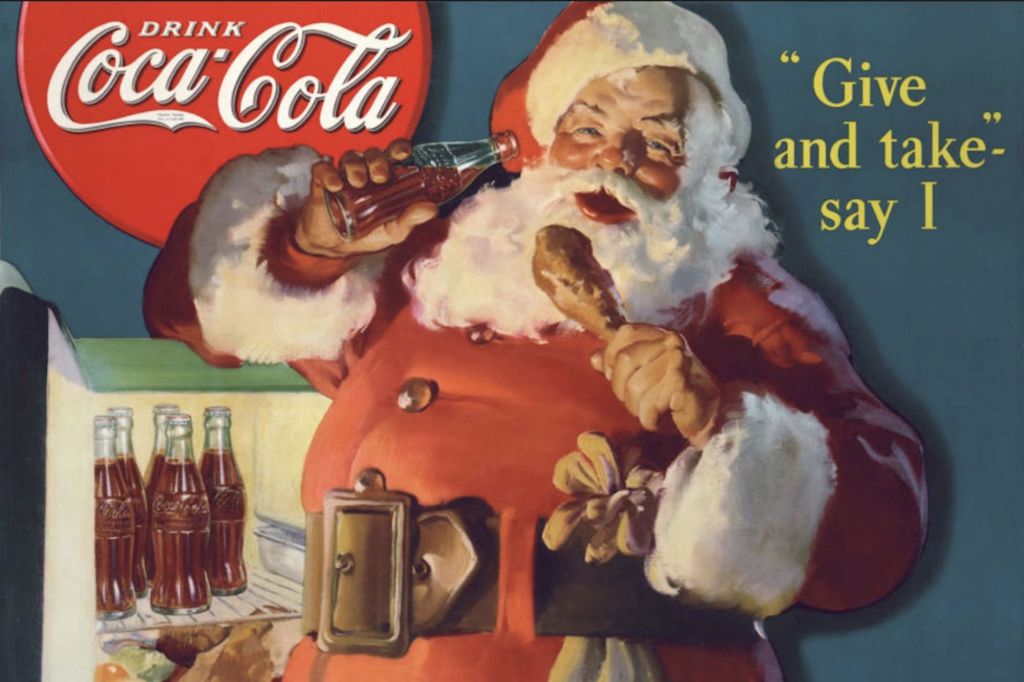
Coca-Cola ad from the 1930s

What is the origin story of Santa Claus?

The figure of Santa Claus – known by various names including Father Christmas, Kris Kringle and Saint Nicholas – has evolved over centuries and has been shaped by a combination of Christian traditions, folklore and historical figures. Here’s a brief overview of the origin story of Santa Claus:

  • Saint Nicholas: The origin of Santa Claus can be traced back to Saint Nicholas, a 4th-century Christian bishop who lived in what is now modern-day Turkey. Saint Nicholas was known for his acts of kindness and generosity, especially toward children and those in need.
  • Evolution of the legend: Over time, stories and legends about Saint Nicholas’s generosity spread across Europe. He became the patron saint of children and sailors. In many countries, Saint Nicholas Day is celebrated on 6th December, and children receive gifts in his honour.
  • Dutch influence: Dutch immigrants to the United States brought with them the tradition of celebrating Sinterklaas (Saint Nicholas) on 5th December, a custom that eventually merged with the Christmas holiday in America. Sinterklaas evolved into “Santa Claus”.
  • Coca-Cola’s Influence: In the 1930s, Coca-Cola played a significant role in shaping the modern image of Santa Claus. They commissioned artist Haddon Sundblom to create a series of images featuring a plump, jolly Santa Claus enjoying Coca-Cola. This popularised the image of Santa as we know him today, with a red suit and white beard.
NORAD SantaTracker

Interesting anecdotes about Santa Claus

  • International names and variations: Santa Claus goes by different names and variations in various countries. For example, in France, he is Père Noël; in Italy, he is Babbo Natale; in Russia, he is Ded Moroz; and in the Netherlands, he is Sinterklaas, who has a helper named Zwarte Piet.
  • Santa’s mail: Many countries have dedicated addresses where children can send letters to Santa Claus. These letters often receive responses from volunteers or postal workers.
  • NORAD Santa Tracker: Since 1955, the North American Aerospace Defense Command (NORAD) has been tracking Santa Claus’s journey around the world on Christmas Eve. It began as a result of a misprinted phone number in a newspaper ad, and it has become a popular tradition.
  • SantaCon: In cities around the world, SantaCon is an annual event where people dress up as Santa Claus and participate in a pub crawl or other festive activities.
  • Santa’s transportation: In many cultures, Santa Claus is believed to travel in various ways. In the United States, he’s said to use a sleigh pulled by reindeer, while in some European countries, he arrives on a horse or even by boat.
  • Leaving out treats: In the United States and other countries, it’s a tradition for children to leave out milk and cookies for Santa Claus as a token of appreciation for his gift-giving.
  • Santa parades: Santa Claus often appears in parades leading up to Christmas, including the Macy’s Thanksgiving Day Parade in New York City.
  • The Santa Claus Oath: There is an official Santa Claus Oath that many individuals who portray Santa Claus in public take, pledging to uphold the values and spirit of Santa.
  • Santa’s workshop: The North Pole is commonly depicted as the location of Santa’s workshop, where he and his elves make toys for children. This imagery has become deeply ingrained in the Santa Claus legend.
  • Acts of kindness: Many people embrace the spirit of Santa Claus by engaging in acts of kindness and charity during the holiday season, helping those in need and spreading joy.
SantaCon, New York City

In a nutshell

The story of Santa Claus is a heartwarming tale that has transcended borders and cultures, bringing joy and goodwill to people around the world during the Christmas season. Santa represents the spirit of giving, generosity, and the magic of the holidays.

Coda

Putting DALL-E 3’s imagination to work, here are a couple of images showing the Yule Lads greeting Santa Claus, as his reindeer pull a flying sled across the sky, all in an Icelandic landscape.


Leave a comment

Christmas traditions (Advent calendar, Day 2)

Iceland

What is the origin story of the Christmas tree?

The tradition of decorating and displaying Christmas trees during the holiday season has roots in various cultures and time periods, but it became widely popular in its current form in 19th-century Europe.

Today, this practice is common across the world over the festive period. This post includes images from four different countries. How many pictures of Christmas trees in other countries can you find?

Here’s a brief overview of the origin story:

Gubbio, Italy
  • Ancient origins: The idea of bringing evergreen plants indoors during the winter months has ancient roots. In pagan traditions, evergreen trees and branches were seen as symbols of life and hope during the dark, cold winter. People would decorate them with items like candles, fruit, and nuts.
  • Christian adoption: In medieval Europe, the early Christian Church adopted some of these pagan customs and incorporated them into their Christmas celebrations. The evergreen tree came to symbolize the Tree of Life and was used to represent the promise of eternal life through Jesus Christ.
  • Germany in the 16th century: The tradition of the Christmas tree, as we know it today, is often attributed to 16th-century Germany. Some historical accounts suggest that Martin Luther, the Protestant Reformer, was the first to decorate a Christmas tree with candles. He was said to be inspired by the beauty of the stars shining through evergreen trees while walking in the forest.
  • Royal influence: The Christmas tree tradition became more widespread in Germany and other European countries during the 18th and 19th centuries. It gained royal approval when Queen Victoria and Prince Albert, who was of German descent, were depicted with a decorated Christmas tree in a popular illustration in 1848. This image helped popularize the tradition in England and beyond.
  • Arrival in the United States: The tradition of the Christmas tree was introduced to the United States by German immigrants in the 19th century. It gained broader popularity in the USA following the publication of a picture of Queen Victoria and Prince Albert’s Christmas tree in a popular magazine.

Interesting anecdotes about Christmas trees

Rockefeller Center, NYC
  • Rockefeller Center Christmas tree: The lighting of the Rockefeller Center Christmas tree in New York City has become a highly anticipated annual event. The first tree was erected in 1931 during the Great Depression, and it has since become an iconic symbol of the holiday season in the United States.
  • Tallest Christmas tree: In 2020, a Christmas tree from the state of New York made headlines as the tallest Christmas tree ever displayed at Rockefeller Center, measuring over 100 feet tall.
  • Edible Christmas trees: In some cultures, especially in Scandinavia, it is traditional to make edible Christmas trees using bread, gingerbread cookies, or other treats. These trees are often decorated with candies and fruits.
  • Environmental concerns: In recent years, there has been a growing awareness of the environmental impact of cut Christmas trees. Many people now opt for artificial trees or participate in tree recycling programs to reduce waste.
  • Specialised tree decorations: Some Christmas trees are adorned with unique and specialized decorations. For example, in Japan, it’s common to decorate trees with paper cranes, and in Mexico, they may hang colorful piñatas.
  • National Christmas trees: Many countries have their own national Christmas trees. For example, the National Christmas Tree in Washington, DC, has been a tradition since 1923 when President Calvin Coolidge lit the first tree.
  • World’s most expensive Christmas tree: In 2019, a Christmas tree in Marbella, Spain, was valued at over $15 million. It was adorned with diamonds, sapphires, and other precious gems.
Rio de Janeiro, Brazil

In a nutshell

The Christmas tree has evolved from a symbol of hope and faith to a widely recognized and cherished part of the holiday season around the world. It continues to be a central element of Christmas celebrations in many cultures, with each region adding its unique customs and decorations to this beloved tradition.

Coda

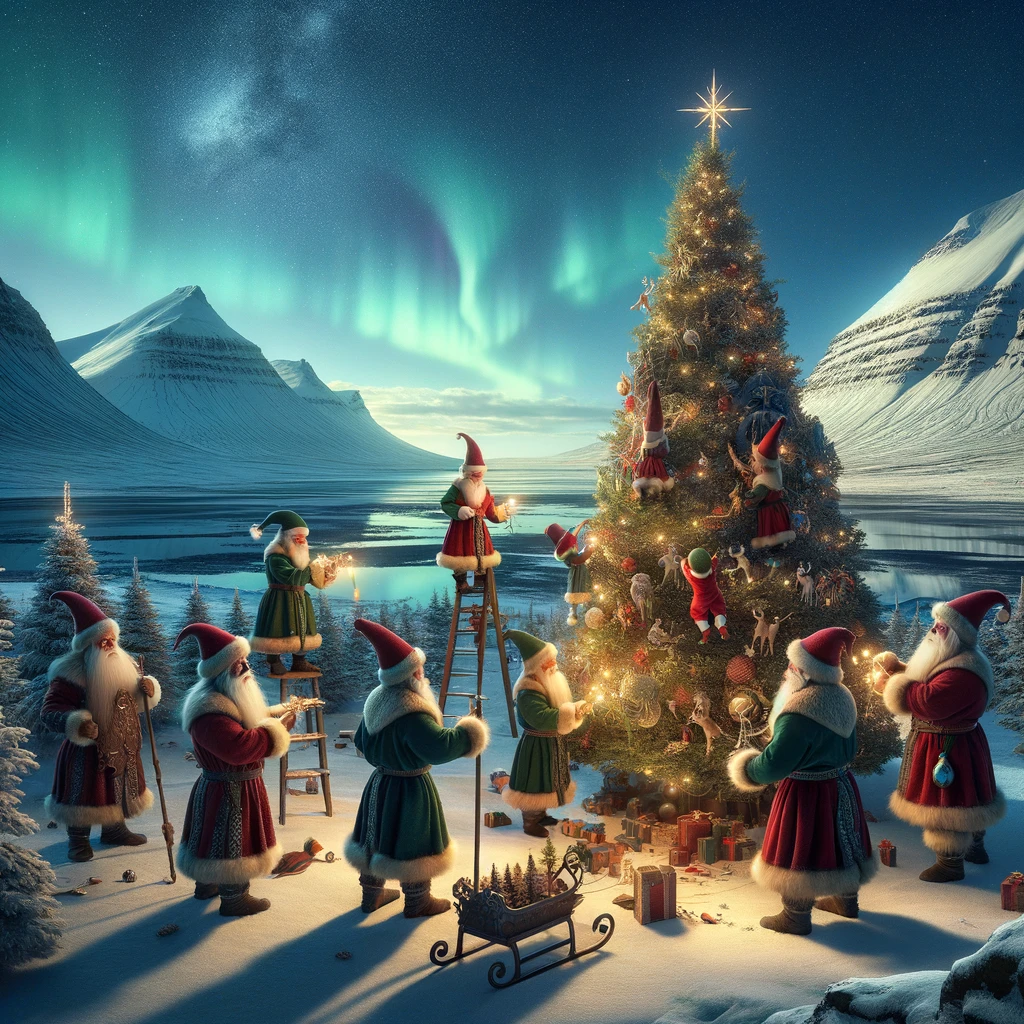
As a flight of fancy, here are a couple of DALL-E 3 images showing the Yule Lads putting decorations on a Christmas tree in an Icelandic landscape.


Leave a comment

Christmas book flood 2023

The tidal wave is coming

Every year in Iceland a new tidal wave of books crashes onto the nation’s beaches for citizens to become aware of via the Bókati∂indi (Book Bulletin) printed catalogue, a copy of which is sent in the post to every home address in the country.

The catalogue always features around 800 newly published book titles across a full range of different categories and genres for fiction, non-fiction and children’s books.

You can download your copy by clicking the Download button on the PDF link above.

Here is the full-length A4-size front cover for this year’s Bókati∂indi catalogue…

The English translation for the Icelandic phrase “Getur þú hu qui∂ þór jól ∂u bóka?” – displayed on the cover on the roof under where Santa and his singular reindeer is parked – equates to “Can you book a book for Christmas?” or, more eloquently, “Can you procure a book for Christmas?”

By way of a little AI image generator fun, here are a couple of dream-like compositions DALL-E 3 wrangled with the prompt for the Yule Lads to be reading books washed up on an Icelandic beach as a result of the annual book flood tidal wave.

Is there a real beach in Iceland with these rock formations or are the landscapes in these images a figment of DALL-E 3’s febrile imagination?