Jolabokaflod

Christmas Book Flood • Reading for Pleasure


Leave a comment

DAY 4 — The Cup-of-Hot-Chocolate Books

Jolabokaflod Advent Calendar 2025

Some books don’t ask to be analysed.
They ask only to be held.

Held the way you hold a warm mug on a cold evening. Fingers curved around ceramic. Steam rising toward your face. A soft pause between one small sip and the next. These are the books I think of as hot-chocolate books — stories that warm you from the inside out.

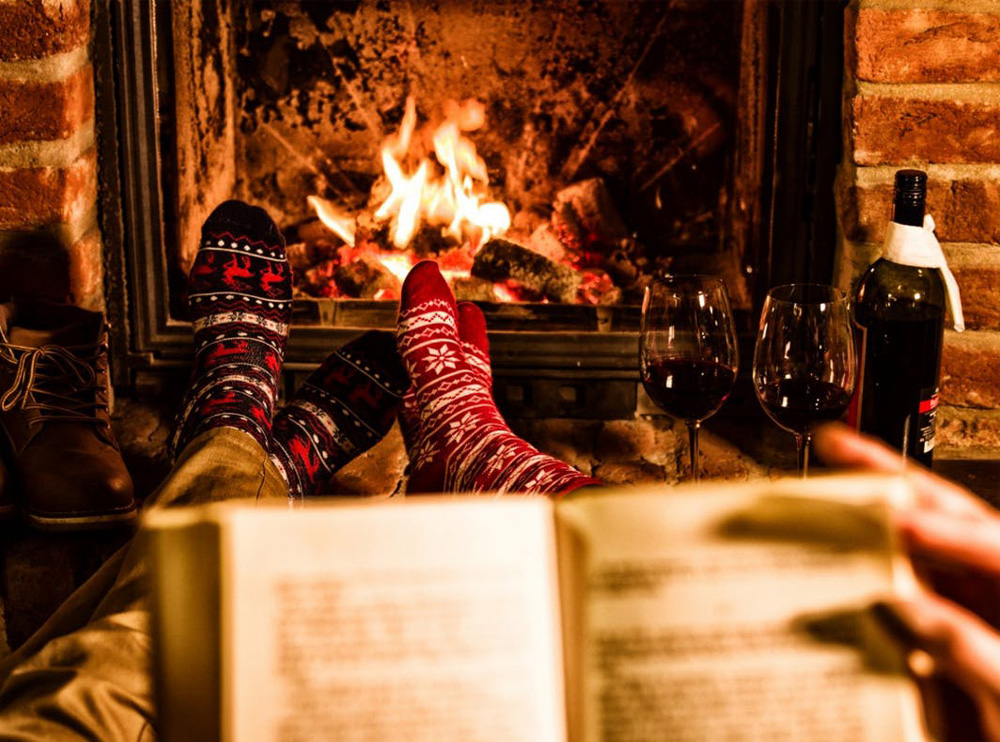
I first noticed this kind of reading on a winter evening when the day had been heavy for no obvious reason. Nothing dramatic. Just one of those tired, emotionally cluttered days that December seems so good at producing. I made hot chocolate almost without thinking, opened a book at random, and somewhere between the sweetness and the softness of the words, I felt my shoulders lower.

That’s when I realised something important:

We live in a world that constantly invites us to optimise even our leisure — to learn more, grow faster, consume smarter. But winter asks something different of us. It asks us to be gentler. It asks us to choose warmth over acceleration. And few things do that as reliably as a truly comforting book.

These are the stories where not much explodes. Where kindness appears quietly. Where the stakes are human rather than heroic. They are perfect companions for evenings when the dark arrives early and the only plan is to stay in.

So today, on Day 4 of our Jolabokaflod Advent journey, I invite you to choose a book the way you might choose a hot drink: not for its prestige, but for how it makes you feel when you take the first sip.

Today’s Reading Picks: “Hot-Chocolate Comfort Reads”

Books that soothe, soften, and wrap you up in story:

These are books you can return to when the world feels a little too sharp around the edges.

You can explore the full Advent Calendar titles here:
👉 Explore the Advent Calendar collection on Bookshop.org

And if you’d like to wander a little further:
👉 Visit the Cosy Winter Fiction Shelf

Tonight, may your book be warm.
May your drink be sweet.
And may the world feel just a little kinder.


Leave a comment

DAY 3 — The Most Memorable Book I Ever Received

Jolabokaflod Advent Calendar 2025

There are many gifts we forget. Some we remember for a season. But a few linger for a lifetime, quietly shaping who we become. More often than not, those are the gifts that came wrapped not just in paper, but in story.

I can still remember the weight of one particular book in my hands as a child—the satisfying density of it, the faint smell of ink and dust, the way my name had been written carefully on the inside cover. I don’t remember what else I received that year. I don’t remember the toys, the clothes, the noise. But I remember that book. I remember where I sat when I opened it. I remember how it felt to realise that something inside those pages now belonged to me.

That is the quiet power of giving a book.

Unlike most gifts, a book does not announce itself all at once. It unfolds slowly. It waits. It meets the reader in private moments—in bed after the lights go out, on the sofa while the house sleeps, in the quiet spaces between the busyness of life. A book becomes more than an object. It becomes a companion. A refuge. Sometimes even a turning point.

When we speak about Jolabokaflod—the Icelandic tradition of gifting books on Christmas Eve—we often talk about culture, community, and reading habits. But at its heart, the tradition is deeply personal. It’s about saying to someone, quietly and with care:

Today, I invite you to pause and think about the most memorable book you ever received. Who gave it to you? Where were you? What did it awaken in you? Often, when we trace our reading lives back far enough, we find that everything began with a single, thoughtful gift.

That’s why, on Day 3 of our Advent journey, today’s focus is on books that make unforgettable presents—the kind that live on long after the wrapping paper is gone.

🎁 Today’s Reading Picks: “Most Memorable Book Gifts”

Timeless, emotionally resonant titles that make extraordinary presents:

These are the books people return to decades later and still remember who gave them.

You can explore the full Advent Calendar curated shelf here:
👉 Explore the Advent Calendar collection on Bookshop.org

And for even more timeless choices:
👉 Visit the Jolabokaflod Classics Shelf

If you’re giving a book this Christmas, you’re not just giving a story.

You’re giving a future memory.

Choose it with care.


Leave a comment

DAY 2 — The Hygge Reading Nook Challenge

Jolabokaflod Advent Calendar 2025

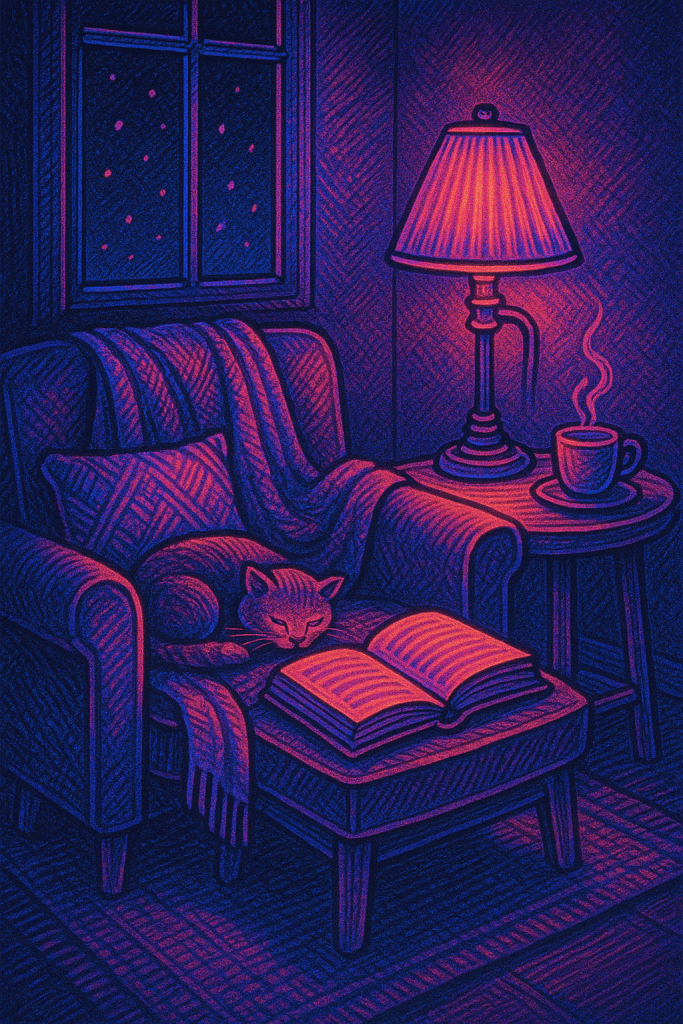
There’s a particular kind of happiness that arrives not in grand gestures, but in the quiet rearranging of a corner of your home. A lamp moved a little closer. A blanket folded just so. A mug placed within easy reach. And suddenly, what was once simply a chair becomes something far more powerful: an invitation to read.

For me, the discovery of hygge years ago didn’t come from a book or an article—it came from a moment. A dreary December afternoon, the kind where the sky hangs low and everything feels slightly unfinished. I lit a small lamp, wrapped a blanket around my shoulders, and sat down “just for a minute”. That minute became an hour. That hour became the start of a ritual that has stayed with me every winter since.

Because here’s the truth we often forget:
Adults don’t just need more time to read. They need more reasons to begin.
And nothing encourages beginning quite like a cosy, welcoming nook.

The beauty of a reading nook is that it doesn’t need to be elaborate. You don’t need a fireplace or a bay window or a perfectly curated stack of Pinterest-worthy décor. All you need are three things:

  1. A comfortable seat
  2. A forgiving light source
  3. A sense of shelter

The shelter is the secret ingredient. It might be the way a blanket drapes over your knees. Or how the chair angles away from the busyness of the room. Or even the presence of a cat who is absolutely convinced this nook was created for them.

Today, for Day Two of our Jolabokaflod Advent Calendar, I invite you to join the Hygge Reading Nook Challenge:

And once you’ve done that, you’ll need the right book: something warm, atmospheric, and comforting enough to justify staying put for just one chapter more.

Today’s Reading Picks: “Hygge Nook Essentials”

Books that pair beautifully with soft light, blankets, and unhurried evenings:

You can explore the full Advent Calendar titles here:
👉 Explore the Advent Calendar collection on Bookshop.org

And if you want even more comforting choices:
👉 Visit the Cosy Winter Fiction Shelf

Whether your nook is humble or heavenly, minimal or magical, let it become your daily December refuge.

May it bring you warmth, rest, and many beautiful pages.


Leave a comment

DAY 1 — The First Snowfall of Reading Season

Jolabokaflod Advent Calendar 2025

There’s a moment every winter when the world changes all at once.

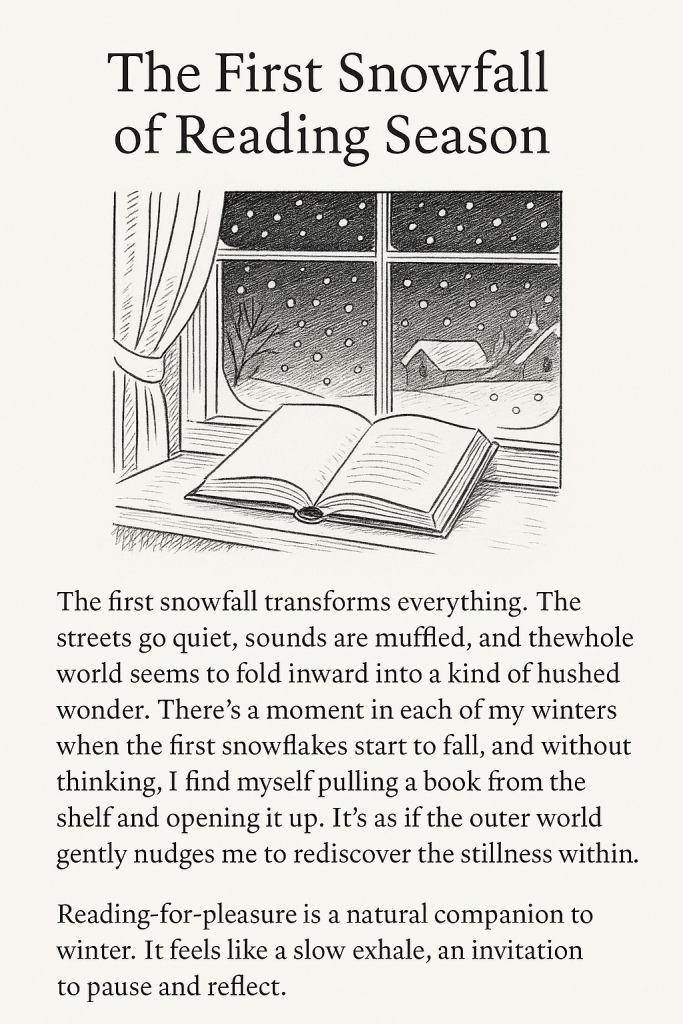
It happens quietly—almost shyly—when the first snowflakes drift past the window. Streets soften. Sounds become muffled. The light turns a gentler shade of silver. And for a few precious hours, the world gives us permission to slow down.

For many people, that first snowfall is the moment they finally exhale. For readers, it’s something more: an invitation. A reminder. A tug at an old, familiar thread of comfort. The first snowfall carries a secret message whispered only to those willing to hear it:

I remember one first snowfall in particular—a December morning years ago, long before Jolabokaflod became a part of my life’s work. I had been rushing, overstretched, juggling the many unnecessary urgencies we invent for ourselves in the run-up to Christmas. Then suddenly, there it was: a soft flurry outside the window. I stopped, mid-task. Without thinking, I made a cup of coffee, pulled a blanket over my lap, and picked up the book waiting quietly beside the sofa.

Thirty pages later, I realised I hadn’t looked at my phone once.

That morning taught me something I’ve since seen echoed in research, book clubs, libraries, and conversations with readers around the world: winter itself can be a catalyst for reading. The colder, quieter, darker days nudge us toward stories in a way summer rarely does. We’re less inclined to rush. We crave atmosphere. We want warmth—not just in temperature but in feeling.

So today, on the first day of our Jolabokaflod Advent Calendar, I invite you to embrace that small but powerful shift. Whether snow is falling where you are or only in your imagination, let this be your moment to pause—to choose a book that mirrors the pace of the season, and to let it carry you gently into December.

❄️ Today’s Reading Picks: “First Snowfall Reads”

Books with crisp air, quiet moods and the soft glow of winter light:

These books pair beautifully with early mornings, warm blankets and the sound of nothing much at all.

You can explore the full Advent Calendar titles here:
👉 Explore the Advent Calendar collection on Bookshop.org

And if you want a second cosy corner to wander into, today’s recommended evergreen shelf is:
👉 The Cosy Winter Fiction Shelf

Let’s begin this season as gently as possible.
Let’s begin with a book.
Let’s begin with the first snowfall.


Leave a comment

Let’s celebrate Sumarbokaflod

Ever wondered why summer is the perfect time to dive into a great book?

In the heart of Iceland’s winter, the tradition of Jolabokaflod, or the Christmas Book Flood, brings warmth and joy as people gift books on Christmas Eve and spend the night reading. Imagine channeling that same spirit into summer with a new tradition: Sumarbokaflod, the Summer Book Flood. In any given year, today’s date marks the halfway point between two Christmas Eves, so 23 June is exactly the right time to be celebrating this new literary anniversary.

As summer rolls in, bookstores and publishers flood us with a tsunami of book campaigns, urging us to find the perfect reads for our vacations, and libraries find themselves busier than at any other time of year. Whether you’re lounging by the beach, hiking in the mountains, or simply enjoying a staycation, there’s no better companion than a good book.

Just like the cosy nights of Jolabokaflod, Sumarbokaflod can transform summer into a season of literary adventure. Publishers can launch special summer editions, host reading events, and offer discounts, making it easier for everyone to discover new stories.

This wave of summer reading not only promotes relaxation and pleasure but also supports authors and the book industry at large. Let’s make Sumarbokaflod a staple of our summer experience, encouraging everyone to pick up a book and lose themselves in its pages.

Are you ready to embrace the Sumarbokaflod tradition and make summer your mid-year season of reading for pleasure?


Leave a comment

Christmas traditions (Christmas Day)

What is the origin story of the Christmas Boat Procession in Venice?

The Christmas Boat Procession in Venice, known as “La Festa di San Nicolò,” is a unique and centuries-old tradition in the city. While it may not be as well-known as some other Christmas traditions, it has a rich history rooted in the maritime culture of Venice. Here’s the origin story and some interesting anecdotes about the Christmas Boat Procession in Venice and how this tradition is used to celebrate Christmas:

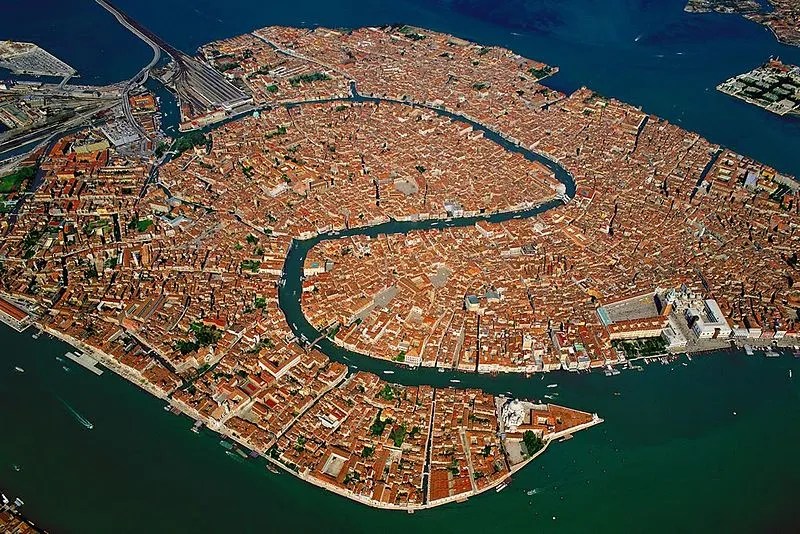
Aerial view of Venice, Italy
  • Historical maritime city: Venice, Italy, is a city built on islands in a lagoon, and its history and culture are closely tied to the sea. Venice has a strong maritime tradition, and waterways are a central part of the city’s identity.
  • Patron Saint: San Nicolò (Saint Nicholas) is the patron saint of Venice and has a special place in the hearts of Venetians. Saint Nicholas is also the patron saint of sailors, making him particularly significant in a city that relied on maritime trade.

Interesting anecdotes about the Christmas Boat Procession

San Nicolò di Lido, Venice
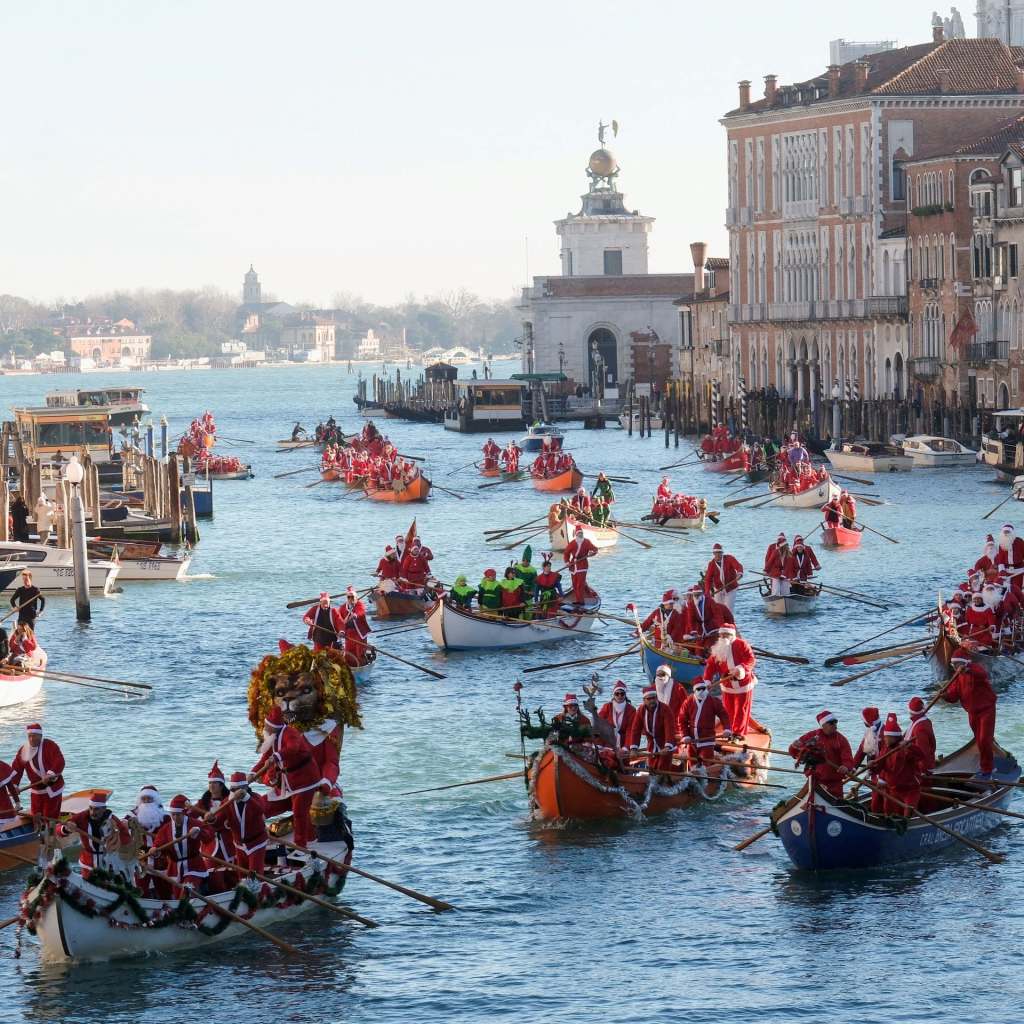
  • The tradition: The Christmas Boat Procession in Venice is an annual event that takes place on 6 December, which is the feast day of San Nicolò. It typically includes a procession of boats, gondolas, and other watercraft adorned with festive decorations, lights, and nativity scenes.
  • Statue of San Nicolò: A statue of San Nicolò is central to the procession. The statue, often housed in the church of San Nicolò di Lido, is brought out and placed on a boat for a ceremonial voyage around the Venetian lagoon. The statue represents the saint’s protection of sailors and the city.
  • Nativity scenes: Many of the boats in the procession carry elaborate nativity scenes, adding a religious and festive element to the event. These nativity scenes are often beautifully crafted and illuminated.
  • Lighted candles: Participants in the procession typically carry lighted candles, creating a stunning visual spectacle as they glide along the city’s canals and lagoon. The flickering candlelight adds to the enchanting atmosphere.
  • Historic significance: The Christmas Boat Procession in Venice has been taking place for centuries and is a testament to the city’s rich maritime history and devotion to its patron saint, San Nicolò.
  • Community involvement: The procession involves not only religious institutions but also local communities, boat owners, and residents of Venice who come together to celebrate and participate in this cherished tradition.
  • Unique Venetian experience: The Christmas Boat Procession is a unique way to experience Venice during the holiday season. It provides a different perspective of the city, as it takes place on the water, away from the crowded streets and squares.
  • Cultural preservation: Efforts are made to preserve and pass on this tradition to future generations. It is a symbol of Venetian identity and a reminder of the city’s strong ties to the sea.
The Christmas Boat Procession, Venice

In a nutshell

The Christmas Boat Procession in Venice is a beautiful and culturally significant event that combines religious devotion, maritime heritage, and festive celebration. It offers locals and visitors alike a chance to experience the magic of Venice during the holiday season while honoring the patron saint of the city and its seafaring history.

Coda

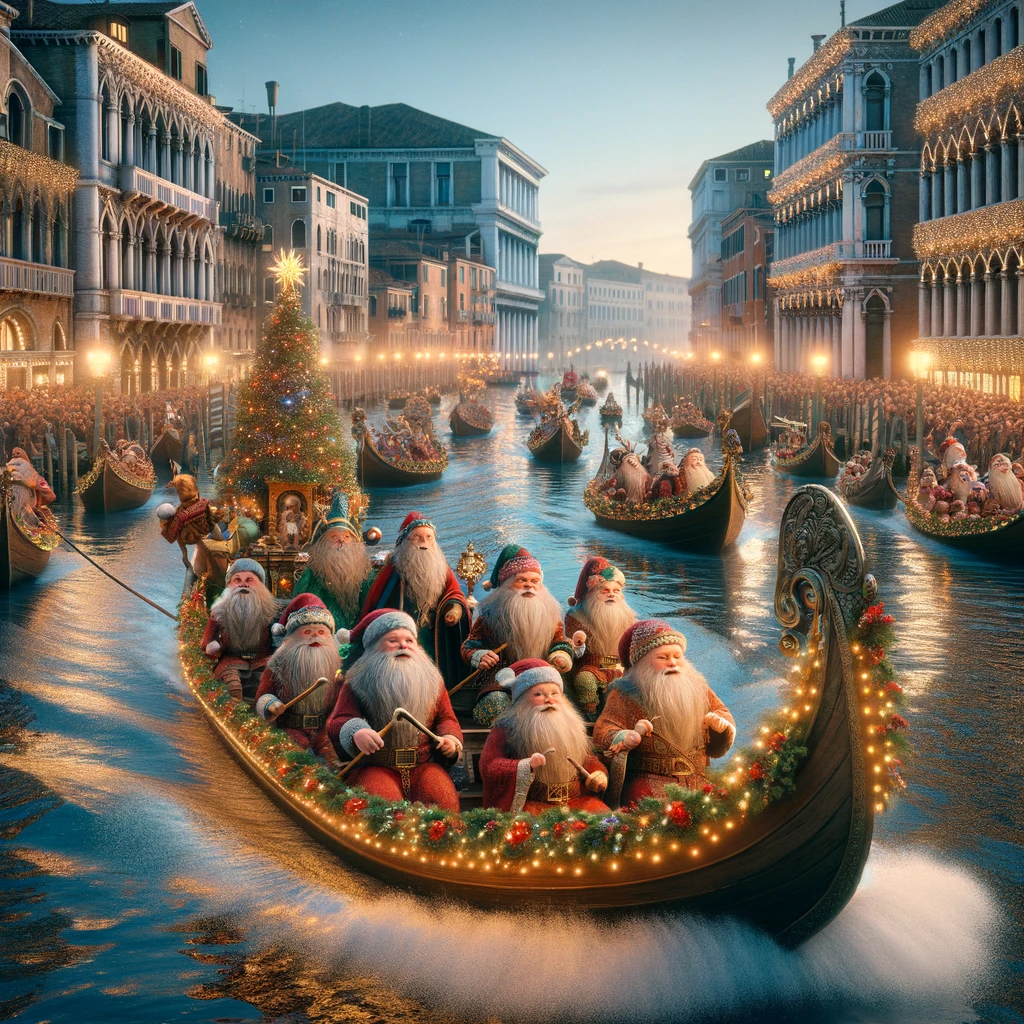
Here are the Yule Lads, imagined by DALL-E 3, taking part in the Christmas Boat Procession by sailing on a gondola on the Grand Canal in Venice, Italy.


Leave a comment

Departure of the Yule Lads

The departure of the thirteen Icelandic Yule Lads, known as “Jólasveinarnir“, from Icelandic houses and communities occurs gradually between 25 December and 6 January. This period marks the end of their annual visitation. Here’s an overview of how their departure unfolds:

  • Christmas Day (25 December): The departure of the Yule Lads begins on Christmas Day, which is a significant holiday in Iceland. Traditionally, it’s believed that the Yule Lads leave the homes and communities where they’ve been causing mischief and return to their mountain abode, known as “Dimmuborgir,” which translates to “Dark Castles.” Families may leave out special treats for the Yule Lads as a gesture of farewell and gratitude.
  • 26- 31 December: Over the next several days following Christmas, the Yule Lads gradually make their way back to their mountain hideaways. Each night, one of the Yule Lads departs. The order of departure is generally the reverse of their arrival, with the last to arrive being the first to leave.
  • New Year’s Eve (31 December): On New Year’s Eve, it’s customary to celebrate with fireworks, as Icelanders believe that lighting fireworks helps to drive away the last remnants of the Yule Lads and other supernatural beings who may still be lingering.
  • 6 January (Þrettándinn – Epiphany): On Þrettándinn, Icelanders bid farewell to the holiday season. This day is marked by various customs and festivities, including bonfires and parades. It is believed that on this day, the Yule Lads return to their remote mountain homes, and the holiday season is officially over.

As the Yule Lads gradually retreat to their mountain home, and the atmosphere in Icelandic communities shifts from the playful mischief of the Yule Lads to the more solemn and reflective celebration of the New Year and Epiphany. The departure of the Yule Lads marks the transition from the festive holiday season to the beginning of the new year in Iceland, with each Yule Lad bidding farewell until their return the following December.


Leave a comment

The day after Jólabókaflóðið

Jólabókaflóðið (The Christmas Book Flood) is of course a beloved Icelandic tradition that takes place on Christmas Eve, rather than Christmas Day. On Christmas Eve, Icelanders exchange books as gifts, and it’s a cherished part of their holiday celebrations. Here’s how the tradition typically unfolds:

Reading together in front of a fire
  • Book giving: On the night of 24 December, it’s customary for Icelanders to exchange books as gifts with their loved ones. The books are typically wrapped and placed under the Christmas tree.
  • Reading together: After the exchange of books, it’s common for families to spend the evening reading. Many people enjoy a peaceful night reading their newly received books, often accompanied by hot cocoa or a festive drink and some chocolates.
  • Quiet celebration: Christmas Eve in Iceland is a quiet and contemplative time. Many businesses close early, and the streets become deserted as families gather to celebrate in the warmth of their homes.

While Jólabókaflóðið is the main book-related tradition associated with Christmas in Iceland, Christmas Day itself typically involves more traditional celebrations, including attending church services, enjoying a special holiday meal, and spending time with family and friends. It’s a time for reflection, relaxation, and festive gatherings, much like in many other countries.

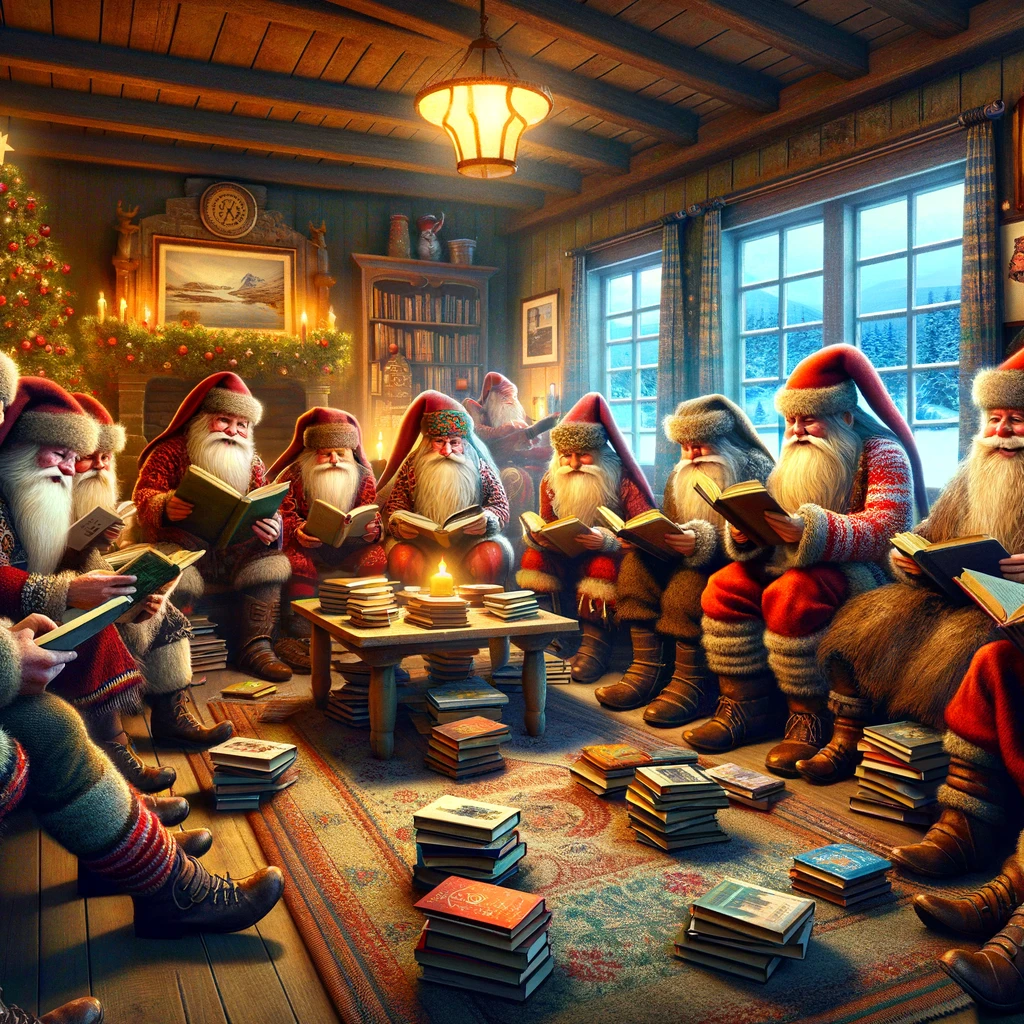
Jolabokaflod CIC exists to promote Jólabókaflóðið everywhere else around the world, to ensure everyone has the chance to participate in this wonderful Icelandic tradition. Here are the Yule Lads, enjoying Jólabókaflóðið by opening their presents and reading the books they receive on Christmas Eve.


Leave a comment

Christmas traditions (Advent calendar, Day 24)

What is the origin story of Santa Runs?

Santa Run in a park

Santa Runs, also known as Santa Dashes or Santa Fun Runs, are festive events that involve participants dressing up as Santa Claus and running a designated route, often for charitable purposes. While the specific origin of Santa Runs is not well-documented, they are part of a broader tradition of holiday-themed fun runs that have become popular worldwide. Here’s an overview of the origin and some interesting anecdotes about Santa Runs and how this tradition is used to celebrate Christmas:

  • Emergence of fun runs: Fun runs, which are non-competitive running events designed for enjoyment rather than competition, have been a popular activity in many countries for decades. These runs often have themes and costumes, and they are organized for various purposes, including charity fundraising.
  • Santa costume element: Santa Runs incorporate the festive and recognisable image of Santa Claus into the fun run concept. Participants don Santa Claus costumes, complete with red suits, white beards, and hats, as they run or walk the designated course.

Interesting anecdotes about Santa Runs

Runners in different Christmas costumes
  • Charitable fundraising: Many Santa Runs are organised as charity fundraisers, with participants required to register and pay a fee, a portion of which goes to support charitable causes. These events often raise money for local charities, food banks, or other community initiatives.
  • World records: Santa Runs have gained popularity as opportunities to set world records for the largest gathering of people dressed as Santa Claus. Cities around the world compete to break these records each year, adding a sense of competition and camaraderie to the events.
  • All ages and abilities: Santa Runs are inclusive events that welcome participants of all ages and abilities. Families often participate together, and the runs typically have different categories to accommodate walkers, joggers and serious runners.
  • Variety of distances: While 5 km (3.1 miles) runs are common, Santa Runs can vary in distance. Some are shorter, family-friendly events, while others are longer and more challenging. The choice of distance often depends on the organizers’ goals and the preferences of the participants.
  • Festive atmosphere: Santa Runs create a festive atmosphere with holiday music, decorations and sometimes even snow machines (in regions where it doesn’t naturally snow). The sense of joy and merriment is a hallmark of these events.
  • Costume creativity: Participants often get creative with their Santa Claus costumes. Some opt for traditional Santa attire, while others put unique twists on their costumes, adding elements like tutus, holiday-themed accessories, or creative variations on Santa’s appearance.
  • Global participation: Santa Runs have become a global phenomenon, with events taking place in cities and communities around the world. Major cities often have their own annual Santa Run, attracting thousands of participants. In coastal areas, a variation on the theme is to go surfing dressed as Santa Claus.
  • Community engagement: Santa Runs are not only about running but also about community engagement and coming together to celebrate the holiday season. Many runs encourage spectators to cheer on participants and join in the festive spirit.

In a nutshell

Surfing Santas

Santa Runs have become a beloved and light-hearted way to celebrate the holiday season, promote physical activity, and raise funds for charitable causes. Whether it’s for fun, fitness, or fundraising, participants in Santa Runs enjoy the festive spirit of the event and the opportunity to spread holiday cheer while staying active.

Coda

DALL-E 3 today imagines the Yule Lads taking part in a Santa Run in Reykjavík alongside many other people dressed in Santa Claus costumes.


Leave a comment

Arrival of the thirteenth Yule Lad

Kertasníkir

Kertasníkir is also known as “Candle Beggar” or “Candle Stealer” in English. He is one of the Yule Lads, known as “Jólasveinarnir” in Icelandic. Kertasníkir makes his visit to Icelandic households on 24 December and is the final Yule Lad to arrive. His name reflects his unique behaviour. Let’s explore the specific characteristics and folklore associated with Kertasníkir:

This Yule Lad is often depicted as a somewhat solemn and dark figure, which is fitting for his role as the last visitor. His appearance suggests his association with the darkest night of the year.

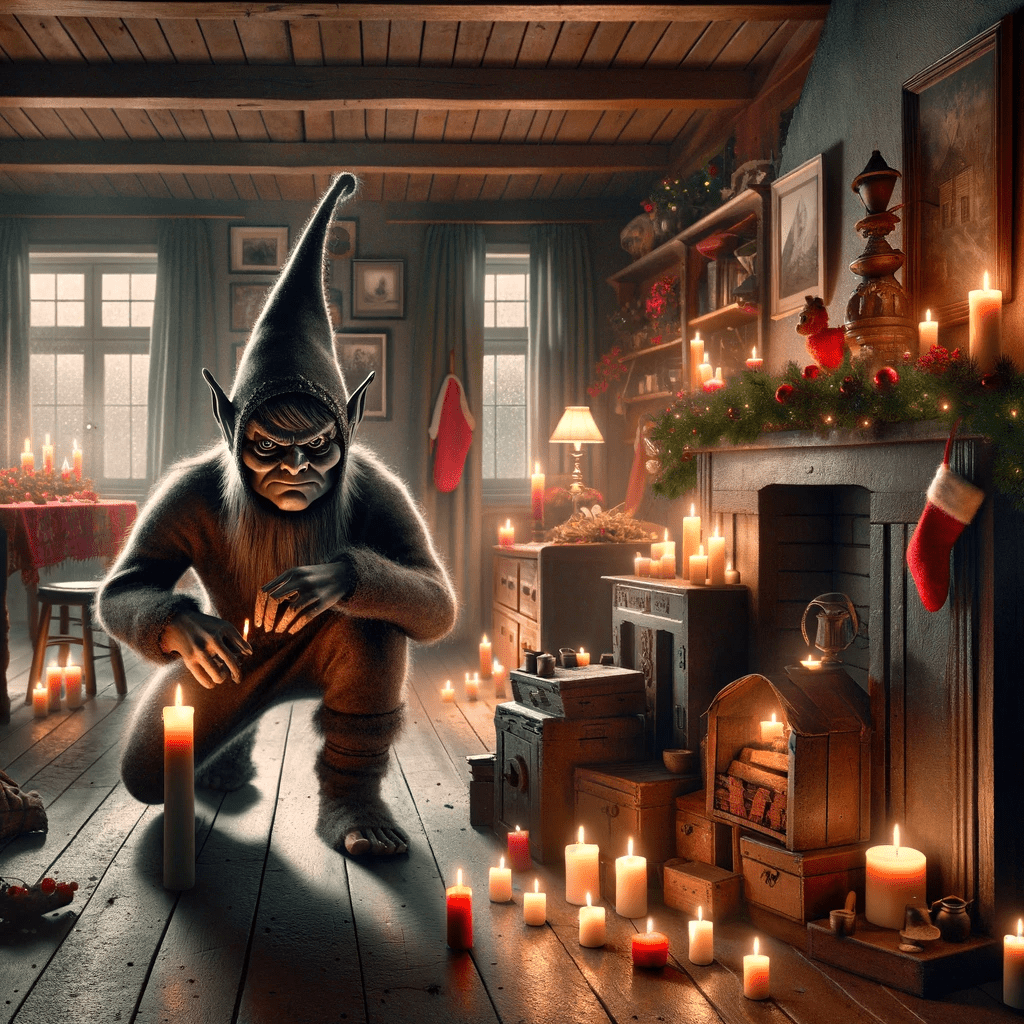
Kertasníkir‘s mischievous behaviour revolves around candles. He is known for sneaking into houses on Christmas Eve to steal candles. In olden times, candles were a precious source of light during the long, dark Icelandic winters. Kertasníkir‘s goal is to take these candles, possibly leaving the household in darkness or depriving them of their Christmas candlelight.

Kertasníkir collects candles by secretly taking them from the homes he visits. The more candles he can take, the darker he leaves the house.