Jolabokaflod

Christmas Book Flood • Reading for Pleasure


Leave a comment

DAY 23 — Jolabokaflod Eve: Your Reading Survival Kit

Jolabokaflod Advent Calendar 2025

Christmas Eve carries a particular kind of energy.

It’s quieter than the days before it, but fuller than the days that follow. The rush has largely passed. The waiting is nearly over. And somewhere in between, a small pocket of calm opens — if we choose to notice it.

In Iceland, Jolabokaflod Eve is not about doing more.

Books are exchanged. Pyjamas appear early. Chocolate is unwrapped without ceremony. The world narrows to the simple, generous idea that tonight is for reading — not achieving, not preparing, not performing.

Over the years, I’ve come to think of Christmas Eve reading not as an activity, but as a kit. A few carefully chosen elements that make the evening feel held and complete. When these are in place, the rest tends to follow naturally.

So today, on Day 23 of our Jolabokaflod Advent Calendar, I invite you to assemble your own Reading Survival Kit — not as a checklist, but as a gentle ritual.

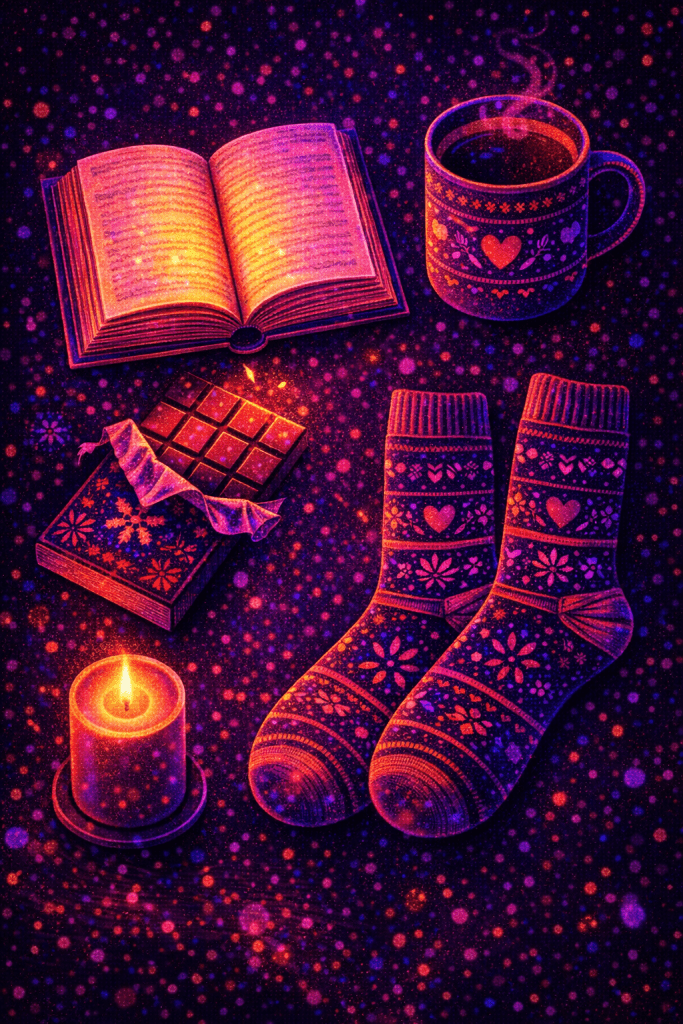
🎄 The Jolabokaflod Eve Reading Survival Kit

One Book
Not a decision to agonise over. Choose something that feels right for tonight. Comforting, absorbing, or quietly beautiful.

Something Sweet
Chocolate, biscuits, fruit, or a favourite treat. Reading pairs well with a little indulgence.

Warm Layers
Socks, a blanket, pyjamas — anything that signals the day is done.

Soft Light
A lamp, a candle, fairy lights. Enough to read without pulling the room back into daytime.

Permission to Stop
This may be the most important item. Permission to read only a few pages — or many. Permission to sleep early. Permission to enjoy the moment without documenting it.

I remember one Christmas Eve when everything else fell away unexpectedly. The house was still. The book was good. The night passed quietly — and it remains one of the most peaceful Christmas memories I have.

That’s the gift of Jolabokaflod Eve:

📚 Today’s Reading Picks — “Jolabokaflod Eve Books”

Perfect companions for the night before Christmas:

You can explore the full Advent Calendar titles here:
👉 Explore the Advent Calendar collection on Bookshop.org

And if you’re still choosing:
👉 Visit the Cosy Winter Fiction Shelf

Tonight doesn’t need to be special because it’s perfect.
It becomes special because it’s gentle.

Settle in.
Open your book.
And let Christmas arrive quietly, one page at a time.


Leave a comment

DAY 4 — The Cup-of-Hot-Chocolate Books

Jolabokaflod Advent Calendar 2025

Some books don’t ask to be analysed.
They ask only to be held.

Held the way you hold a warm mug on a cold evening. Fingers curved around ceramic. Steam rising toward your face. A soft pause between one small sip and the next. These are the books I think of as hot-chocolate books — stories that warm you from the inside out.

I first noticed this kind of reading on a winter evening when the day had been heavy for no obvious reason. Nothing dramatic. Just one of those tired, emotionally cluttered days that December seems so good at producing. I made hot chocolate almost without thinking, opened a book at random, and somewhere between the sweetness and the softness of the words, I felt my shoulders lower.

That’s when I realised something important:

We live in a world that constantly invites us to optimise even our leisure — to learn more, grow faster, consume smarter. But winter asks something different of us. It asks us to be gentler. It asks us to choose warmth over acceleration. And few things do that as reliably as a truly comforting book.

These are the stories where not much explodes. Where kindness appears quietly. Where the stakes are human rather than heroic. They are perfect companions for evenings when the dark arrives early and the only plan is to stay in.

So today, on Day 4 of our Jolabokaflod Advent journey, I invite you to choose a book the way you might choose a hot drink: not for its prestige, but for how it makes you feel when you take the first sip.

Today’s Reading Picks: “Hot-Chocolate Comfort Reads”

Books that soothe, soften, and wrap you up in story:

These are books you can return to when the world feels a little too sharp around the edges.

You can explore the full Advent Calendar titles here:
👉 Explore the Advent Calendar collection on Bookshop.org

And if you’d like to wander a little further:
👉 Visit the Cosy Winter Fiction Shelf

Tonight, may your book be warm.
May your drink be sweet.
And may the world feel just a little kinder.


Leave a comment

Christmas traditions (Advent calendar, Day 16)

What is the origin story of eggnog?

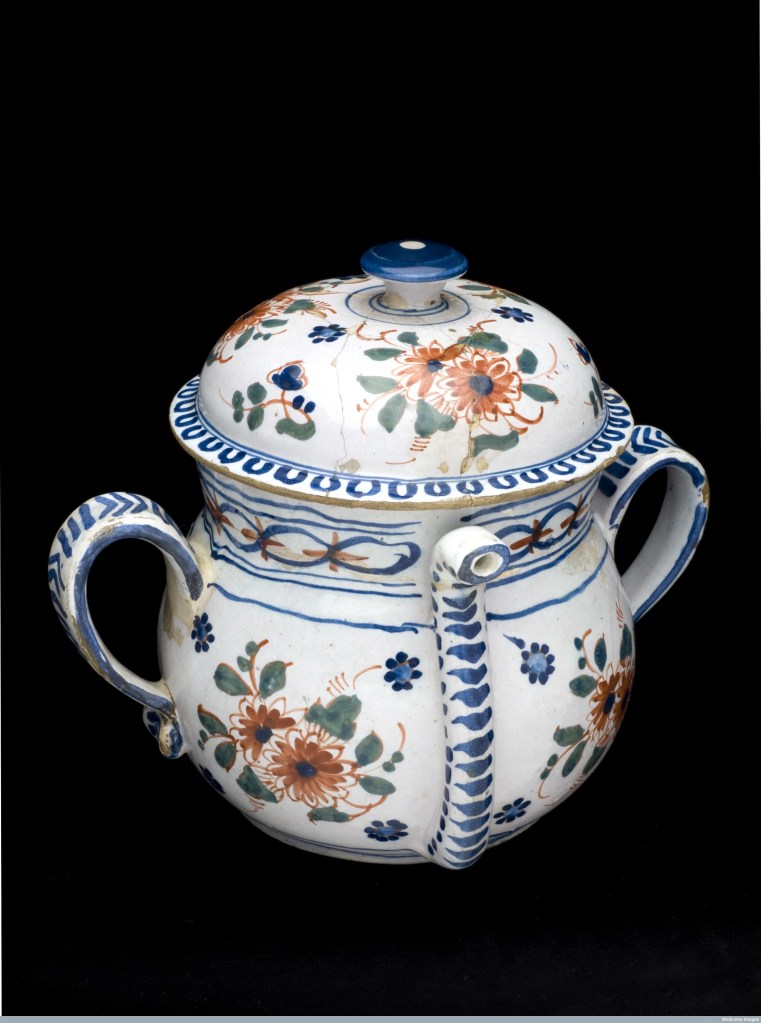
Posset pot with lid, England, 1701-1800. (Wellcome Trust)

Eggnog is a rich and creamy beverage associated with the Christmas season, particularly in the United States and Canada. Its origins can be traced back to medieval Europe, where “posset” was a popular drink made with hot milk, eggs, and ale or wine. Here’s the origin story and some interesting anecdotes about eggnog and how this tradition is used to celebrate Christmas around the world:

  • Medieval origins: The predecessor to eggnog, posset, was a warm, spiced drink made with milk curdled with ale or wine. It was often sweetened and flavoured with spices like nutmeg and cinnamon. Posset was commonly consumed in medieval England.
  • Eggnog in America: Eggnog as we know it today evolved in the American colonies in the 18th century. The name “eggnog” likely comes from “nog,” which was a term for a strong ale. Early American settlers adapted the posset recipe, substituting ale or wine with rum or brandy, which were more readily available.
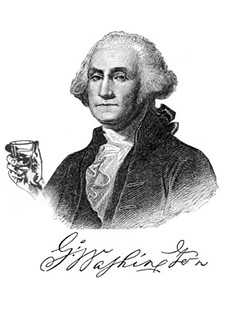
George Washington with drink in hand (Chelsea Wine Co.)

Interesting anecdotes about eggnog

  • Colonial America: Eggnog became a popular holiday drink in colonial America, where it was often made with rum, brandy, or whiskey. It was considered a festive and warming drink, especially during the cold winter months.
  • George Washington’s recipe: It is said that George Washington, the first President of the United States, had his own special recipe for eggnog. His version included rye whiskey, rum and sherry, along with the traditional ingredients of eggs, milk, sugar and nutmeg.
  • Christmas tradition: In the United States and Canada, eggnog is closely associated with Christmas and is often served at holiday gatherings, parties and festivities. Commercially produced eggnog is widely available during the holiday season.
  • Recipe variations: While traditional eggnog recipes include alcohol, non-alcoholic versions are also popular, making the drink suitable for people of all ages. Some variations include bourbon, brandy or cognac.
  • Cultural variations: Eggnog-inspired drinks and beverages are enjoyed in various forms around the world. In Puerto Rico, “Coquito” is a holiday drink made with coconut cream, condensed milk, rum, and spices. In Mexico, “Rompope” is a similar drink made with rum, eggs, milk and vanilla.
  • Eggnog lattes and flavours: In recent years, eggnog flavours have expanded beyond the traditional beverage. Eggnog lattes, ice cream, and even eggnog-flavoured cookies and desserts have become popular during the holiday season.
  • National Eggnog Day: National Eggnog Day is observed on 24 December in the United States, just in time for Christmas Eve celebrations.
  • Eggnog traditions around the world: While eggnog itself is not a widespread tradition outside of North America, similar creamy, spiced drinks can be found in various cultures. These beverages often have regional names and ingredients but share a common theme of warmth and festivity during the holiday season.
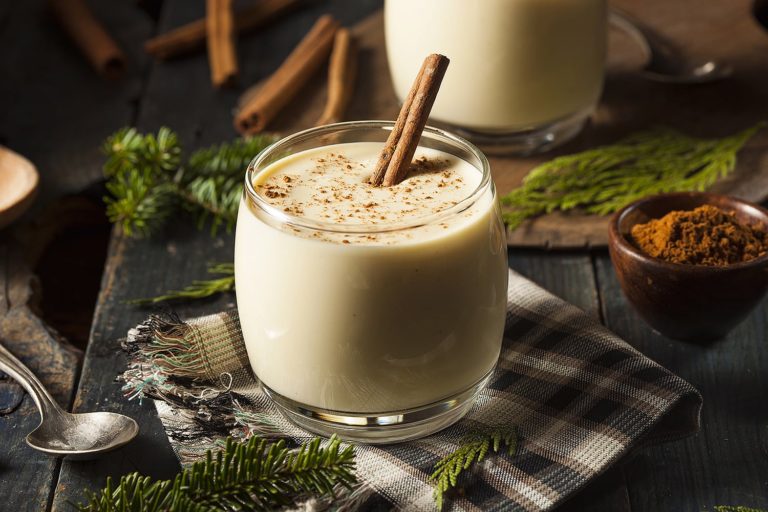
Eggnog (Trinkreif.de)

In a nutshell

Eggnog remains a beloved and indulgent holiday treat, bringing warmth and cheer to Christmas celebrations in North America. Whether enjoyed with or without alcohol, it continues to be a festive tradition that evokes feelings of comfort and nostalgia during the holiday season.

Coda

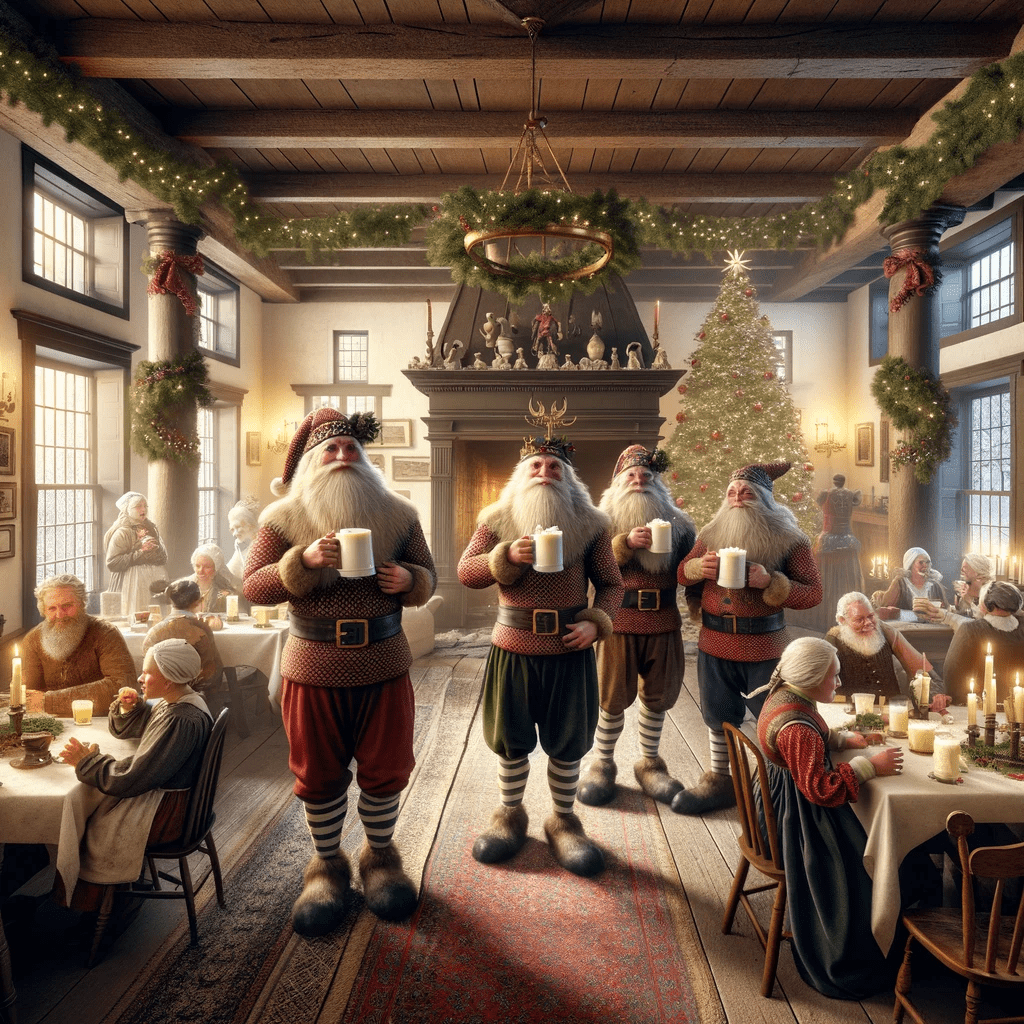
The Yule Lads are depicted by DALL-E 3 as drinking eggnog at a Christmas party or social gathering in Colonnial-era America.


Leave a comment

Christmas traditions (Advent calendar, Day 13)

What is the origin story of Las Posadas?

Las Posadas is a traditional Christmas celebration primarily observed in Mexico and some other Latin American countries. The term “posada” means “inn” or “lodging” in Spanish, and the celebration reenacts Mary and Joseph’s search for a place to stay in Bethlehem before the birth of Jesus. Here’s the origin story and some interesting anecdotes about Las Posadas and how it is used to celebrate Christmas:

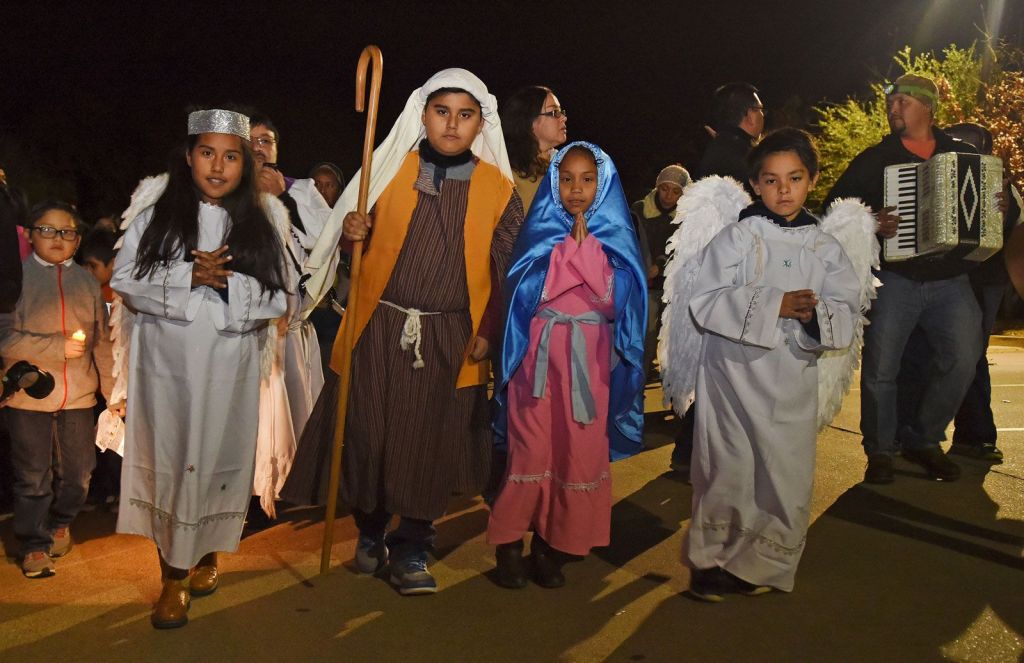
Children in a procession (Britannica)
  • Spanish influence: Las Posadas has its origins in the Spanish colonisation of Latin America. When Spanish missionaries arrived in the Americas in the 16th century, they sought to convert indigenous populations to Christianity. To make the religious teachings more accessible, they incorporated indigenous traditions into Christian rituals and celebrations.
  • Simulating Mary and Joseph’s journey: Las Posadas re-enacts the biblical journey of Mary and Joseph as they sought shelter in Bethlehem. Participants, often in costumes, form a procession that goes from house to house, representing the couple’s search for lodging. At each stop, they sing carols and request shelter, but they are usually turned away until they reach the final “inn.”

Interesting anecdotes about Las Posadas

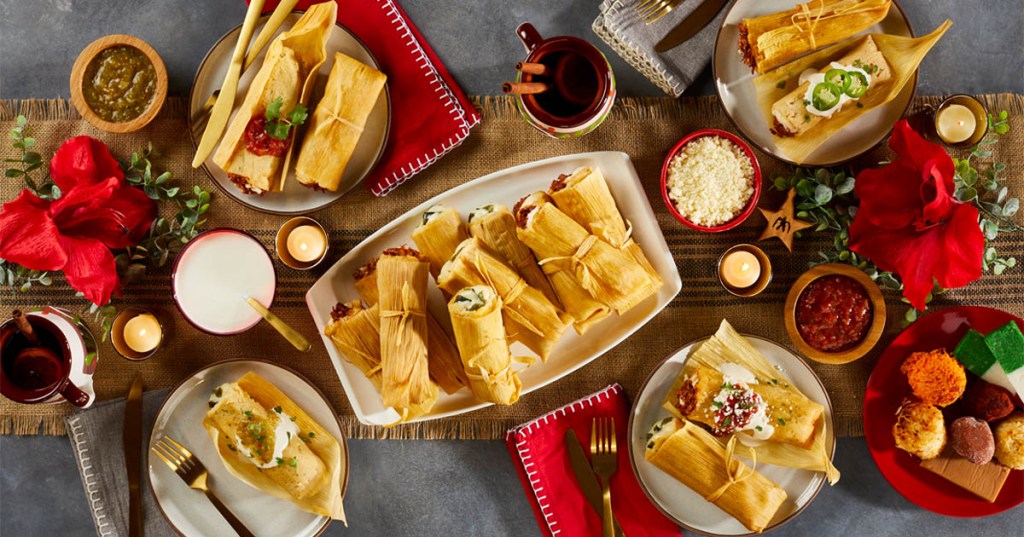
Traditional food and drink (Cacique Foods)
  • Duration of the celebration: Las Posadas typically begins on 16 December and continues for nine consecutive nights, culminating on 24 December, Christmas Eve. Each night’s procession is known as a “posada.”
  • Traditional songs: Special songs, known as “villancicos,” are sung during Las Posadas. These songs often include lyrics that reflect Mary and Joseph’s journey and their plea for lodging.
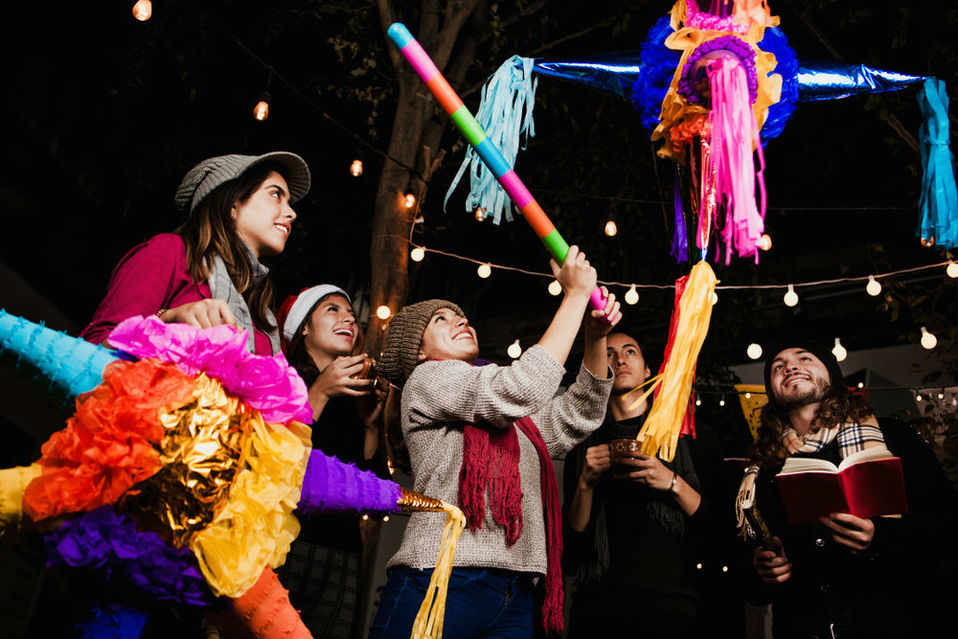
  • Piñatas: Piñatas are a common feature of Las Posadas celebrations. The traditional piñata represents the devil, and breaking it symbolizes overcoming evil. Piñatas are filled with candies and small toys that spill out when the piñata is broken.
  • Party and refreshments: After the final “inn” has accepted Mary and Joseph, a party often takes place, featuring traditional foods and drinks such as tamales, ponche (fruit punch), and atole (a warm, thick beverage made from masa or corn flour).
  • Religious significance: Las Posadas is not only a cultural celebration but also a religious one. It serves as a way for communities to come together to reflect on the nativity story and to prepare for the birth of Jesus on Christmas.
  • Community bonding: Las Posadas fosters a strong sense of community and togetherness. Neighbors and friends often participate in the processions and open their homes to fellow community members, reinforcing bonds and solidarity.
  • Variations in Latin America: While Las Posadas is most closely associated with Mexico, variations of the celebration exist in other Latin American countries, each with its unique customs and traditions.
  • Modern adaptations: In some urban areas, Las Posadas processions have taken on a more modern form, with participants riding in cars or buses rather than walking from house to house. However, the core elements of the celebration, including singing, prayer and fellowship remain intact.
Hitting a traditional piñata (Milenio)

In a nutshell

Las Posadas is a meaningful and festive Christmas tradition that combines cultural heritage with religious devotion. It serves as a way for communities to come together, reflect on the nativity story, and prepare for the joyous celebration of the birth of Jesus.

Coda

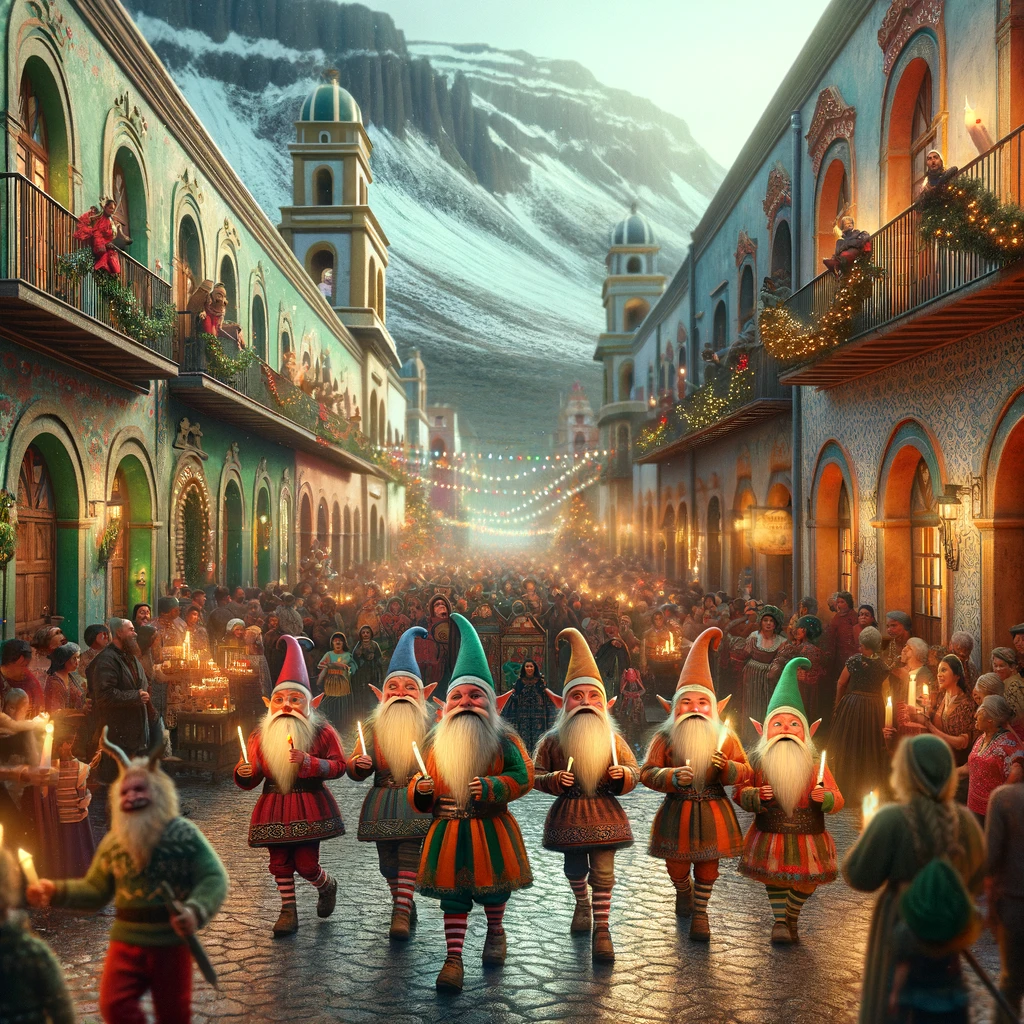
Today’s prompt allowed DALL-3 to really flex its muscles. I asked the image AI generator to show the Yule Lads in Mexico for Christmas, taking part in a Las Posadas street procession where a few of the Lads are hitting a traditional piñata. I requested a backdrop of a Mexican/Icelandic hybrid landscape in a village. Here are the results.


Leave a comment

Christmas traditions (Advent calendar, Day 7)

What is the origin story of Christmas markets?

The tradition of Christmas markets, also known as Christkindlmarkts or Weihnachtsmärkte, originated in Europe during the late Middle Ages. Here’s the origin story and some interesting anecdotes about Christmas markets and how they are used to celebrate Christmas around the world:

Medieval Christmas market, Durlach
  • Medieval fairs: The concept of Christmas markets can be traced back to medieval fairs and markets that took place in towns and cities across Europe. These fairs were not specifically Christmas-themed but provided an opportunity for people to buy and sell goods, especially as the holiday season approached.
  • First documented market: The first documented Christmas market was in Vienna, Austria, in 1294. These early markets were often associated with Advent, a period of fasting and preparation leading up to Christmas, and served as a place for people to stock up on supplies for the winter.
  • Cologne, Germany: One of the most famous Christmas markets is the one in Cologne, Germany. It dates back to the early 14th century and has a rich history. During the Middle Ages, the market was held to help fund the construction of the Cologne Cathedral.
  • Craftsmen and artisans: Christmas markets were originally places for craftsmen and artisans to sell their wares, which often included handmade ornaments, toys, candles, and seasonal foods.

Interesting anecdotes about Christmas markets

Ice-skating rink, Christmas market, Cologne
  • Mulled wine and seasonal treats: Christmas markets are known for their delicious seasonal treats and beverages. One popular drink is mulled wine (glühwein in German), a warm, spiced wine often served in decorative mugs. You can also find gingerbread cookies, roasted chestnuts, sausages, and other festive snacks.
  • Ornaments and decorations: Christmas markets are a treasure trove of unique ornaments and decorations. Visitors can find handcrafted ornaments, tree toppers, and nativity scenes, often made by local artisans.
  • Ice skating: Many Christmas markets feature ice skating rinks, providing a fun and festive activity for families and visitors. Skating amid twinkling lights and holiday decorations adds to the magical atmosphere.
  • Gift shopping: Christmas markets are ideal places to shop for holiday gifts. Visitors can discover a wide range of items, including handmade jewelry, textiles, pottery, and wooden crafts.
  • Live entertainment: Some Christmas markets feature live performances, including choirs, musicians, and theatrical presentations. These performances add to the festive ambiance and entertain visitors of all ages.
  • Market themes: Some Christmas markets have specific themes or traditions unique to their region. For example, the Nuremberg Christmas Market in Germany is famous for its gingerbread cookies (Lebkuchen) and has a “Christkind” (Christmas angel) who opens the market.
  • Worldwide popularity: While Christmas markets originated in Europe, they have gained popularity worldwide. You can find Christmas markets in cities and towns across North America, Asia, and other continents.
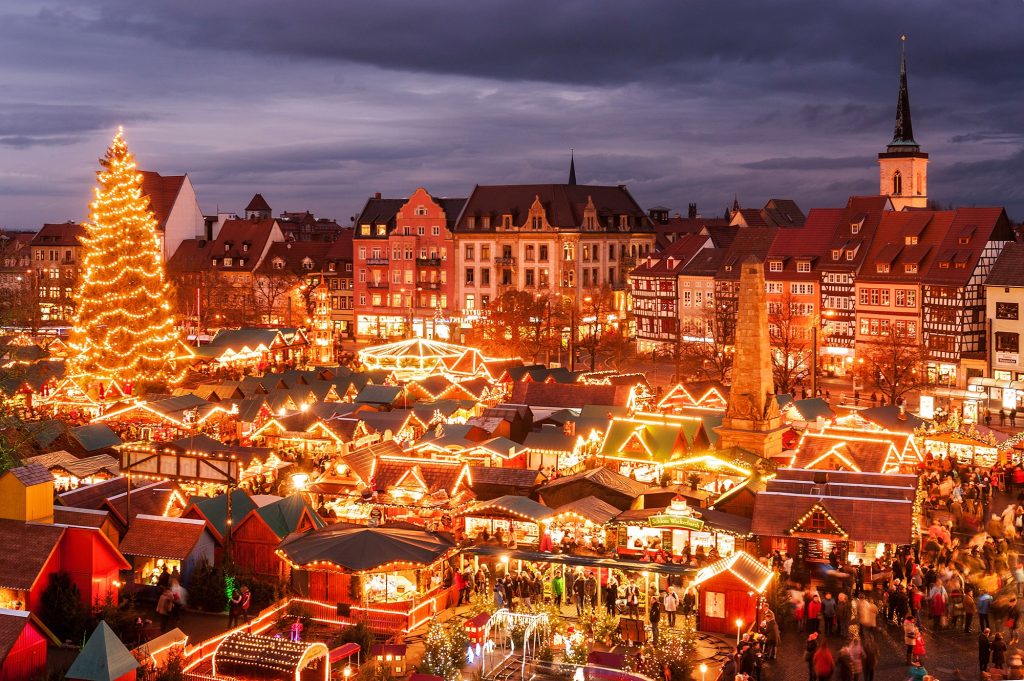
  • Holiday lights: Christmas markets are renowned for their beautiful holiday lighting displays. Markets often feature thousands of twinkling lights, making the evening atmosphere particularly enchanting.
  • Community and tradition: Christmas markets play an important role in fostering a sense of community and preserving cultural traditions. Many markets are organized and run by local communities and volunteers.
  • Environmental awareness: In recent years, there has been a growing awareness of sustainability and reducing waste at Christmas markets. Some markets have introduced eco-friendly practices, such as using reusable mugs and encouraging recycling.
Festive lights, Christmas market, Erfurt

In a nutshell

Christmas markets continue to be a beloved tradition that brings communities together and ushers in the festive spirit of the holiday season. Whether you’re shopping for gifts, savoring seasonal treats, or simply soaking up the enchanting atmosphere, Christmas markets offer a delightful way to celebrate Christmas around the world.

Coda

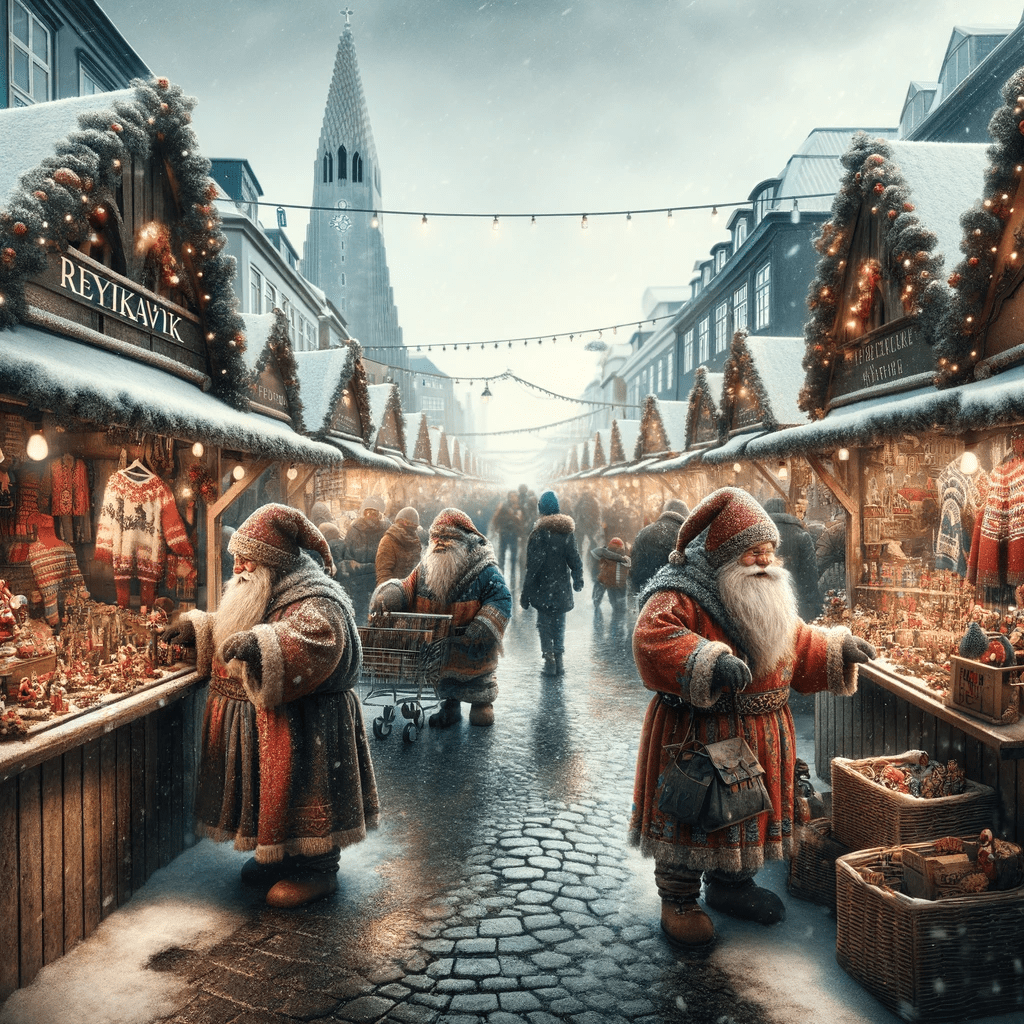
Here is DALL-E 3’s interpretation of the Yule Lads browsing the stalls at a Christmas market in Reykjavík, the capital of Iceland. The market is located in Skólavörðustígur street with Hallgrímskirkja Lutherian parish church in the far distance, with its distinctive geyser-shaped spire.