
Jolabokaflod Advent Calendar 2025
At some point in adulthood, many of us quietly stop making wish lists.
We become practical. Sensible. Self-reliant. We buy what we need, make do with what we have, and reserve longing for things that feel more justifiable than desire. But winter — especially December — has a way of loosening that restraint.
And books, perhaps more than anything else, invite us back into wishing.
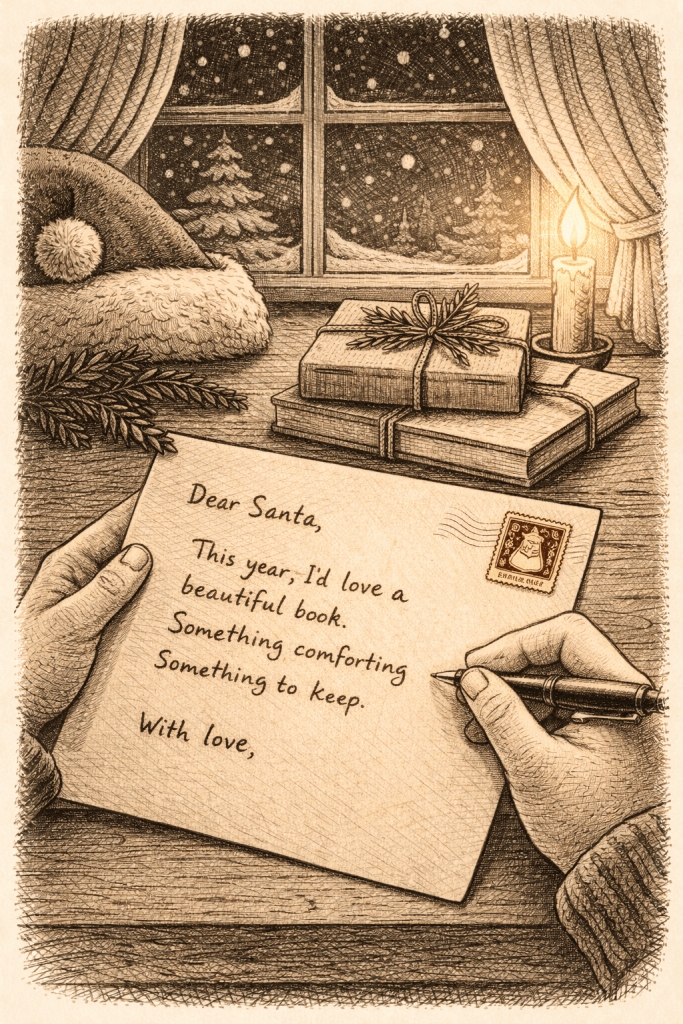
I like to imagine what an adult letter to Santa about books might look like. Not the breathless lists of childhood, but something softer. Slower. A note written by someone who knows themselves a little better now.
It might say:
Dear Santa,
This year, I’d love a book that makes me feel less rushed.
Or one that reminds me who I was before life got so loud.
Something beautiful enough to keep, not just read.
Books make perfect wishes because they are allowed to be unnecessary. They don’t have to improve us, optimise us, or solve anything. They are permitted to exist purely for delight — for the pleasure of weight in the hands, paper under the fingers, words waiting patiently inside.
That’s why gift-worthy books matter. Not just because they look beautiful under the tree, but because they send a message:
You are allowed to want something gentle.
Today, on Day 12 of our Jolabokaflod Advent Calendar, I invite you to indulge in a little imaginative generosity — whether for yourself or for someone else. Write a mental letter to Santa. What kind of book would you ask for if practicality weren’t in charge?
🎅 Today’s Reading Picks — “Letters to Santa” Books
Beautiful, comforting, wish-worthy books that feel special to receive:
- 84 Charing Cross Road — Helene Hanff
- A Gentleman in Moscow — Amor Towles
- The Curious Charms of Arthur Pepper — Phaedra Patrick
- Letters from the North Pole — Annie Atkins
These are books that feel like they’ve been chosen with care — because they have been.
You can explore the full Advent Calendar titles here:
👉 Visit the “Advent Calendar” collection on Bookshop.org
And if you’re gathering ideas for thoughtful gifts:
👉 Visit the Giftable Hardbacks Shelf
- Journey — Dorling Kindersley: An illustrated history of the world’s greatest travels
- Jurassic World: The Ultimate Visual History — James Mottram: Definitive collector’s book, a must-have for fans of the action-packed dinosaur saga
- National Geographic Ultimate Visual History of the World — Jean-Pierre Isbouts: Here, in vivid colour and crisp narrative, is the sweeping story of the history of civilisation
- The Wonder of Life on Earth — Henry Gee: Astonishing and readable natural history giving an accessible introduction to the topic of life.
- The Illustrated World of Tolkien — David Day: Exquisite reference guide to Tolkien’s world and the artists his vision inspired.
- The Work of Art — Adam Moss: Guided tour of what goes on inside an artist’s head.
- The Natural History Book — Dorling Kindersley: Beautiful guide to Earth’s wildlife and natural history, including its rocks, minerals, animals, plants, fungi and microorganisms.
- Information is Beautiful — David McCandless: Visual guide to how the world really works, through stunning infographics and data visualisations
- Animalium — Jenny Broom: Rich, informative and truly wonderful cabinet of curiosities beautifully displayed in this imaginative book
- The Book of Symbols. Reflections on Archetypal Images — Taschen: Sets new standards for thoughtful exploration of symbols and their meanings
- The Illustrated Brief History Of Time — Stephen Hawking: Bring theories to life in a clear, captivating and visually engaging way
- The Secret Lives of Colour — Kassia St Clair: Excellent, innovative and idiosyncratic cultural history that will colour your thinking
- Atlas of the Invisible — James Cheshire and Oliver Uberti: Discover the hidden patterns in human society as you have never seen them before — through the world of data
- The Book of Trees: Visualising Branches of Knowledge — Manuel Lima: Stunning visual maps showing how humans organise knowledge.
- The Planets — Andrew Cohen and Brian Cox: Visually striking and intellectually generous.
This season, you don’t have to justify your wishes.
You don’t have to explain why a book feels necessary.
Sometimes, it’s enough to say:
I would love this.
And let the rest take care of itself.


 Jolabokaflod