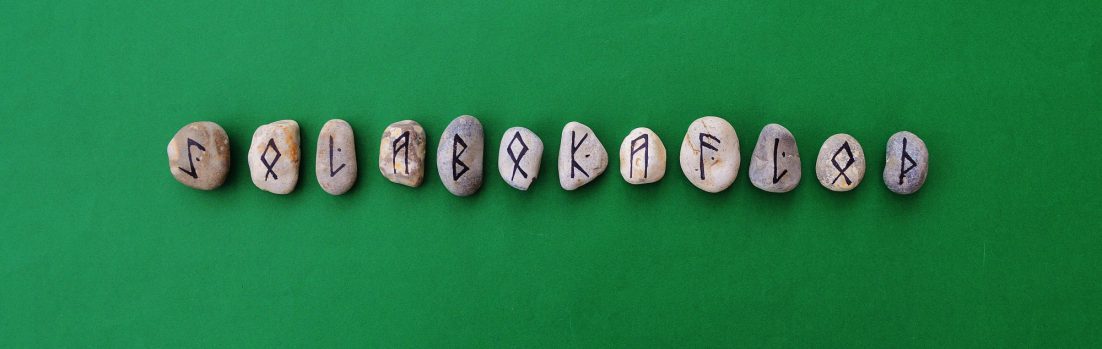
Jolabokaflod

Christmas Book Flood • Reading for Pleasure


Leave a comment

Christmas traditions (Advent calendar, Day 6)

What is the origin story of mistletoe‘s role at Christmas?

Mistletoe, a symbol of love, fertility, and renewal, has a rich history dating back to ancient times. Here’s the origin story of mistletoe and how it became associated with Christmas:

“Baldur’s Death” by Christoffer Wilhelm Eckersberg (1817)
  • Ancient origins: Mistletoe was revered by various ancient cultures, including the Druids of the British Isles, the Norse, and the Greeks. It was considered a magical plant due to its ability to grow high in trees without apparent roots.
  • Druidic rituals: The Druids, Celtic religious leaders, considered mistletoe a sacred plant. During the winter solstice, they would climb oak trees to harvest mistletoe with a golden sickle, believing it had healing properties and could bring good luck.
  • Norse mythology: In Norse mythology, the mistletoe was associated with the goddess Frigg. The story of Balder, the god of light and purity, involves mistletoe. He was killed with an arrow made of mistletoe, which had been overlooked in Frigg’s attempt to make everything in the world promise not to harm him. Balder’s death brought tears of sorrow from Frigg, and she declared mistletoe a symbol of love and peace.
  • Christian adoption: As Christianity spread across Europe, some of the traditions associated with mistletoe were incorporated into Christmas celebrations. Mistletoe’s evergreen nature and associations with renewal and love made it a fitting symbol for the Christmas season.
  • Kissing under the mistletoe: The tradition of kissing under the mistletoe likely has multiple sources. One theory is that it originated from the Norse myth of Balder, where the mistletoe became a symbol of love and reconciliation after the tragic event. Another theory is that it evolved from British and Celtic customs of using mistletoe in marriage ceremonies.

Interesting anecdotes about mistletoe

Parasite (Photo by Daniel Jolivet licensed under CC BY 2.0)
  • Kissing tradition: The custom of kissing under the mistletoe is one of the most enduring and popular Christmas traditions associated with mistletoe. According to the tradition, when two people stand beneath the mistletoe, they are supposed to share a kiss. It’s considered bad luck to refuse a kiss under the mistletoe.
  • Mistletoe as a parasite: Mistletoe is a semi-parasitic plant that grows on the branches of trees, drawing nutrients from its host. While it can harm its host tree, it also provides food and shelter for birds and insects.
  • Mistletoe varieties: There are several species of mistletoe, but the one most commonly associated with Christmas is European mistletoe (Viscum album). It has distinctive pairs of evergreen leaves and white berries.
  • Medicinal uses: In traditional folk medicine, mistletoe was used for various medicinal purposes, though it can be toxic if ingested in large quantities. Today, it is sometimes used in complementary and alternative medicine for its potential anti-cancer properties.
  • Mistletoe in art and literature: Mistletoe has been featured in numerous works of art, literature, and folklore throughout history, often as a symbol of love, renewal, and protection.
  • Christmas decorations: Mistletoe is commonly used as a decoration during the Christmas season. It can be found in wreaths, garlands, and as standalone decorations in homes and public spaces.
  • Mistletoe markets: In some regions, especially in Europe, there are Christmas markets where mistletoe is sold along with other holiday decorations.
  • Mistletoe removal: In some parts of the world, there are organized mistletoe removal programs to protect trees from the potential harm caused by mistletoe growth.
Sprig of mistletoe

In a nutshell

Mistletoe’s role in Christmas celebrations reflects its rich history and the blending of cultural traditions over time. Today, it remains a beloved symbol of love, renewal, and goodwill during the holiday season.

Coda

Here are the Yule Lads, according to DALL-E 3’s imagination, collecting mistletoe from trees in a mythical Icelandic landscape, ready to leave sprigs in houses when they pay their visits over the Christmas period.


Leave a comment

Valentine’s Day: receiving books from your beloved

ibgd-poster If books be the food of love, read on: sharing books with the people in your life

Part 3: receiving a book

As the Book Bulletin online catalogue crowdfunding campaign for reading recommendations and gift suggestions comes to an end on International Book Giving Day (also known in some quarters as ‘Valentine’s Day’), Christopher Norris from the Jolabokaflod Book Campaign asked friends, fans and followers of the initiative how they would feel about exchanging books with significant others on 14 February.

How would receiving a book as a gift on Valentine’s Day make you feel?

Hannah Bellamy, CEO, United Way Reading Oasis: Understood

Catherine Clover, author, forthcoming multimedia Aldus Cervus series: Having been given children’s books by my parents on Valentine’s Day when I was young, I know what a blessing it is to have such an intimate and lasting token of their love. To this day, when I read the Valentine inscriptions written lovingly in my now deceased mother’s hand, it makes me feel so connected to her. I feel that there is nothing greater to bring us together with our loved ones than sharing a bound copy of a book!

Andrew Haywardether, Managing Director, Ether Books: When I am the recipient of a book, I find that often my friends are pushing me out of my comfort zone, and that has to be a good thing!

Jessica Norrie, author, The Infinity Pool: Much better than receiving chocolate-cream-filled profiteroles with pink, sugar hearts or any of the other sickly things on sale at this time of year!

Lesley Pollinger, author and Literary Executor and Trustee for the Estate of Frieda Lawrence Ravagli: Loved (and probably stunned!).

Nick Quantrill, crime writer and Hull Noir 2017 team, international crime writing festival: Books can be such a personal thing, so receiving a book you’ll really enjoy shows a genuine connection with your loved one. I’d be delighted to receive a book and think it would be a fine tradition to initiate.

Yrsa Sigurðardóttiryrsa-helmet, award-winning author: Again, absolutely marvelous and I hope my husband reads this.

Hildur Sif Thorarensen, author, Einfari: Very good. I love books. I love educational books. I love crime novels. I love all sorts of interesting reading material.

Karen Sullivan, Founder and Publisher, Orenda Books: I always have a book wish list on the fridge, and receiving a book as a gift on Valentine’s Day would be the most perfect gift – enabling me to be transported, indulge in my favourite activity: reading.

Victoria Wicks, actress, granddaughter of H E Bates: I’d be pretty thrilled to get anything on Valentine’s Day!

How would you summarise the idea of giving and receiving books on Valentine’s Day?

Anonymous advertising executive: A book is a really thoughtful gift because it shows that you know the person inside

Gill Paulicon-gill-paul, author, historical fiction: Flowers and chocolates are lovely, but impersonal and impermanent. To choose a book for someone else requires thinking about who they are, what they enjoy, the very heart and soul of them. And while flowers wither and chocolates get eaten (fast), that book will last for life

Christopher Norris is the Founder and Curator of the Jolabokaflod Book Campaign (twitter: @Jolabokaflod). There is still time to make a contribution to the Book Bulletin cause and receive promotion for you and your passions, projects and interests. Please give generously by 14 February 2017.


Leave a comment

Valentine’s Day: giving books to your beloved

hug-book-loveIf books be the food of love, read on: sharing books with the people in your life

Part 2: giving a book

As the Book Bulletin online catalogue crowdfunding campaign for reading recommendations and gift suggestions comes to an end on International Book Giving Day (also known in some quarters as ‘Valentine’s Day’), Christopher Norris from the Jolabokaflod Book Campaign asked friends, fans and followers of the initiative how they would feel about exchanging books with significant others on 14 February.

How would receiving a book as a gift on Valentine’s Day make you feel?

Hannah Bellamy, CEO, United Way Reading Oasis: No book is the same. I give to offer advice, adventure, comfort or amusement. When someone is suffering and I don’t know how to help, I send a book.

Catherine Clovercc-white-hart, author, forthcoming multimedia Aldus Cervus series: For a child in my life I can think of nothing better than to give them a book from a favorite series they are reading, or a book of poetry.

Andrew Hayward, Managing Director, Ether Books: I love fitting books to people, finding a subject they like and hopefully getting a new fan for the author. If I find people who have an interest in Germany, both during the war and post war I always give them a copy of a Philip Kerr, Bernie Gunther book. So far, everyone has enjoyed him and bought the rest of the series

Jessica Norrie, author, The Infinity Pool: I would enjoy browsing for something that expressed love elegantly and spiritually and with humour. Or that specifically reflected the relationship I was celebrating.

Lesley Pollinger, author and Literary Executor and Trustee for the Estate of Frieda Lawrence Ravagli: Loving, and with thought for the recipient.

Nick Quantrillhull-noir-2017, crime writer and Hull Noir 2017 team, international crime writing festival: As a book lover, I know such a gift would be well-received, so it’d be a genuine pleasure to buy the perfect book.

Yrsa Sigurðardóttir, award-winning author: Absolutely marvelous. A book is a gift that requires thought and insight and is reserved for those close to your heart, be it lover, relative or friend. People don’t give books to someone they don’t like.

Hildur Sif Thorarensen, author, Einfari: It would make me happy if I found a good book that is up my boyfriend’s alley.

Karen Sullivan, Founder and Publisher, Orenda Books: I always give books as gifts, and they are powerful conveyors of emotion and affection. On Valentine’s Day, this becomes increasingly poignant.

Victoria Wicks, actress, granddaughter of H E Bates: If I was given a book by a prospective beau, and I found I liked the book, that would give me goosebumps I think. It’s really quite sexy because it indicates a desire to be very close to someone. If you’re reading a book someone’s given you then that person is everywhere you are when you are reading it: on the tube or the bus, by the fire, in bed. It indicates intimacy in a way that lingerie can’t.

Christopher Norris is the Founder and Curator of the Jolabokaflod Book Campaign (twitter: @Jolabokaflod). There is still time to make a contribution to the Book Bulletin cause and receive promotion for you and your passions, projects and interests. Please give generously by 14 February 2017.